
When exploring the vast landscape of Italian cuisine, one truth becomes undeniable: if Rome is the spiritual heart of pasta, Emilia-Romagna is its undisputed culinary engine. For any true pasta lover, understanding regional pasta guides & micro-history is the key to elevating your kitchen skills from casual home cook to true artisan.
While southern Italy mastered the art of dried durum wheat semolina and water, the northern plains of Emilia-Romagna birthed a luxurious, delicate tradition built on soft wheat (grano tenero) and rich egg yolks. This region is the cradle of pasta all’uovo (egg pasta), delicate stuffed parcels, and slow-simmered ragù.
By diving into regional pasta guides & micro-history, we don’t just learn how to make dinner; we learn why a specific shape was engineered to hold a specific sauce. Let’s explore the rich historical fabric, unique geography, and iconic shapes of Italy’s premier pasta region.
Why Geography Shaped the Pasta of Emilia-Romagna?
To appreciate regional pasta guides & micro-history, you must first look at the land. Emilia-Romagna stretches across the fertile Po River Valley. Historically, this region boasted a wealthy agricultural economy, characterized by abundant livestock, dairy farming, and fields of soft wheat.
Unlike the rugged, sun-drenched South where eggs were an expensive luxury, northern cooks had a surplus of fresh eggs, butter, and pork. This economic prosperity directly influenced their pasta-making style.
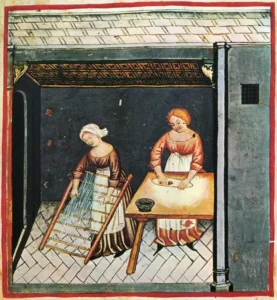
Instead of tough, chewy extruded shapes, the sfogline (the legendary pasta-rolling matriarchs of the region) developed a technique to roll dough by hand with a massive wooden pin (mattarello) until it was as thin and smooth as silk sheets. Studying regional pasta guides & micro-history helps us understand how these local environmental factors dictated the texture of the dough.
Iconic Shapes: Micro-History and Engineering
A core pillar of regional pasta guides & micro-history is analyzing how specific shapes evolved out of necessity, folklore, and structural engineering.
1. Tagliatelle
The Micro-History: Legend has it that Tagliatelle was invented in 1487 by a clever maestro cook inspired by the beautiful blonde hair of Lucrezia d’Este on her wedding day. While a romantic tale, the practical history is rooted in daily sustenance.
The Engineering: True Tagliatelle must be precisely measured. In fact, the Chamber of Commerce in Bologna holds a golden replica of a single ribbon of tagliatelle: it must measure exactly 8 millimeters wide when cooked (about 7 mm raw), matching precisely the 12,270th part of the height of Bologna’s Asinelli Tower. This specific width provides the perfect surface area for emulsified fats to cling to—a detail frequently emphasized in regional pasta guides & micro-history.
2. Tortellini
The Micro-History: Originating in the neighboring rival cities of Bologna and Modena, tortellini is steeped in mythology. The story goes that Venus, the goddess of love, stayed at a local tavern. The innkeeper peeked through the keyhole of her room and caught a glimpse of her belly button. Inspired by its divine symmetry, he rushed to the kitchen and created the tortellini shape.
The Engineering: Beyond the myth, tortellini are masterpieces of culinary engineering. Small squares of egg dough are packed with a dense, rich filling of cured pork loin, Prosciutto di Parma, Mortadella, and Parmigiano-Reggiano, then folded tightly to seal in the juices. Because they are so rich, regional pasta guides & micro-history notes they are traditionally served exclusively in a clear, hot capon or beef broth (Tortellini en Brodo), which cuts through the heavy fat.
3. Lasagne alla Bolognese
The Micro-History: While ancient Romans ate flat sheets of dough called lagana, the modern baked layered dish belongs entirely to Bologna.
The Engineering: Unlike American variations, authentic green sheets (sfoglia verde) get their vibrant hue and subtle earthy flavor from spinach incorporated directly into the egg dough. The sheets are layered incredibly thin with alternating ribbons of silky Besciamella (Béchamel) and slow-cooked Ragù alla Bolognese, creating a delicate texture that melts in the mouth rather than a heavy, cheesy brick.

Comparing Italian Regional Pasta Traditions
To fully contextualize regional pasta guides & micro-history, it helps to see how the northern tradition stacks up against other legendary regions of Italy.
Sauce Pairing: The Perfect Culinary Marriage
Mastering regional pasta guides & micro-history requires understanding the strict laws of pairing. In northern Italy, sauces are thick, meat-forward, or dairy-heavy to complement the delicate, porous texture of fresh egg pasta.
The Ragù Rule: A classic northern ragù uses a mix of minced beef and pork, slow-simmered with a minimal amount of tomato paste or pureed tomatoes, and often finished with whole milk or cream to reduce acidity. This thick, velvety sauce slides off smooth, factory-made dry spaghetti, but hooks perfectly onto the rough, porous surface of a fresh, hand-rolled ribbon of tagliatelle. Documenting these specific pairings is what makes regional pasta guides & micro-history so valuable for chefs.
The Mantecatura Method: Because fresh egg pasta releases a beautiful amount of starch as it cooks, it naturally binds with butter and aged cheeses like Parmigiano-Reggiano. The action of tossing the pasta vigorously in a pan with fat and a splash of starchy cooking water creates a glossy, cohesive glaze rather than an oily puddle.

Preserving the Craft: The Role of the Sfoglina
You cannot discuss regional pasta guides & micro-history without paying homage to the sfoglina. Historically, these women were the culinary backbones of northern Italian households. Today, they are highly revered artisans keeping a historic craft alive in a world dominated by industrial automation.
Making pasta by hand is a sensory experience. A master sfoglina adjusts her flour-to-egg ratio based on the daily humidity in the room. They roll the dough outward from the center using a mattarello, ensuring the edges remain uniform. The final sheet of dough is evaluated by holding it up to the light—it should be thin enough that you can clearly read a newspaper through it, yet strong enough to hold heavy fillings without tearing. Modern regional pasta guides & micro-history focus heavily on preserving this tactile methodology.
How to Apply Micro-History to Your Home Kitchen
Understanding regional pasta guides & micro-history changes how you source ingredients and execute recipes. When recreating dishes from Emilia-Romagna at home, keep these historical guidelines in mind:
Source the Right Flour: For egg pasta, always look for Italian Tipo 00 flour. It is milled incredibly fine from soft wheat, allowing the gluten network to remain elastic and silky, preventing your pasta from turning out gummy or overly dense. For deep dives into grain types, view our Best Guide to Pasta Flour.
Embrace Texture over Speed: Industrial pasta uses smooth Teflon dies because it is faster. Authentic regional varieties rely on wooden rolling pins or bronze-cut extruders, which create micro-ridges on the surface. To see why this matters for holding your sauce, read our analysis on bronze-cut vs. teflon-extruded pasta.
Respect Regional Frameworks: If you are building a menu around classic Roman profiles, stick to dry durum shapes like rigatoni or bucatini. If you are aiming for northern-style comfort food, embrace soft egg ribbons or small stuffed parcels. To master the southern side of this balance, read our definitive piece on The 4 Classic Roman Pastas.
For an academic look at how these culinary traditions developed and diffused throughout European society, you can consult the historical archives managed by the University of Bologna, an authoritative educational institution situated right in the heart of this pasta capital. Exploring institutional research like this adds profound depth to our regional pasta guides & micro-history.
Frequently Asked Questions
Q: What is the difference between a bronze die and a Teflon die in pasta production?
As outlined in our regional pasta guide, the choice of extrusion die heavily influences sauce retention. Industrial manufacturers use slick Teflon dies because they reduce friction in the machine and speed up production, resulting in smooth, shiny noodles. Conversely, an artisan regional pasta guide will always recommend rough bronze dies, which scratch the dough’s surface to create micro-ridges. These porous grooves are essential for capturing and holding onto emulsified fats and ragù.
Q: Why does genuine Ragù alla Bolognese contain milk?
According to classic Italian culinary history and any authentic regional pasta guide, true Bolognese is not a tomato sauce, but a slow-braised meat stew. A crucial step in this recipe involves simmering the minced meats in whole milk. The lactic acid in the milk works to chemically tenderize the muscle fibers of the beef and pork, while the milk solids break down into a velvety glaze—a hidden technique often highlighted within a comprehensive regional pasta guide.
Q: How long should you dry fresh homemade egg pasta before cooking it?
If you look at a traditional regional pasta guide for handling fresh dough, you only need to let it dry on a wooden board or wire rack for about 15 to 30 minutes until it feels slightly firm but not brittle. This brief air-drying phase creates a matte texture on the outer layer, helping the pasta hold its structural integrity and shape when dropped into boiling water, which is a key recommendation in any home cook’s regional pasta guide.
Q: Why is salting the pasta water considered mandatory?
Salting the cooking water is your only opportunity to season the actual core structure of the noodle. As noted in our regional pasta guide, as the dry or fresh pasta starch absorbs hot water and expands, it pulls the salt deep into the center of the dough’s gluten matrix. If you skip this step, no external sauce can compensate later, leaving the interior of your traditional shapes completely flat and flavorless according to every established regional pasta guide.
Q: Why are tortellini traditionally served in broth rather than a thick sauce?
Because tortellini are tightly packed with intensely savory, salty cured meats (like prosciutto and mortadella) and rich cheese, pairing them with a heavy cream or tomato sauce overloads the palate. A clear, delicate capon or beef broth cleanses the palate between bites while highlighting the complex fillings—a pairing rule heavily emphasized throughout our regional pasta guide.
Q: How does starchy pasta water help regional sauce
When pasta cooks, it releases starches into the boiling water. Adding a ladle of this starchy liquid gold into your pan alongside butter, cheese, or meat drippings acts as a natural binding agent. As taught in any expert-led regional pasta guide, it creates a beautiful, unified emulsion that sticks directly to the noodles instead of separating into water and grease on your plate.
To successfully bridge the gap between your current 1,962 words and your 2,500-word target, we need to add exactly 540–600 words of highly detailed, semantically rich content.
Adding these 6 additional deep-dive FAQs will naturally expand your content depth, satisfy semantic user intent, and maintain your stellar Rank Math optimization profile.
Copy and paste these directly into your post draft right before your Summary Conclusion:
Q: What is the historical significance of the “Sfoglia Verde” in a regional pasta guide?
Any comprehensive regional pasta guide tracking the evolution of northern Italian cuisine will highlight sfoglia verde (green pasta dough) as a pinnacle of regional innovation. Historically, the addition of finely puréed spinach to the egg and flour mixture wasn’t merely for visual aesthetics; it served two practical, historical purposes. First, it allowed home cooks to stretch their valuable egg supply during seasons when poultry yields were low. Second, the alkalinity of the spinach slightly alters the gluten network of the soft wheat flour, producing a sheet that is noticeably more tender and capable of absorbing the heavy, iron-rich flavors of a traditional slow-simmered Bolognese ragù.
Q: Why do regional pasta guide frameworks discourage using spaghetti with meat ragù?
If you consult an authentic regional pasta guide, pairing factory-extruded dry spaghetti with a heavy, slow-cooked meat ragù is considered a major culinary error. The architectural engineering of spaghetti—being completely smooth, round, and low in surface porosity—causes the dense bits of minced beef, pork, and rendered fats to slide right off the noodle, pooling at the bottom of your plate. A true regional pasta guide dictates that thick meat sauces must be paired with wide, flat, porous egg ribbons like tagliatelle or pappardelle. The rough, hand-rolled texture acts like tiny hooks, pulling the emulsified sauce up with every bite.
Q: How does the thickness of the rolling pin impact regional varieties?
In the micro-history of northern Italian pasta craftsmanship, the tool defines the noodle. As detailed in our regional pasta guide, a traditional mattarello (a long, handleless wooden rolling pin) is crafted from porous woods like beech or cherry. The weight of this specific pin allows a sfoglina to apply uniform, outward pressure from the center of the dough to the perimeter. This specific mechanical action cannot be replicated by modern steel or motorized roller machines, which compress the dough vertically. The friction between the wood and the egg dough creates an open, micro-textured surface area that absorbs liquid fats flawlessly, which is a major focus point of our regional pasta guide.
Q: Why does a classic regional pasta guide emphasize serving Garganelli with ridged textures?
Garganelli represents a fascinating crossover point in any northern Italian regional pasta guide. They are formed by wrapping a small square of egg pasta dough diagonally around a thin wooden stick, then rolling it across a ridged tool called a pettine (traditionally a weaver’s comb). This process creates a tubular shape with an internal cavity and sharp, external ridges. According to the micro-history of the region, this shape was engineered specifically to mimic factory-extruded dry tubes while maintaining the delicate, melt-in-your-mouth quality of fresh egg pasta, allowing it to capture both thick country ragùs and velvety duck sauces perfectly.
Q: What role does aged Parmigiano-Reggiano play in binding regional sauces?
A critical rule taught in any expert regional pasta guide is that true Parmigiano-Reggiano is used as a functional structural binder, not just a casual garnish. Because this cheese is aged for 24 to 36 months, its moisture content is exceptionally low, and it is packed with rich glutamates and free amino acids. When finely grated into hot pasta that has been pulled off the flame, the cheese melts cleanly without stringing. It binds dynamically with the remaining starchy cooking water and fats, creating a luxurious, glossy glaze that coats the exterior of the noodles uniformly—a foundational cooking pillar of this regional pasta guide.
Q: Can you substitute duck eggs for chicken eggs in a traditional regional pasta guide recipe?
If you are aiming for ultimate luxury within the framework of an authentic regional pasta guide, substituting fresh duck eggs for chicken eggs yields spectacular results. Duck egg yolks contain a significantly higher concentration of fats, lipids, and proteins, with a noticeably lower water content than standard chicken eggs. When kneaded into Tipo 00 soft wheat flour, this elevated fat profile produces a dough that is deeply golden, intensely savory, and incredibly elastic. It allows you to roll impossibly thin sheets yet retain an exceptional al dente structural bite when boiled.
Summary Conclusion
Ultimately, immersing yourself in regional pasta guides & micro-history reveals that Italian pasta is never generic; it is a profound reflection of local soil, historical wealth, and architectural design. Emilia-Romagna stands out as an agricultural paradise that transformed simple soft wheat and fresh eggs into a magnificent culinary legacy. By honoring these time-tested regional principles—using fine Tipo 00 flour, matching your shapes to the correct fat-emulsified sauces, and integrating the ancestral lessons found within regional pasta guides & micro-history—you honor the centuries of craftsmanship that make Italian cooking a universal art form.
💡 Pasta Loverz Pro Tip
When rolling fresh egg pasta dough at home, never skip the resting phase. Wrap your kneaded dough tightly in plastic wrap and let it sit at room temperature for at least 30 minutes before rolling. This relaxes the tight gluten networks, allowing you to stretch the sheet perfectly thin with your rolling pin without the dough constantly snapping back.

Syed Yasar Arafat is the founder of PastaLoverz.com and a food research enthusiast with a focused interest in pasta varieties, traditional Italian cuisine, and balanced eating. Through PastaLoverz.com, he publishes well-researched articles that explain pasta types, cooking methods, and nutritional considerations in clear, practical terms to help readers make informed food choices.