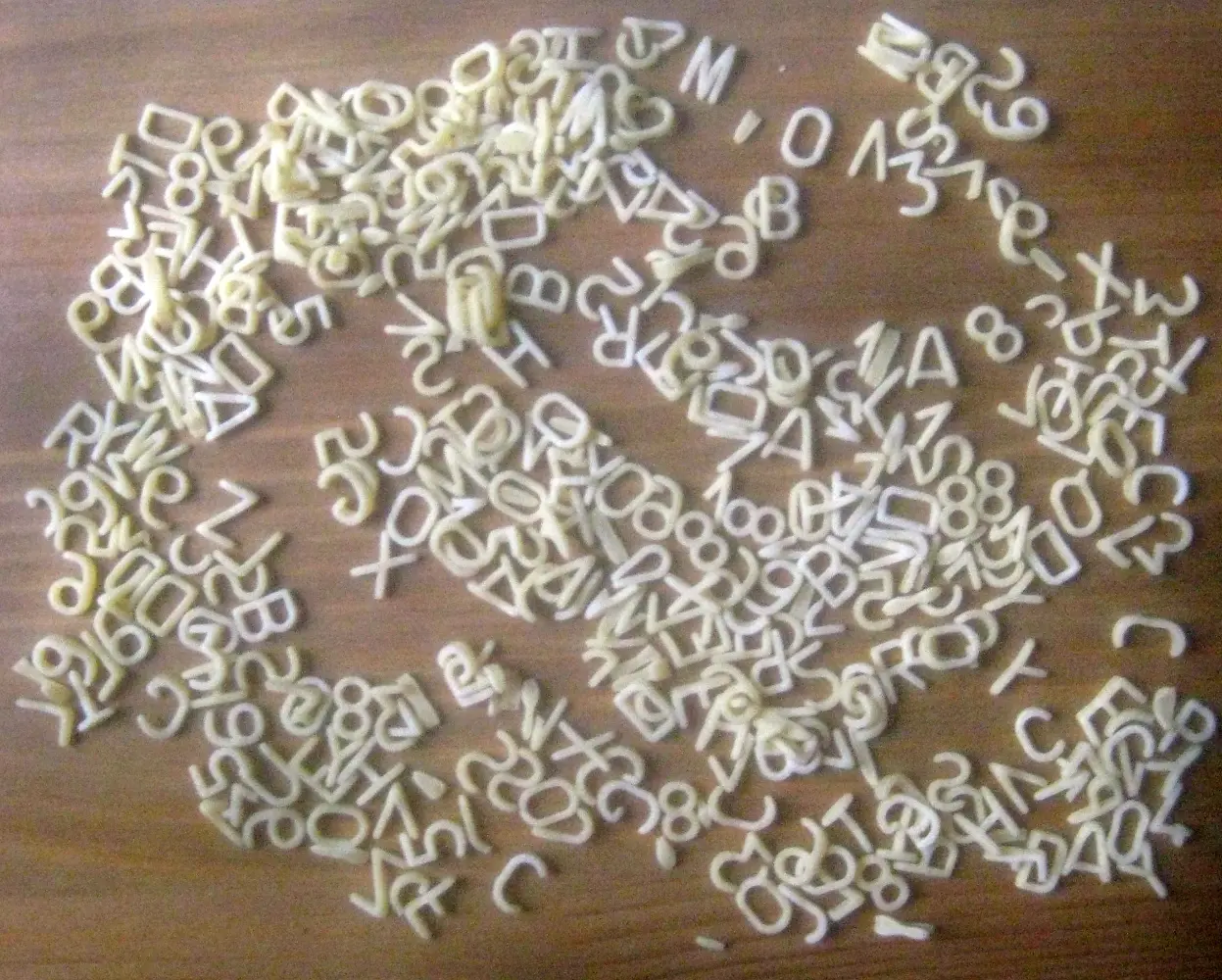
Alphabet pasta is tiny dried pasta cut into letters, and for many people it means a warm bowl of soup and a spoon spelling out a name. It belongs to the family of very small soup pasta known in Italy as pastina, where it is sold as alfabeto. Because the pieces are so small, they cook in minutes and are easy for young children to eat.
This guide covers where alphabet pasta comes from, how to cook it, what to make with it beyond tomato soup, and a few ways to use it away from the table.
A short history
Pasta shaped like letters is older than most people expect. One early mention appears in an 1883 cookbook from the Chicago Herald Cooking School, which lists “alphabet pastes” among its recipes. In the twentieth century, canned soups and tinned pasta, including the British favourite “Alphabetti Spaghetti” on toast, made the shape familiar in homes across Europe and North America.
The soup even gave English a phrase. In the 1930s, commentators described the many agencies created under Franklin D. Roosevelt’s New Deal as “alphabet soup”, because of the flood of initials such as CCC and TVA.
How the letters are made
The dough is a stiff mixture of semolina and water, forced through a die with letter-shaped openings and sliced into thin pieces by a rotating blade. Bronze dies leave a rougher surface that holds sauce better, while smooth dies give the slick texture of canned pasta. Producers have to control moisture and pressure carefully, or the letters swell and lose their shape when cooked.
Cooking tips
- Watch the clock. Dried letters usually take 4 to 6 minutes, and the gap between tender and mushy is short.
- Allow for carry-over. If you add them to soup, they keep cooking in the hot broth, so take them slightly under.
- Rinse only for cold dishes. For salads, rinse under cold water to stop the cooking. For soup, do not rinse, because the surface starch helps thicken the broth.
Storage tip: small pasta behaves like a sponge, so letters left in soup overnight swell and turn the broth thick. For leftovers, cook and store the pasta separately, then spoon some into each bowl before ladling the hot soup over it.
Ways to use it
Sopa de letras
In Mexico and much of Latin America, sopa de letras is a classic comfort food. The dry pasta is first toasted in oil until golden, then simmered in a tomato and onion broth. The toasting adds a nutty depth that plain boiling does not. Pati Jinich shares a traditional version.
Other ideas
- Clear broth: a simple chicken or vegetable broth with carrots and celery. In Germany, Buchstabensuppe is often served in a clear beef broth.
- Pasta salad: use the letters in place of macaroni.
- Risotto style: cook them slowly in broth, adding liquid gradually, for a creamy dish.
- Substitute: they can replace orzo, stelline or ditalini in many recipes.
Making them at home
You can cut letters from fresh pasta dough, though it takes patience. Use an egg dough of about 100 g of 00 flour to one large egg, rest it, and roll it very thin. Press out the letters with tiny fondant or cake-decorating cutters. Fresh letters cook in under a minute in boiling broth. The leftover dough can be chopped into rustic maltagliati for another meal.
Nutrition
Like other pasta made from durum wheat, alphabet pasta provides carbohydrate for energy and a few grams of protein per serving, and enriched versions add iron and B vitamins. Whole wheat versions raise the fibre, and gluten-free versions are made from rice, corn or legume flours. Served in broth with vegetables and a protein, it makes a balanced bowl. Details vary by brand, so check the label, and a database such as Nutrition Value gives typical figures.
Not just for eating
- Sensory play: dyed dry pasta fills sensory bins.
- Letter games: sorting letters, finding the first letter of a name, or spelling words helps with early literacy and picking up small objects.
- Craft: glued onto card, the letters make textured name tags and greeting cards.
If you are giving dry pasta to young children as a toy, supervise them. The pieces are small enough to be a choking hazard.
Buying and brands
Alphabet pasta is sold under many names, including alfabeto and sopa de letras. La Moderna is a familiar choice in Hispanic grocery stores, Barilla and De Cecco offer tiny shapes in some markets, and organic brands sell coloured vegetable versions. Number-shaped pasta is often sold alongside it.
Common questions
What is alphabet pasta called in Italian?
Alfabeto, a kind of pastina.
Is it healthy?
It can be part of a balanced meal, especially in a vegetable soup. Whole grain versions add fibre.
Can babies eat it?
It is soft when cooked and often one of the first solid foods for toddlers. As with any food, follow your paediatrician’s advice and serve it in age-appropriate portions.
Does it come in other shapes?
Yes. Many brands sell numbers, and some sell character shapes.
More tiny pasta
See our guides to stelline, acini di pepe and pastina. For cooking basics, read pasta cooking.
Related guides: compare alphabet pasta with other tiny shapes in best pasta for soup, or find swaps in the pasta substitution chart.

Syed Yasar Arafat is the founder of PastaLoverz.com and a food research enthusiast with a focused interest in pasta varieties, traditional Italian cuisine, and balanced eating. Through PastaLoverz.com, he publishes well-researched articles that explain pasta types, cooking methods, and nutritional considerations in clear, practical terms to help readers make informed food choices.