
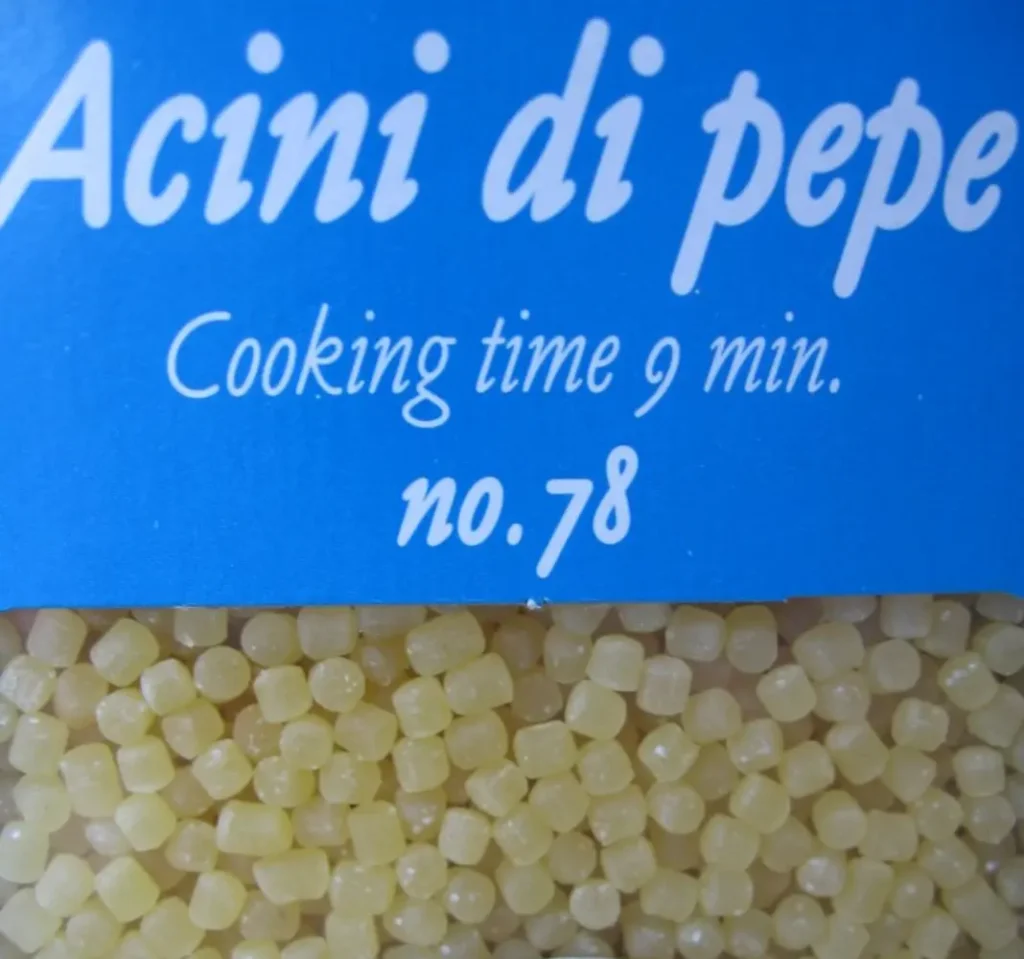

Acini di pepe are tiny, bead-shaped pasta, a type of pastina. The name means “peppercorns” or “seeds of pepper” in Italian, because the pieces are about the size of a peppercorn. They cook quickly and are best known in Italian-American wedding soup, but they also work in other soups, broths, cold salads and light comfort dishes. This guide covers what acini di pepe are, how to cook them without turning mushy, how they compare with couscous and orzo, and what to make with them.
What acini di pepe are
- Shape: tiny solid beads, smaller than orzo
- Made from: durum wheat semolina and water
- Cooking time: about 5 to 7 minutes
- Category: pastina, the general term for very small pasta
The shape is used across Italy and in Italian-American cooking. For background see the Wikipedia entry on acini di pepe and the ShareThePasta profile.
A note on “wedding soup”
Italian wedding soup is an Italian-American dish of small meatballs and greens in chicken broth, often with acini di pepe or another tiny pasta. The name comes from the Italian minestra maritata, “married soup”, which describes the way greens and meat go together, and not a wedding. Small pasta such as acini di pepe is a common addition in the American version. For more on small soup pasta, see pastina.
How to cook acini di pepe
Stovetop
- Bring salted water or stock to a boil (about 10 g of salt per litre of water).
- Add the pasta and stir gently in the first minute so it does not clump.
- Cook for about 5 to 7 minutes, starting to taste at 5. The beads overcook quickly.
- Drain through a fine-mesh sieve, since a standard colander lets the tiny pieces slip through.
In soup
Add the pasta to simmering soup for the last 6 to 10 minutes. A thick broth with lots of vegetables can slow cooking, so taste often. If you will keep or reheat the soup, cook the pasta separately and add it to each bowl, since the beads keep absorbing liquid. As a rough guide, use at least 4 cups of broth for every ½ cup of dry pasta.
See pasta cooking and pasta water for the basics.
Tip for leftovers: cook the pasta separately until about a minute short of done, drain, toss with a little olive oil, and keep it in the fridge for 3 to 4 days. Put a portion in each bowl and ladle hot soup over it. This keeps both the broth and the pasta in good condition.
How acini di pepe compare
| Staple | What it is | Texture | Best for |
| Acini di pepe | Tiny pasta beads | Smooth, slightly chewy | Brothy soups, cold salads |
| Orzo | Rice-shaped pasta | Firm, chewy | Pilafs, salads, baked dishes |
| Moroccan couscous | Dampened semolina granules, not pasta | Light and fluffy | Steamed side dishes, salads |
| Israeli (pearl) couscous | Toasted pasta pearls, close in size | Chewy, nutty | Salads and bowls |
| Stelline | Tiny stars | Soft | Clear broths, children’s bowls |
If you cannot find acini di pepe, use orzo, ditalini or stelline in wedding soup. See also ditalini, anelli and alphabet pasta.
Ways to use acini di pepe
- Italian-American wedding soup: with small meatballs, greens and a clear chicken broth.
- Chicken soup with dill: a lighter alternative to larger noodles.
- Minestrone: toast the dry pasta briefly in olive oil first for a nutty note.
- Cold lemon and feta salad: toss cooled pasta with lemon juice, olive oil, olives, tomatoes, herbs and feta. It behaves like pearl couscous when chilled.
- Brothy seafood soups: the small size suits delicate fish and shellfish.
For another salad, see Epicurious’ acini de pepe with spinach and feta.
Nutrition
Acini di pepe nutrition is similar to other small semolina pasta. As a rough guide, a 1/3 cup dry serving (about 57 g) has about 200 to 210 calories, 41 g of carbohydrate, 7 g of protein, 2 g of fibre and under 1 g of fat. Brands vary, so check the label. Enriched pasta also supplies iron and B vitamins. Orzo and couscous are very close per serving, and couscous is slightly higher in carbohydrate. Whole-wheat and legume versions add fibre. Add vegetables and a lean protein such as chicken, beans or fish to balance a bowl, and use broth-based sauces in place of cream-heavy ones.
Acini di pepe are a common first pasta for babies who already tolerate gluten, but always supervise young children and follow your paediatrician’s advice. They contain wheat, so they are not gluten-free.
Common questions
Is acini di pepe the same as pastina?
Acini di pepe is one type of pastina. Pastina is the general term.
Can I use it instead of couscous?
Yes, in salads and bowls. It is softer and more pasta-like.
Why does it turn mushy?
The small beads overcook in a minute or two and keep absorbing liquid. Taste at 5 minutes and stop at al dente.
How do I stop it clumping?
Stir right after adding it, and use plenty of water at a full boil.
Can I freeze it?
Yes. Freeze the cooked pasta separately from the soup, in airtight bags, for up to 2 months.
Can I toast it?
Yes. A few minutes in a dry pan or a little oil adds a nutty flavour.
How much per person?
About 1/3 cup dry, which makes roughly 1 cup cooked.
Keep exploring
See our guides to pasta pairing, chickpea pasta and common pasta mistakes.
Related guides: compare other small shapes in best pasta for soup, find swaps in the pasta substitution chart, or check typical times in the cooking time chart.

Syed Yasar Arafat is the founder of PastaLoverz.com and a food research enthusiast with a focused interest in pasta varieties, traditional Italian cuisine, and balanced eating. Through PastaLoverz.com, he publishes well-researched articles that explain pasta types, cooking methods, and nutritional considerations in clear, practical terms to help readers make informed food choices.