
Spaghetti alle vongole is an Italian pasta with clams, garlic, olive oil, white wine and parsley. There’s no cream, as the clam juices and starchy pasta water make a light, glossy sauce. It serves 4 and takes about 35 minutes, plus time to clean the clams.
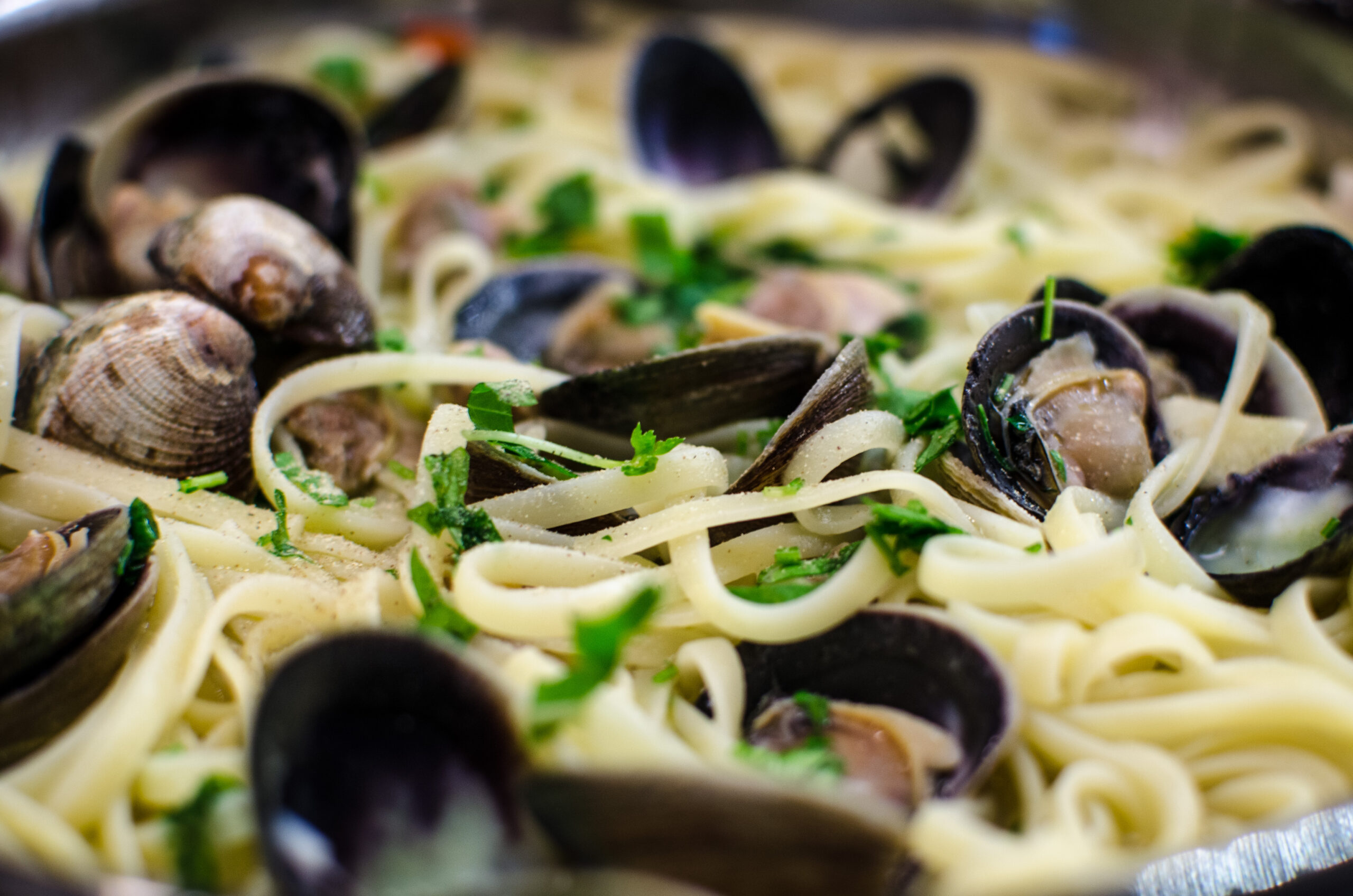
What is spaghetti alle vongole?
The name means “spaghetti with clams”. It’s a coastal Italian dish, and it’s made both with and without tomatoes. This version leaves them out so the clams stand out, but you can add some if you prefer.
Ingredients
- 400 g spaghetti
- 1 kg fresh live clams
- 4 tablespoons extra-virgin olive oil
- 4 garlic cloves, thinly sliced
- 120 ml dry white wine
- 1 small red chili, finely sliced, or a pinch of chili flakes
- A large handful of flat-leaf parsley, finely chopped
- Salt, for the pasta water
- A squeeze of lemon (optional)
Choosing and cleaning clams
Buy live clams from a reliable seafood supplier. They should smell clean, like the sea, and their shells should be closed or close when tapped. Throw away any that are cracked or stay open.
Soak them in a bowl of cold water for a while to help release sand, then rinse well. Some cooks use salted water, while others use plain. See the FDA seafood safety guide for more on buying and handling seafood.
Instructions
- Start the pasta water. Bring a large pot of water to a boil and salt it moderately, as clams are already salty.
- Cook the clams. Heat 2 tablespoons of oil in a large, deep skillet over medium-high heat. Cook half the garlic briefly until fragrant. Add the clams and wine, cover, and cook for several minutes, shaking the pan, until the shells open.
- Set them aside. Move the open clams to a bowl, and throw away any that stay closed. Strain the cooking liquid through a fine sieve to catch any grit, and keep it.
- Boil the spaghetti. Cook it until 2 minutes short of the packet time. Save about 250 ml of the cooking water, then drain without rinsing.
- Make the sauce. Wipe out the skillet and warm the remaining oil, garlic and chili over medium heat until the garlic is lightly golden. Add the clam liquid and simmer for 1 to 2 minutes.
- Finish in the pan. Add the spaghetti and a splash of pasta water, and toss for 1 to 2 minutes until glossy. Add more water if it looks dry, or keep tossing if it looks watery.
- Add the clams. Return the clams to the pan with the parsley and toss until hot. Taste before adding any salt, add lemon if you like, and serve right away.
Tips and common mistakes
- Keep the clam liquid. It’s the main flavor in the sauce.
- Don’t burn the garlic. Dark garlic is bitter and overpowers the clams.
- Don’t skip the pan finish. Tossing combines the starch, oil and clam juices. Our mantecatura guide explains why this works.
- Don’t overcook the pasta. It keeps cooking in the skillet.
- Don’t rinse the spaghetti. Rinsing removes the starch that helps the sauce cling.
- Skip the cheese. Seafood pasta like this is traditionally served without it.
Variations
- With tomatoes: add 150 to 200 g of halved cherry tomatoes with the garlic and chili.
- Without wine: use a little low-salt seafood stock, or water with a squeeze of lemon.
- Without chili: leave it out for a milder dish.
- With linguine: linguine is a very good alternative.
- With frozen clams: follow the packet instructions. The texture and flavor will differ, and they may release more liquid.
Serving and storage
Serve it with a green salad, lightly dressed arugula, grilled vegetables or crusty bread.
It’s best eaten fresh, so try to cook only what you need. Refrigerate any leftovers promptly in a sealed container and eat them within a day. Reheat gently in a skillet with a splash of water until piping hot, though the clams may turn rubbery.
Frequently asked questions
What clams should I use?
Small, fresh clams work best. The exact type will depend on what’s sold near you.
Why is my sauce watery?
There’s probably too much liquid. Toss the pasta over moderate heat until it reduces.
Why is it too salty?
Clams and their juices are naturally salty, so salt the pasta water moderately and taste before seasoning the sauce.
How do I keep sand out?
Soak and rinse the clams well, then strain the cooking liquid through a fine sieve.
Can I use bottled clam juice?
Yes, if the clams don’t release enough liquid. Use it carefully, as saltiness varies.
For more, see our guides to cooking pasta, pasta water and pasta pairing.

Syed Yasar Arafat is the founder of PastaLoverz.com and a food research enthusiast with a focused interest in pasta varieties, traditional Italian cuisine, and balanced eating. Through PastaLoverz.com, he publishes well-researched articles that explain pasta types, cooking methods, and nutritional considerations in clear, practical terms to help readers make informed food choices.