
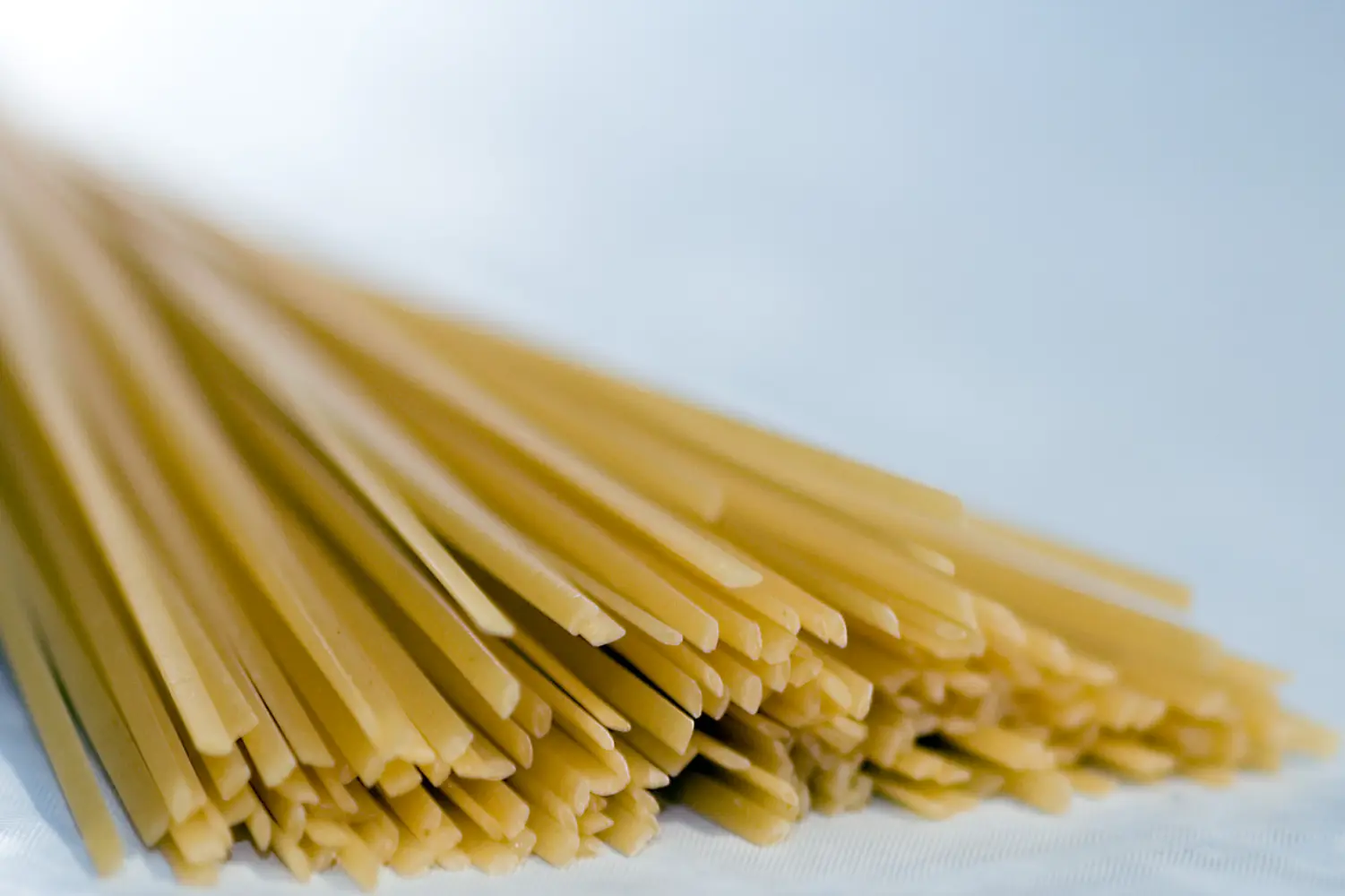
Linguine is a long, flat, narrow pasta from Liguria on Italy’s north-west coast. The name means “little tongues”, and the strands are slightly oval and about 3 to 4 mm wide, wider than spaghetti but narrower than fettuccine. That in-between shape suits seafood, olive oil, pesto and lighter tomato or cream sauces. This guide covers its origin, how it compares with similar pasta, how to cook it, and the classic dishes to try.
Origin
Linguine comes from Liguria, particularly around Genoa, a region famous for its seafood and basil pesto, two things linguine suits very well. It is traditionally made from durum wheat semolina and water, without eggs. For the pesto tradition, see the Academia Barilla recipe for pesto alla genovese and our pesto genovese with trofie. For more on the region, see our regional pasta guide. The idea that Marco Polo brought pasta from China is a myth. See pasta history.
Linguine compared with other long pasta
| Pasta | Shape and width | Dough | Region | Best with |
| Linguine | Slightly flat, about 3 to 4 mm | Semolina and water | Liguria | Pesto, clams, garlic and oil |
| Spaghetti | Round strands | Semolina and water | Southern Italy | Tomato, carbonara, cacio e pepe |
| Fettuccine | Flat ribbons, about 5 to 6 mm | Usually flour and eggs | Rome and central Italy | Cream and butter sauces |
| Bucatini | Thick, hollow strands | Semolina and water | Lazio | Amatriciana, spicy tomato |
| Tagliatelle | Flat ribbons, 6 to 8 mm | Flour and eggs | Emilia-Romagna | Ragù |
Linguine’s flat surface gives sauce slightly more to cling to than round spaghetti, while staying light. Heavy meat ragù is better suited to wider ribbons like pappardelle. For similar strands, see bavette and trenette.
How to cook linguine
- Use plenty of water, about 4 to 6 litres for 500 g of pasta, and salt it once it boils (roughly 10 g per litre).
- Add the linguine and stir during the first minute so the strands separate.
- Cook for about 8 to 10 minutes, or as the packet says. Taste a minute or two early.
- Save a cup of the starchy cooking water before draining. Do not rinse.
- Finish the pasta in the sauce: lift it with tongs into the pan and toss with a splash of cooking water for a minute. This Italian technique is called mantecatura. See our mantecatura guide.
The basics are covered in pasta cooking and pasta water. A main-course portion is about 75 to 100 g of dry linguine per person.
Classic linguine dishes
Linguine alle vongole (with clams)
Clams, garlic, white wine, parsley and olive oil. See our alle vongole recipe, which works with linguine too.
Linguine with pesto
Basil, pine nuts, garlic, Parmesan and olive oil. The flat strands carry the sauce evenly. Toss with pasta water off the heat so the basil stays bright.
Aglio e olio
Garlic, olive oil, chilli and parsley, a quick dish that depends on technique. For a similar quick garlic sauce, see our garlic butter Parmesan spaghetti.
Lemon, shrimp and seafood
Prawns, scallops or crab with lemon, garlic and herbs. See our lemon garlic shrimp and spinach pasta.
Alfredo and cream sauces
Alfredo traditionally uses fettuccine, but linguine makes a lighter version. See best pasta for Alfredo.
Ideas and pairings
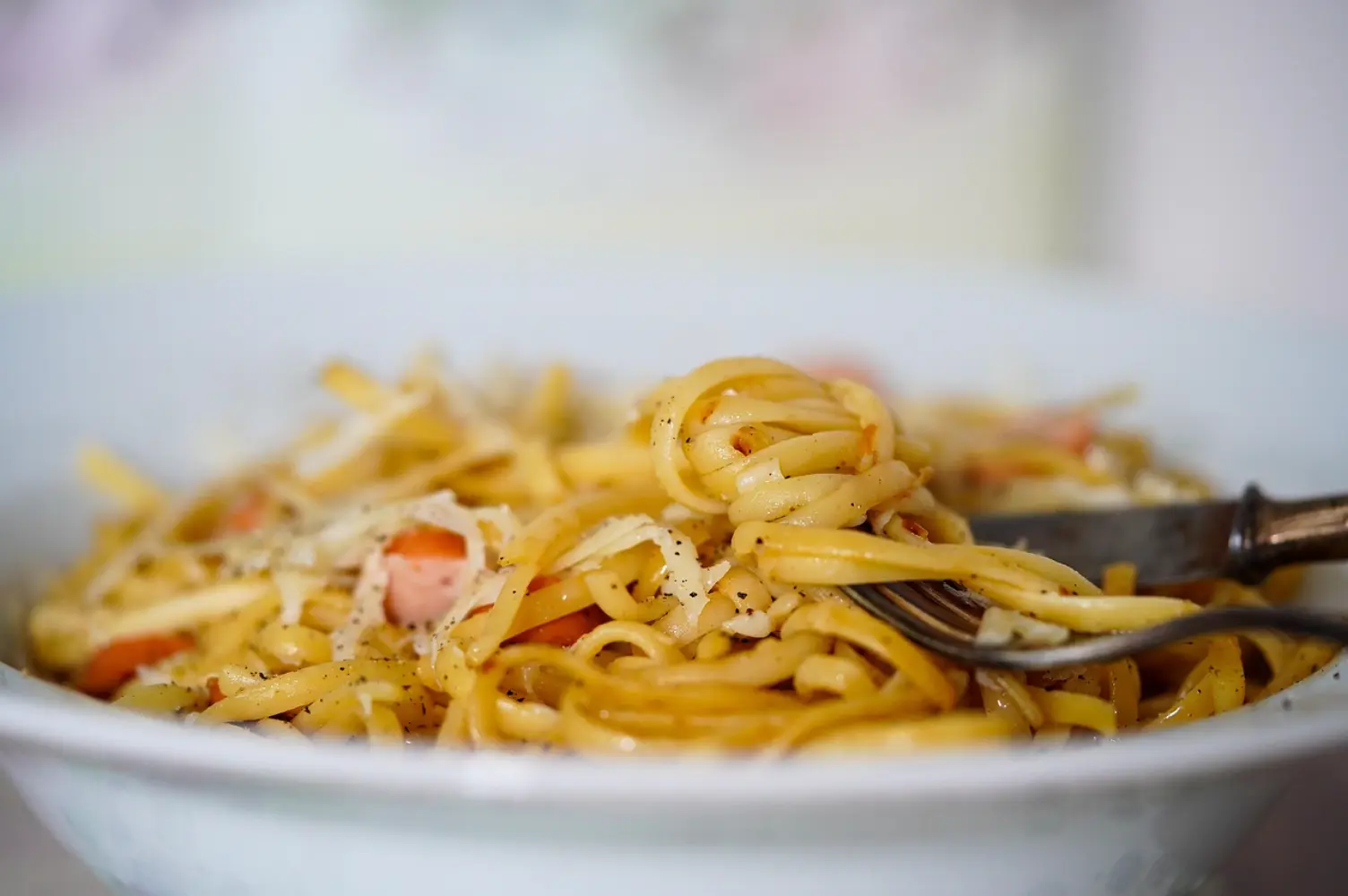
- With truffle cream sauce
- With avocado pesto, as in our creamy avocado pasta
- With mushrooms, as in our one-pan creamy mushroom pasta
- With roasted vegetables
Wine: Vermentino, Pinot Grigio or Sauvignon Blanc suit seafood and pesto dishes. More matches are in our pasta pairing guide and sauces guide.
Nutrition
A 2 oz (56 g) dry serving of ordinary linguine provides roughly 200 calories, about 40 to 42 g of carbohydrate and around 7 g of protein, with little fat. Whole-wheat versions have more fibre, and enriched pasta adds iron and B vitamins. Check the label for your brand. The sauce and portion size determine how heavy the dish is: olive oil, vegetables and seafood make a lighter plate than cream or butter.
Common mistakes
- Overcooking, so the strands turn soft.
- Too little water, which makes the strands stick.
- Rinsing the pasta.
- Drowning the pasta in sauce. It should be lightly coated.
- A very heavy ragù, which suits wider pasta.
More slips are listed in common pasta mistakes.
Storing leftovers
Toss cooled linguine with a little olive oil, store it in an airtight container in the fridge for 3 to 4 days, and reheat it in a pan with sauce and a splash of water for a minute or two. Avoid the microwave, which can dry out the strands. Lightly sauced linguine can be frozen, though the texture softens.
Common questions
Is linguine the same as spaghetti?
No. Linguine is flatter and slightly wider than spaghetti, which is round.
Is linguine egg-free?
Traditionally yes, made from semolina and water. Fresh versions sometimes contain egg, so check the label.
Can I use linguine instead of fettuccine?
Yes, though it is thinner and lighter, so it suits delicate sauces best.
Which is better with seafood, linguine or spaghetti?
Both work. Linguine’s flat shape holds oil-based seafood sauces slightly better.
Can it be used in salads?
Yes, cooked al dente and tossed with olive oil to prevent sticking.
What is a good substitute?
Spaghetti, bavette or fettuccine, depending on the sauce.
Is whole-wheat linguine different?
It has a nuttier flavour and a firmer texture, and more fibre.
Keep exploring
For a quick weeknight dish, try the linguine aglio e olio video, or read about other shapes in our pasta shapes guide.
Related guides: find close swaps in the pasta substitution chart, check typical times in the cooking time chart, or browse the pasta shapes A to Z.
For a baked American dish made with long pasta, chicken and a creamy mushroom sauce, see our pasta tetrazzini guide.

Syed Yasar Arafat is the founder of PastaLoverz.com and a food research enthusiast with a focused interest in pasta varieties, traditional Italian cuisine, and balanced eating. Through PastaLoverz.com, he publishes well-researched articles that explain pasta types, cooking methods, and nutritional considerations in clear, practical terms to help readers make informed food choices.