
Pappardelle pasta is one of the most iconic wide ribbon pastas in Italian cuisine. Pappardelle pasta is known for its broad, flat strands that hold thick sauces beautifully, making it a favorite for hearty dishes.
1: What is Pappardelle Pasta?
It is a broad, flat ribbon pasta traditionally made with eggs and flour. Its width and texture make it ideal for clinging to thick ragù, mushroom sauces, and cream-based preparations.
2:A Brief History and Origin
Pappardelle pasta traces its roots to Tuscany, where wide ribbon pastas evolved to suit the region’s bold, rustic cooking style. The name is widely believed to come from the Italian verb pappare, meaning “to gobble up” or “to eat with pleasure,” a fitting description for a pasta designed to carry generous, hearty sauces.
Historically, pappardelle was paired with game meat ragùs such as wild boar, hare, or venison. These long-simmered sauces needed a pasta with width and strength, and pappardelle’s broad ribbons provided both. The large surface area allowed thick sauces to cling evenly, ensuring deep flavor in every bite.
In central Italy, especially rural Tuscany, this pasta reflected seasonal cooking and local ingredients. Fresh eggs, stone-ground flour, and slow-cooked meats shaped dishes meant to be filling, comforting, and shared. Over time, pappardelle became a symbol of Tuscan cuisine, known for elevating simple ingredients through technique and patience.
Today, pappardelle remains closely associated with rich, slow-cooked sauces, carrying forward a tradition built on robust flavors, regional identity, and the joy of eating well.
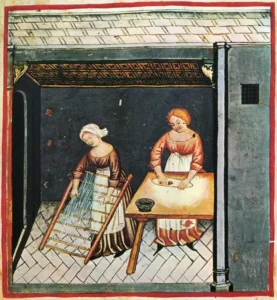
3:What Makes It Different from Other Ribbon Pastas
Pappardelle pasta stands out among other ribbon shapes for its exceptional width. It is noticeably wider than Fettuccine or tagliatelle, which gives it a greater surface area to support bold, chunky sauces. This extra width prevents heavy ingredients from sliding off and keeps thick ragùs balanced on the pasta rather than pooling at the bottom of the plate.
The broader ribbon also changes the eating experience. Pappardelle delivers a fuller, more substantial bite that matches the intensity of hearty sauces made with slow-cooked meats, mushrooms, or game. Where narrower ribbons might twist or collapse under weight, pappardelle stays flat and composed.
Fresh pappardelle often features fluted or ruffled edges, created by hand-cutting or fluted wheels. These edges increase sauce grip and add a rustic texture that enhances mouthfeel. Dried pappardelle, by contrast, typically has straight, clean edges, offering a more uniform bite while still retaining the pasta’s signature width.
Because of these differences, pappardelle excels in dishes that demand structure and presence. It is not designed for light, watery sauces. Instead, it shines when paired with rich, textured preparations that need a pasta capable of carrying real weight.
4:How to Choose Fresh vs Dried Pappardelle Pasta
Freshly cooked eggs quickly develop a silky texture, highlighting their flavor. Dried holds up better in long-simmered sauces and offers a firmer bite. Both work, depending on the sauce and occasion.
5:Seven Ways to Cook Pappardelle Pasta
Why does pappardelle work so well across so many recipes?
Pappardelle’s wide ribbons and sturdy structure allow it to carry sauces that would overwhelm narrower pastas. From slow-braised meats to vegetable-forward and even fusion dishes, it performs best when flavor and texture matter.
1) Classic wild boar or pork ragù
A Tuscan cornerstone. Slow-simmered pork or wild boar breaks down into tender shreds that cling to the broad ribbons. The tomato-rich sauce coats the pasta evenly, creating deep, savory bites that define traditional pappardelle dishes.
2) Short-rib ragù
Braise beef short ribs until fork-tender, then shred the meat and reduce the cooking liquid into a glossy sauce. Pappardelle’s width supports the richness and weight of the sauce without collapsing.
3) Mushroom and brown butter
Caramelized mushrooms paired with nutty brown butter create a luxurious vegetarian option. A squeeze of lemon adds balance, while the pasta’s surface beautifully holds the butter-based sauce.
4) Creamy guanciale and arugula
Crisp guanciale renders fat that forms the base of the sauce. Toss with pasta water, butter, and aged cheese, then fold in fresh arugula at the end for a peppery contrast that cuts through richness.
5) Seafood pappardelle
Scallops, shrimp, or clams cooked with white wine, garlic, and parsley create a lighter yet elegant dish. Keep the sauce restrained so the seafood stays front and center while the pasta provides structure.
6) One-pan primavera
Cook seasonal vegetables in stock or a light cream sauce, then finish the pappardelle in the same pan. The pasta absorbs flavor as it cooks, making this a practical and satisfying weeknight meal.
7) Fusion: Dan Dan–inspired pappardelle
A bold modern twist. Minced pork, chili crisp, and Sichuan pepper create heat and numbing spice that pair surprisingly well with wide ribbons. The pasta tempers the intensity while holding the sauce effectively.
For a deeper background on Tuscan pappardelle traditions and techniques, explore The Pasta Project’s detailed guide.
These seven approaches show why pappardelle remains one of the most adaptable ribbon pastas. It handles richness, texture, and bold flavors with confidence, making it ideal for both classic and creative cooking.
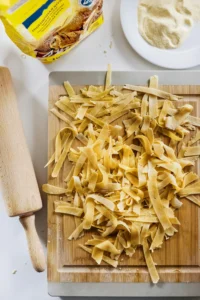
6:Sauce Pairing Rules and Flavor Matches
Heavy sauces match the noodle’s weight.
Use sharp cheeses, such as Pecorino or Parmigiano.
Add fresh herbs only at the end.
Brighten rich dishes with a touch of acidity.
- 101 cookbooks
7:Step-by-Step Homemade Pappardelle Pasta Recipes
Ingredients
300 g flour
3 eggs
1 tbsp olive oil (optional)
Pinch of salt
Method
Make a flour mound with a well in the center, then add eggs, salt, and oil.
Beat the eggs, then incorporate the flour until a dough forms.
Knead 8–10 minutes until smooth. Rest 30 minutes.
Roll the thin sheets into ribbons approximately 2–3 cm long.
Dry slightly, then boil 2–4 minutes.
Toss with sauce and serve. Wikipedia

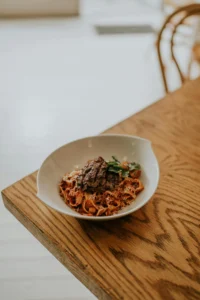
8:Common Mistakes and Quick Fixes
Overcooking: Pull when al dente.
Too little salt: Season pasta water generously.
Undersaucing: Use reserved pasta water for balance.
Crowding the pan: Toss in batches for even coating.
9:Storage, Leftovers, and Reheating of Pappardelle pasta
Refrigerate cooked pasta up to 3 days, tossing lightly in oil. Reheat with a splash of stock. Store uncooked fresh ribbons in the freezer for up to a month
Our Cappelliti, chickpea, and Soba pastas will further broaden your pasta knowledge, serving as our valuable pasta Guides.
10:FAQs
Q: What width should authentic pappardelle pasta be?
Authentic pappardelle is typically 2–3 cm wide. This generous width is essential to its identity and allows the pasta to support heavy, chunky sauces without folding over or losing balance.
Q: Can pappardelle pasta be used for seafood dishes?
Yes. Pappardelle works well with seafood when paired with light, controlled sauces. Firm shellfish such as shrimp, scallops, or clams pair best. Avoid watery sauces, which can overwhelm the wide ribbons.
Q: How long does fresh pappardelle pasta take to cook?
Fresh pappardelle usually cooks in 2–4 minutes, depending on thickness. Stir gently and start tasting early. The ideal texture is tender with a slight bite, not soft or limp.
Q: Is pappardelle pasta an egg pasta?
Yes. Traditional pappardelle is an egg-based pasta, typically made with eggs and flour. The eggs add richness, color, and elasticity, helping the wide ribbons hold their shape.
Q: Is pappardelle pasta the same as Fettuccine or tagliatelle?
No. While all are ribbon pastas, pappardelle is significantly wider. Fettuccine and tagliatelle suit lighter sauces, while pappardelle is designed for hearty, textured preparations.
Q: Does it work better fresh or dried?
Fresh pappardelle pasta offers a silkier texture and cooks quickly, making it ideal for butter-based and cream sauces. Dried pappardelle pasta provides a firmer bite and works well with long-simmered ragùs. Both are traditional.
Q: What sauces pair best with it?
It pairs best with slow-cooked meat ragùs, mushroom sauces, cream-based sauces, and rich vegetable preparations. Its width and surface area help it evenly carry bold flavors.
Q: How much should I serve per person?
For a main course, plan about 80–100 g of dried pappardelle per person or 100–120 g if fresh. Rich sauces often require slightly smaller portions.
Q: Should pappardelle pasta be rinsed after cooking?
No. Rinsing removes surface starch that helps sauces adhere. Always reserve some pasta water to adjust consistency and finish the dish properly.
Q: Why does it sometimes stick together?
Because of its width, it needs plenty of boiling water and gentle stirring during the first minute. Finishing the pasta in the sauce also helps separate the ribbons and evenly coat them.
Q: What is the best substitute for pappardelle pasta?
Answer: The best substitute for pappardelle pasta is tagliatelle. While slightly narrower, tagliatelle is also a flat, egg-based ribbon pasta that holds heavy meat ragùs exceptionally well. For robust, chunky sauces, you can also use lasagna sheets cut into wide strips or fettuccine as a secondary alternative.
Q: Is pappardelle pasta always made with eggs?
Answer: Traditionally, yes. Authentic Tuscan pappardelle is an egg pasta (pasta all’uovo) made with a high ratio of egg yolks to flour, gives the wide ribbons their characteristic rich flavor, golden color, and velvety texture. While some commercial dry brands offer a water-and-semolina version, the classic recipe relies on eggs for structural strength.
Q: Why does rich ragù pair best with wide ribbon pasta?
Answer: Thick, slow-cooked ragù pairs best with wide ribbon pasta because of the increased surface area. Narrower noodles like spaghetti allow heavy minced meats and chunky vegetables to slide off and pool at the bottom of the plate. Pappardelle acts as a sturdy vehicle, allowing thick sauces to cling evenly to every single bite.
Q: What is the difference between pappardelle and tagliatelle?
Answer: The main difference between pappardelle and tagliatelle is their width. Tagliatelle ribbons are typically about 6mm to 8mm wide, making them ideal for standard Bolognese. Pappardelle ribbons are much wider, measuring between 2cm to 3cm (up to 1 inch), which gives them the extra structural strength needed to carry heavier, rustic game meats and wild boar ragù.
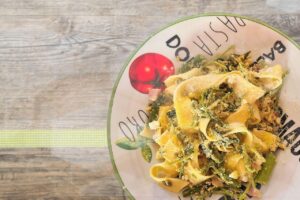
Q: Why do heavy Tuscan game ragùs pair best with pappardelle pasta?
A: Thick, slow-cooked Tuscan ragùs pair best with pappardelle pasta due to the physics of its broad surface area. Narrower noodles like spaghetti or linguine lack the physical structure to support chunky minced meats, wild boar, or braised root vegetables, causing these heavy ingredients to slide off and pool at the bottom of the plate. Because pappardelle pasta is traditionally cut into wide, flat ribbons, it acts as a sturdy culinary vehicle. The expansive surface area allows viscous, fat-emulsified sauces to coat every square millimeter evenly, ensuring you get a perfectly balanced distribution of meat, sauce, and pasta in every single bite.
Q: What is the ideal thickness when rolling out homemade pappardelle pasta?
A: When crafting fresh pappardelle pasta from an egg dough, the ideal thickness is slightly more substantial than what you would roll for a delicate sheet of lasagna or angel hair. You should aim for a thickness of roughly 1 millimeter (typically setting number 2 or 3 on a standard counter-top crank pasta machine). Because pappardelle pasta is cut into incredibly wide ribbons (up to 3 centimeters), rolling the dough too thin will cause the broad sheets to tear during the boiling process or turn mushy when tossed in a heavy skillet. Maintaining a 1mm thickness ensures the wide ribbons retain their signature rustic integrity and provide a satisfying, toothsome al dente bite.
Q: How do you prevent dried pappardelle pasta nests from breaking in the box?
A: Commercial manufacturers package dried pappardelle pasta in coiled, nested bundles specifically to protect the ultra-wide, brittle edges from shattering during shipping and handling. To keep these delicate nests intact until they reach the boiling pot, always store the box in a cool, dry pantry away from heavy items that might crush the packaging. When it is time to cook, do not forcefully pull the dried nests apart with your hands. Drop the intact nests directly into a generous pot of rapidly boiling, heavily salted water. Within 30 to 45 seconds, the heat will naturally soften the starch structure, allowing the long ribbons to unfurl safely on their own without snapping.
Q: Is pappardelle pasta suitable for light, olive-oil-based sauces?
A: Generally, pappardelle pasta is not recommended for thin, delicate, or purely olive-oil-based sauces like aglio e olio. Light oils do not possess the viscosity required to cling to such an expansive surface area, which often results in a plate of slick, heavy noodles sitting in a puddle of separated oil. However, if you want a lighter preparation, you can adapt pappardelle pasta by incorporating a starch-based binding agent. Tossing the wide ribbons with roasted summer vegetables, fresh herbs, and a generous splash of starchy, reserved pasta cooking water allows the oil to emulsify into a light, velvety glaze that perfectly coats the broad strands.
Summary
This comprehensive culinary guide explores pappardelle pasta, the iconic, wide ribbon pasta deeply rooted in Tuscany’s culinary traditions. Characterized by its broad, flat shape and traditionally prepared as an egg-based pasta (pasta all’uovo), authentic pappardelle features an exceptional width—typically measuring 2–3 cm wide—giving it the optimal surface area and structural strength required to carry heavy, chunky sauces without folding over.
While commonly compared to narrower alternatives like tagliatelle and fettuccine, pappardelle uniquely excels at clinging to robust flavor profiles.
It acts as the perfect vehicle for slow-cooked comfort food, ranging from a classic wild boar or pork ragù and tender short-rib ragù to rustic mushroom and brown butter sauces.
Whether utilizing fresh or dried ribbons, mastering proper cooking techniques—such as boiling until perfectly al dente and utilizing reserved pasta water to emulsify the sauce—ensures an authentic Italian dining experience that beautifully balances texture, tradition, and rich flavor.
11:Conclusion
Pappardelle pasta stands out because it was built for substance. Its wide ribbons, egg-rich dough, and sturdy texture allow it to carry bold sauces that would overwhelm narrower pastas. From slow-simmered game ragùs to mushroom-forward vegetarian dishes and carefully balanced seafood sauces, pappardelle pasta delivers depth, balance, and presence on the plate.
When cooked correctly and paired with the right ingredients, pappardelle transforms simple components into dishes that feel generous and refined at the same time. It is a pasta that rewards patience, quality ingredients, and thoughtful sauce pairing.
Comparison Table: Ribbon Pastas & Best Culinary Pairings
| Pasta Shape | Average Width | Traditional Base | Textural Characteristic | Best Sauce Match & Culinary Use |
| Pappardelle | 2–3 cm (Up to 1 inch) | Egg-based dough (pasta all’uovo) | Broad, ultra-wide ribbon with high surface area; substantial, heavy bite. | Heavy, chunky sauces, slow-cooked wild boar or pork ragù, short rib, and rustic mushrooms. |
| Tagliatelle | 6–8 mm | Egg-based dough | Flat, mid-width ribbon; delicate yet sturdy structural strength. | Classic Bolognese meat sauce, smooth beef ragùs, and thick cream-based preparations. |
| Fettuccine | 3–5 mm | Egg or water-and-semolina | Narrower flat ribbon; smooth, uniform texture that yields to lighter fats. | Alfredo sauce, rich butter-and-parm emulsions, chicken, and creamy seafood pairings. |
| Lasagna (Cut) | Varies (Hand-cut strips) | Egg-based dough | Rustic, variable hand-cut flat sheets; highly versatile substitute. | Robust, hearty meat sauces and layered, slow-simmered comfort foods. |
Call to Action
Bring pappardelle pasta into your kitchen and cook it the way it was meant to be enjoyed. Try a classic Tuscan ragù, experiment with mushrooms or seafood, or explore modern twists that let the wide ribbons shine.
Explore more detailed pasta guides, traditional techniques, and authentic pairing advice on PastaLoverz.com. Save this guide, share it with fellow pasta lovers, and keep discovering how the right pasta shape can elevate every meal.
Pasta Cooking: 9 Powerful Secrets for Perfect Results
Casarecce Pasta: 11 Essential Secrets for Perfect Sauce
Rigatoni Pasta: 7 Reasons It’s the Best Shape for Big Flavor
Bucatini Pasta: 7 Powerful Secrets for Perfect Recipes
Cappelletti Pasta: 7 Amazing Secrets of This Italian Classic
Are our Valuable Contributions and informative hubs
Pro Tip from PastaLoverz: When working with exceptionally wide ribbons like pappardelle pasta, always finish cooking the noodles directly in your sauce skillet along with a splash of starchy, reserved pasta water. Because of their broad surface area, these wide ribbons can dry out and clump together almost instantly if left to sit in a colander. Tossing them immediately into a simmering ragù or cream emulsion creates a velvety glaze that binds the sauce directly to the dough. For more expert culinary troubleshooting and authentic Italian pairing guides, check out our master resources right here on PastaLoverz.com.

Syed Yasar Arafat is the founder of PastaLoverz.com and a food research enthusiast with a focused interest in pasta varieties, traditional Italian cuisine, and balanced eating. Through PastaLoverz.com, he publishes well-researched articles that explain pasta types, cooking methods, and nutritional considerations in clear, practical terms to help readers make informed food choices.

3 Responses