
Bucatini pasta


Bucatini pasta is a classic Italian noodle known for its long, hollow shape. Bucatini pasta looks similar to spaghetti, but its tiny holes allow sauces to coat both the outside and inside of the strand.

The pasta is strongly associated with the cuisine of Rome and the surrounding region of Lazio. Because of its structure, bucatini pairs beautifully with bold and hearty sauces. One of the most famous dishes is bucatini all’amatriciana, a traditional recipe featuring tomato, guanciale, and pecorino cheese.
Contents hide

Quick overview: What is Bucatini Pasta?

Bucatini pasta is a long, tubular pasta with a hollow center. It resembles thick spaghetti, but with a hole running through the middle. That hole is the simple innovation that defines the pasta’s eating experience.

Because the tube collects sauce inside, Bucatini pasta delivers a more concentrated, saucy bite than solid noodles. It is sturdy, satisfying, and ideal for bold, textured sauces.

SPAGHETTI

Why Bucatini Pasta matters in Italian cooking?

Bucatini pasta is a mainstay in Roman and Lazio cuisine. Its structure makes it an excellent partner for preparations that use cured pork, tomatoes, or slow-cooked ragù.

Practical reasons explain its popularity. The hollow center holds sauce; the thicker body offers a pleasing chew; and the shape resists being overwhelmed by strong ingredients. You will also like to read our complete linguine pasta guide for cooking tips and serving ideas.

History and origin of Bucatini Pasta

The name “bucatini” comes from the Italian word buco, meaning hole. Regional dialects sometimes call it perciatelli. Bucatini has deep roots in Lazio, where it pairs with local ingredients like guanciale and Pecorino Romano.

While its exact birthplace is debated, Bucatini’s culinary home is clear: it belongs to Roman tables and the dishes that built the region’s reputation for robust, ingredient-driven cooking.

Pasta History: Ancient illustration of traditional pasta making in a medieval kitchen, showing historical dough preparation and drying techniques.

Shape, production, and texture — why the hole counts

Bucatini is produced by extrusion. Dough is pushed through a die that shapes the tube and cuts it to length. The method matters: bronze-drawn dies give a rougher surface that helps sauce cling, while smooth dies produce a sleeker mouthfeel.

The hollow center affects texture. Compared to solid spaghetti, Bucatini has a denser bite and more surface area for sauce to cling to. Thin sauces can sit inside the tube, while textured sauces cling to the outside.
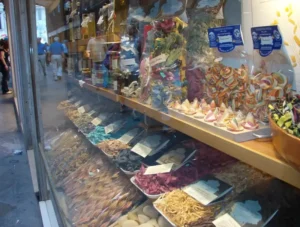
Fresh, dried, and gluten-free pasta types displayed for sauce pairing.


Classic recipes of Bucatini Pasta that make it sing

Bucatini all’Amatriciana

It is the canonical pairing: guanciale, tomatoes, Pecorino Romano, and red chili. Crisp the guanciale until the fat renders, add tomatoes and a pinch of heat, then toss the Bucatini in the pan to finish.

With pork ragù

Slow-cooked pork shoulder or a mixed pork ragù with pancetta makes a clingy, meat-forward sauce that fills the tubes and clings to the outside. The balance of meat, fat, and pasta is particularly satisfying.

Lighter takes

Don’t let the tube fool you—Bucatini works with brighter preparations. Lemon, olive oil, garlic, and parsley combine to create a simple sauce that is packed inside the tube. A loose pesto or a ricotta toss also plays well.

Read our complete Ravioli pasta guide for recipes and cooking tips, also.

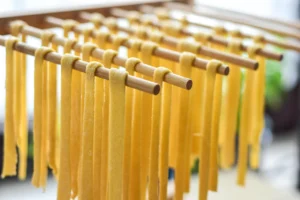
Freshly made long pasta strands hanging to air-dry on a traditional wooden pasta drying rack.

How to cook Bucatini pasta perfectly — practical steps

  1. Bring a large pot of water to a rolling boil; salt it generously so it tastes like the sea.
  2. Add Bucatini and stir immediately to prevent sticking. Use a long-handled spoon to gently separate the strands.
  3. Because Bucatini is thicker, check for al dente a minute or two after the package time suggests.
  4. Reserve at least one cup of pasta water before draining.
  5. Finish the Bucatini in the saucepan with a splash of pasta water for 30–60 seconds to let the sauce cling and emulsify.
  6. Add grated Pecorino or Parmesan off the heat to avoid a grainy cheese texture.

These practical steps reduce common issues such as splintered tubes, bland pasta, or sauces that refuse to cling.
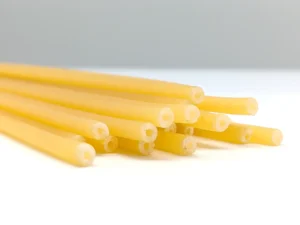

A bundle of straight, uncooked bucatini pasta noodles resting on a white surface, showcasing their unique thick and hollow shape.

Pairing, serving, and plating suggestions for Bucatini Pasta

Both classic and modern pairings work beautifully with bucatini. For bucatini all’amatriciana, pair it with a medium-bodied red wine such as Sangiovese, which balances the richness of guanciale and tomato. For lighter lemon- or seafood-based bucatini dishes, a crisp white wine like Vermentino enhances freshness without overpowering delicate flavors. Rosé wines also pair well with vegetable-based sauces, especially those featuring zucchini or cherry tomatoes.

When serving, use wide bowls rather than flat plates to help the sauce collect at the base while keeping the pasta warm. Bucatini benefits from generous saucing, as the hollow center holds liquid and intensifies flavor with every bite. For added texture, consider finishing the dish with a drizzle of extra virgin olive oil or a touch of reserved pasta water to create a glossy finish.

For presentation, twirl bucatini into tight nests using a carving fork or tongs for a clean, restaurant-style look. Shorter lengths can be folded into a neat loop to highlight the pasta’s hollow center. Finish with freshly cracked black pepper, a sprinkle of finely grated Pecorino Romano, and optional garnishes such as fresh parsley, basil, or lemon zest for visual contrast and flavor balance.

A selection of spicy sauces and lemons used for perfect pasta pairing and seasoning.

: Great pasta starts with mastering the basics: proper cooking technique, correct water usage, smart sauce pairing, and avoiding common mistakes. These fundamentals directly impact texture, flavor, and how well the sauce clings to pasta. By following a reliable pasta cooking guide, understanding water science for pasta, choosing the best pasta for each sauce, and learning common pasta mistakes, you can consistently cook pasta that tastes balanced, structured, and restaurant-quality.

Pasta Cooking: 9 Powerful Secrets for Perfect Results

Casarecce Pasta: 11 Essential Secrets for Perfect Sauce

Rigatoni Pasta: 7 Reasons It’s the Best Shape for Big Flavor

Cappelletti Pasta: 7 Amazing Secrets of This Italian Classic

Linguine Pasta: 7 Amazing Secrets You Should Know

Above are our valuable contributions and Informational hubs.
Fresh, dried, and gluten-free pasta types displayed for sauce pairing.

Frequently Asked Questions About Bucatini Pasta

Q: What is bucatini pasta?

Bucatini is a long, thick pasta similar to spaghetti, but with a hollow center.

Q: Is bucatini the same as spaghetti?

No. Bucatini is thicker than spaghetti and has a hole through the center, while spaghetti is solid.

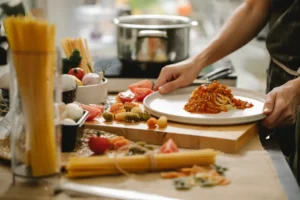
A chef adding freshly Bucatini pasta to a plate in a kitchen, with raw pasta strands, a boiling pot, and fresh ingredients visible on the wooden countertop.

Q: What does bucatini pasta taste like?

Bucatini has a neutral wheat flavor, but its hollow shape holds sauces better, making dishes taste richer.

Q: Why does bucatini have a hole?

The hole helps trap sauces inside the pasta, improving texture and flavor with every bite.

Q: What sauce is best for bucatini pasta?

Thick sauces like Amatriciana, Carbonara, meat sauces, and rich tomato sauces work best with bucatini.

Q: What is bucatini all’amatriciana?

Bucatini all’amatriciana is a classic Italian dish made with tomato sauce, guanciale, Pecorino cheese, and chili.

Q: Is bucatini pasta Italian?

Yes. Bucatini is a traditional Italian pasta commonly used in Roman and central Italian cuisine.

Q: How long does bucatini pasta take to cook?

Bucatini typically takes 9 to 12 minutes to cook al dente, depending on thickness and brand.

Q: Why is bucatini sometimes hard to find?

Bucatini production is slower due to its hollow shape, which can limit availability in some regions.

Q: Can bucatini be used instead of spaghetti?

Yes. Bucatini can replace spaghetti in many recipes, especially when thicker sauces are involved.

Q: Is bucatini pasta good for Carbonara?

Yes. Bucatini works very well with Carbonara because it holds the creamy sauce inside the tube.

Q: Is bucatini pasta healthy?

Bucatini can be part of a balanced diet, especially when paired with vegetables, lean proteins, or whole-grain versions.

Q: Is bucatini pasta hollow all the way through?

Yes. Authentic bucatini has a continuous hole from one end to the other.

Q: What is the difference between bucatini and linguine?

Bucatini is thicker and hollow, while linguine is flat and solid.

Q: Is bucatini pasta chewy?

Bucatini has a firmer, chewier bite compared to spaghetti due to its thickness.

Q: Can bucatini pasta be baked?

Yes. Bucatini can be used in baked pasta dishes, especially with thick sauces and cheese.

Q: What region of Italy is bucatini from?

Bucatini is strongly associated with Rome and the Lazio region of Italy.

Q: Does bucatini hold sauce better than spaghetti?

Yes. The hollow center allows bucatini to hold more sauce than spaghetti.

A selection of spicy sauces and lemons used for perfect pasta pairing and seasoning.

Q: Is bucatini suitable for vegetarian recipes?

Yes. Bucatini pairs well with vegetable-based sauces, cheese sauces, and olive oil preparations.

Q: What pasta is closest to bucatini?

Perciatelli is the closest pasta type and is often considered a regional name for bucatini.

Q: Can bucatini pasta be broken before cooking?

No, bucatini should not be broken before cooking. Its long, hollow shape is designed to evenly distribute sauce along its full length, and breaking it reduces both texture and sauce retention. Authentic Italian cooking keeps bucatini whole.

Q: Can you use bucatini for cold pasta salads?

Yes, bucatini can be used for cold pasta salads, but it should be cooked al dente and lightly coated with olive oil after draining. Its hollow center holds dressing well, though shorter pasta shapes are usually more common for cold dishes.

Q: What is the difference between bronze-die and Teflon-extruded bucatini?

The method used to extrude bucatini radically alters how it interacts with sauces. Bucatini produced using traditional bronze dies (trafilata al bronzo) emerges with a rough, matte, and highly porous surface texture. This deliberate roughness acts like Velcro for starchy sauces, locking in emulsions. Conversely, mass-produced industrial bucatini extruded through modern Teflon dies has a slick, shiny exterior. While Teflon extrusion is faster and cheaper, the smooth surface lacks capillary grip, causing fluid sauces to slide off the noodle and pool at the bottom of your bowl.

Q: Why does bucatini cause more sauce splattering than spaghetti, and how do you eat it?

Because bucatini is significantly thicker, heavier, and structurally rigid due to its hollow core, it behaves differently on the plate than solid strands. It resists tightly coiling around the prongs of a fork. When you attempt to spin it, the springy, straw-like design causes the tail ends of the pasta to snap back fiercely, resulting in the famous “bucatini splatter effect.” To eat it like an authentic Italian, do not use a spoon. Instead, trap just two or three strands at a time against the curve of a wide pasta bowl and roll gently, allowing the hollow tubes to fold over themselves securely.

Q: Can you make authentic fresh bucatini at home without a machine?

Unlike flat ribbon shapes like fettuccine or pappardelle, which can easily be rolled and hand-cut with a kitchen knife, authentic bucatini cannot be made entirely by hand. Because it requires a continuous internal cavity running perfectly from end to end, the dough must be forced through a dedicated mechanical pasta extruder equipped with a circular hollow die. Attempting to roll dough around wire rods manually yields a regional variant known as fusilli col buco or maccheroni alla chitarra, but true uniform bucatini requires mechanical extrusion.

Q: What is the science behind why the hole in bucatini enhances flavor?

The culinary brilliance of bucatini relies heavily on physics—specifically capillary action. When tossed over heat during the mantecatura (pan-emulsification stage), cooking oils, rendered fats, and starchy water are drawn directly inside the 1.5 to 2-millimeter internal channel. This creates a double layer of flavor absorption: the sauce coats the exterior walls and lines the interior pipe simultaneously. When bitten, the structural walls of the tube provide a resistant, muscular al dente pop, immediately followed by the micro-release of trapped savory liquid.

Q: What is the closest substitute for bucatini pasta if it is sold out?

If your local grocer is facing a bucatini shortage, your best replacements depend on the sauce you are preparing:

  • Perciatelli: The absolute best substitute. It is virtually identical, though historically associated with Neapolitan cooking, featuring a marginally wider inner diameter.

  • Fusilli col Buco: A long, corkscrew-twisted strand that is also hollow down the center, making it an excellent alternative for capturing heavy sauces.

  • Thick Spaghetti (Spaghettoni): A solid option that mirrors the exterior density and weight of bucatini, though it lacks the internal flavor-trapping channel.

Enjoy classic bucatini

Summary:

 Bucatini pasta is a long, thick Italian pasta that resembles spaghetti but has a hollow center running through each strand. Originating from central Italy, especially the Lazio region around Rome, bucatini is traditionally made from durum wheat semolina and water and is valued for its ability to trap sauce inside the tube while also coating the outside. The pasta is most famously paired with classic Roman dishes such as bucatini all’Amatriciana, where the hollow shape captures tomato sauce, guanciale, and Pecorino cheese. Culinary authorities, including Encyclopedia BritannicaAccademia Italiana della Cucina, and The Pasta Project, describe bucatini as a distinctive pasta shape designed to enhance the absorption of sauces and deliver balanced flavor in every bite.

Final thoughts

Bucatini pasta is a minor structural change with a big culinary payoff. Its hollow center traps sauce, the thicker profile adds a satisfying chew, and the shape pairs naturally with bold, flavorful sauces. From classic Roman dishes like bucatini all’amatriciana to modern lemon, seafood, and vegetable-based preparations, this pasta delivers consistent texture and balance.

Bucatini also stands out for its versatility. It works equally well in rustic, traditional recipes and refined, contemporary plates. Whether served simply with olive oil and cheese or layered with rich tomato and cured pork, bucatini offers a memorable eating experience that rewards both careful cooking and confident seasoning. For anyone looking to move beyond standard spaghetti, bucatini is a smart and flavorful upgrade.

Long Tubular & Solid Pasta Comparison Table

Pasta VarietyShape & Structural DesignCore Sauce Trapping MechanismTraditional Regional HomeBest Culinary Matches
BucatiniThick, round strands with a continuous, hollow center hole running end-to-end.The hollow tube draws thin, savory oil and tomato emulsions directly inside the noodle.Lazio (Rome)Authentic Bucatini all’Amatriciana, hearty pork ragù, carbonara, and cacio e pepe.
SpaghettiSolid, completely dense cylinders with no inner cavity.Sauce adheres strictly to the exterior surface area via starchy friction.Campania (Naples)Light marinara, garlic & olive oil (Aglio e Olio), clams, or light seafood bases.
PerciatelliVisually identical to bucatini but slightly thicker with a wider internal diameter.Sucks up heavier, more fluid sauces inside its wider central pipe.Campania / SicilyRustic, slow-simmered meat sauces and thick, broken tomato sauces.
LinguineSolid, narrow ribbons with a flattened, elliptical (oval) cross-section.The wider flat sides prevent smooth, oily emulsions from sliding off.Liguria (Genoa)Pesto alla Genovese, white wine clam sauce, and delicate seafood tosses.

💡 Pro Tip: The “Wide Pot & Gentle Twist” Method

Because bucatini strands are thick and hollow, they are surprisingly brittle before they submerge and soften in boiling water. Forcing them down into a small pot is the number one reason the long tubes splinter or snap, destroying the signature “straw” effect that sucks up sauce.

To cook bucatini perfectly without breaking a single strand, always use your widest stockpot filled with a large volume of water. When dropping the pasta in, let the strands fan out in a circle around the perimeter of the pot. Wait roughly 30 to 45 seconds for the submerged bottoms to soften slightly.

Then, instead of pushing down from the top, use a pair of long tongs to gently twist and swirl the bundle clockwise. This coiling motion naturally pulls the top halves safely into the water without applying the structural pressure that causes hollow pasta to snap.


2 Responses

Leave a Reply

Your email address will not be published. Required fields are marked *