
The Ultimate Guide to Orecchiette Pasta: History, Cooking Secrets, and Authentic Recipes
If you have ever visited the sun-drenched region of Puglia in Southern Italy, you have likely seen local grandmothers (le nonne) sitting outside their doorways, their hands moving with mesmerizing speed. With just a simple knife and a thumb, they transform small nuggets of dough into beautiful, dome-shaped disks. This is orecchiette pasta, one of Italy’s most iconic, culturally rich, and structurally brilliant pasta shapes.
In this comprehensive guide, we will dive deep into the world of orecchiette pasta. We will explore its historical roots, uncover the science behind its unique shape, master the authentic dough-making process, and share time-tested cooking secrets. Whether you are a home cook looking to elevate your weeknight dinners or a culinary enthusiast aiming for regional Italian authenticity, this guide delivers everything you need to know about this “little ear” pasta.
What is Orecchiette Pasta?
The Etymology and Shape
The word orecchiette translates literally from Italian as “little ears” (orecchia meaning ear, and ette being the diminutive suffix). When you look closely at a piece of orecchiette pasta, the name makes perfect sense.
Each piece is shaped like a small, concave dome or cup. It features a rough, stratified exterior texture and a slightly thicker, firmer rim with a thinner, more delicate center. This architectural design is not just for aesthetics; it serves a vital culinary purpose. The hollow center acts as a miniature bowl designed to scoop up chunky sauces, while the rough texture catches and holds onto emulsified olive oil and grated cheese.
The Science of Texture: Al Dente Perfection
From a textural standpoint, orecchiette pasta provides a unique eating experience known in culinary circles as a “dual texture.” Because the edges are thicker than the center, cooking the pasta to a perfect al dente state yields two distinct sensations in a single bite:
A soft, yielding center that melts into the sauce.
A firm, chewy, toothsome border that provides satisfying structural integrity.
The Fascinating History and Regional Origins
While orecchiette pasta is undisputed royalty in Pugliese cuisine, its exact historical origins are a subject of delightful culinary debate among food historians.
The Norman-Swabian Theory
The most prominent historical theory suggests that the ancestor of orecchiette pasta did not originate in Italy at all, but rather in Southern France during the Middle Ages.
During the 12th century, the Norman-Swabian dynasty ruled over parts of Southern Italy, including Puglia. Historians studying the Alimenta Italica Regional Food Archive believe they introduced a traditional French pasta made from thick durum wheat, hollowed out in the center, and dried for long-term storage. This durable pasta was ideal for long sea voyages and military campaigns. Once it was integrated into local Pugliese culture, residents refined the shape into the delicate “little ears” we know today.
The Roman Connection
Another school of thought points back to ancient Rome. The famous Roman writer Terenzio Varrone, along with the culinary writer Apicius, made references to a type of pasta called lixulae. This was a dome-shaped, water-and-flour pasta prepared using a technique incredibly similar to modern-day handmade orecchiette.
The Symbolic Center of Bari Vecchia
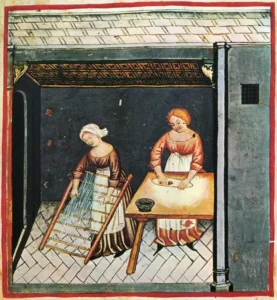
Regardless of its ancient origins, the spiritual home of orecchiette pasta is Bari Vecchia (the old town of Bari, Puglia). If you walk down the famous Strada delle Orecchiette (Via Arco Basso), you will witness a living museum. Here, local women like the famous Nunzia Caputo hand-roll kilograms of pasta every single day on wooden boards, preserving a UNESCO-worthy intangible cultural heritage.
Nutritional Profile of Orecchiette Pasta
Traditional orecchiette pasta is a staple of the Mediterranean Diet, celebrated worldwide for its focus on whole, unrefined ingredients, healthy fats, and vibrant vegetables.
Because authentic orecchiette is made without eggs, it is naturally vegan and lower in fat than egg-based fresh pastas from Northern Italy (like tagliatelle or pappardelle).
Nutritional Breakdown (Per 100g Dry Pasta)
Calories: ~350 kcal
Carbohydrates: 72g (predominantly complex carbohydrates)
Protein: 12g – 13g (derived from high-protein durum wheat)
Fiber: 3g
Fat: 1.5g
Due to the use of high-quality durum wheat semolina, orecchiette pasta has a lower glycemic index compared to pasta made from highly refined soft wheat flour (Tipo 00). This means it releases energy more slowly, preventing sharp blood sugar spikes and keeping you fuller for longer.
Pasta Cooking: 9 Powerful Secrets for Perfect Results
Casarecce Pasta: 11 Essential Secrets for Perfect Sauce
Rigatoni Pasta: 7 Reasons It’s the Best Shape for Big Flavor
Cappelletti Pasta: 7 Amazing Secrets of This Italian Classic
Linguine Pasta: 7 Amazing Secrets You Should Know
Above are our valuable contributions and informational hubs.
Ingredients: The Holy Trinity of Pugliese Pasta
One of the most beautiful aspects of orecchiette pasta is its minimalism. You do not need expensive kitchen gadgets or complex ingredients. You only need three elements:
[Durum Wheat Semolina Rimacinata] + [Warm Water] + [A Pinch of Fine Sea Salt]
1. Semola di Grano Duro Rimacinata
To make authentic orecchiette, you must use Semola di Grano Duro Rimacinata (twice-milled durum wheat semolina). This flour is golden-yellow, rich in carotenoids, and high in glutenin and gliadin proteins, which give the dough its elasticity and signature chew. Do not substitute standard all-purpose flour; it lacks the structural integrity required to hold the dome shape.
2. Warm Water
The water should be warm, around 100°F to 110°F (38°C to 43°C). Warm water hydrates the starch granules in the semolina quickly and helps activate the gluten network smoothly without making the dough tough.
3. Sea Salt
While some traditionalists in Bari omit salt from the dough itself—relying entirely on heavily salted cooking water—a small pinch of fine Mediterranean sea salt helps enhance the grain’s natural, nutty flavor.
Step-by-Step Guide: How to Make Handmade Orecchiette Pasta
Making orecchiette pasta by hand is a therapeutic, tactile art form. Follow this master guide to create your own from scratch.
Step 1: Mixing the Dough
Pour 400 grams of semolina flour onto a large, wooden pasta board. Create a wide well in the center (the “volcano” method).
Pour about 200 milliliters of warm water into the center of the well, along with a small pinch of salt.
Using a fork, gradually incorporate the flour from the inner walls of the well into the water, stirring constantly to prevent the water from breaching the walls.
Step 2: Kneading to Smooth Perfection
Once a shaggy dough forms, cast the fork aside and begin working the dough with your hands.
Knead the dough vigorously using the heel of your hand. Push forward, fold over, rotate 90 degrees, and repeat.
Continue kneading for 10 to 12 minutes. The dough will initially feel stiff and rough, but it will transform into a smooth, supple, matte-finish ball that springs back slightly when pressed.
Wrap the dough tightly in plastic wrap or cover it with an inverted glass bowl. Let it rest at room temperature for 30 minutes. Crucial step: This allows the gluten network to relax, making it easy to shape without snapping back.
Step 3: Rolling the Filone (Ropes)
Cut off a small portion of the dough, keeping the rest covered so it doesn’t dry out.
Roll the portion out on your wooden board using your palms, working from the center outward, until you create a long rope (filone) about 1/2 inch (1.2 cm) thick.
Step 4: Shaping the “Little Ears”
Using a straight-edged, dull dinner knife or a traditional Italian pastry scraper, cut a 1/2-inch piece of dough from the rope.
Place the knife edge at the far side of the dough nugget at a slight angle.
Press down firmly and pull the knife toward you, dragging the dough across the wooden board. The dough will curl over the knife blade, forming a rough, ribbed, elongated shell (similar to a cavatelli).
Pick up the curled piece of dough and gently invert it over your thumb. Press the center inside-out to form a small dome with a rough texture on the outside and a smooth pocket on the inside.
Place your finished orecchiette pasta onto a mesh tray or a clean tablecloth dusted with semolina, ensuring they do not touch. Let them dry for at least 1 hour before cooking.
How to Cook Orecchiette Pasta Perfectly
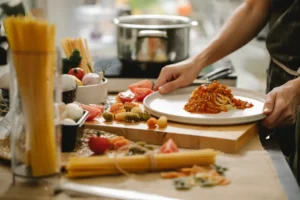
Whether you are using your fresh handmade creations or a high-quality box of artisanal dried orecchiette pasta, cooking it correctly is paramount.
The Golden Ratio of Pasta Cooking
To ensure uniform heat distribution and prevent the starch from making the water overly gummy, always use the classic Italian structural ratio:
100g of Pasta
1 Liter of Water
10g of Coarse Rock Salt
The Cooking Process
Bring a massive pot of water to a rolling, aggressive boil.
Add your coarse salt. The water should taste clean but noticeably salty, like a light broth.
Drop the orecchiette pasta and stir immediately with a long wooden spoon to prevent sticking.
Timing:
Fresh Handmade Orecchiette: Cooks incredibly fast, usually between 3 and 5 minutes. They will float to the top; once they do, give them another minute to ensure the thick rim loses its raw flour taste.
Artisanal Dried Orecchiette: Takes significantly longer due to its dense structure, typically 11 to 14 minutes. Always check the package instructions, but start tasting 2 minutes before the suggested time.
The Secret Weapon: Never dump your pasta water down the drain! Use a slotted spoon or a spider strainer to transfer the pasta directly into your saucepan. The starchy, salted water is pure culinary liquid gold; splashing a few tablespoons into your saucepan creates a luxurious, velvety emulsification.
Authentic Culinary Pairings and Recipes
The unique design of orecchiette pasta makes it uniquely suited for specific types of sauces. Thick, chunky vegetable ragùs, pestos, and pork-based sauces perform beautifully here.
Let’s look at three definitive recipes, starting with the undisputed cultural masterpiece of Puglia.
1. Orecchiette con le Cime di Rapa (Turnip Tops / Broccoli Rabe)
This is the ultimate signature dish of Bari and the wider Puglia region. The bitterness of the greens contrasts beautifully with savory garlic, spicy chili, and rich olive oil.
Method:
Bring a large pot of salted water to a boil. Add the cleaned cime di rapa greens directly into the boiling water and cook for 5 minutes to tenderize them and mellow their sharp bitterness.
Add your orecchiette pasta directly into the same pot with the cooking greens. This allows the pasta to absorb the vibrant green color and herbal flavor molecules from the very start.
While the pasta and greens cook, heat the extra virgin olive oil in a wide skillet over medium-low heat. Add the garlic, chili flakes, and anchovy fillets. Use a wooden spoon to smash the anchovies until they completely dissolve into the warm oil, creating a deep, savory umami base.
Use a spider strainer to lift the pasta and greens directly out of the water and drop them into the infused oil skillet.
Crank the heat to high, toss vigorously, and add a ladle of starchy pasta cooking water. Cook for 60 seconds until a creamy, green-flecked sauce coats every single piece of orecchiette pasta. Serve immediately without cheese (purists omit cheese here, though some enjoy a sprinkle of toasted breadcrumbs, known as poverello parmesan).

2. Orecchiette al Ragù Barese (Bari-Style Meat Sauce)
For Sunday family gatherings, Pugliese families slow-simmer a rich tomato meat sauce featuring a mixture of pork chops, beef chunks, and involtini (stuffed meat rolls). The deep pockets of the orecchiette pasta scoop up the rich tomato reduction and melted meat fats effortlessly. Top this dish with a generous shaving of aged Canestrato Pugliese or sharp Pecorino Romano cheese.
3. Summer Orecchiette with Cherry Tomatoes and Cacioricotta
A lighter, faster adaptation ideal for warm weather. Sauté sweet cherry tomatoes (Pomodorini) in olive oil with torn fresh basil until they just burst. Toss in your al dente orecchiette pasta, remove from the heat, and shower the dish with freshly grated Cacioricotta, a unique seasonal Pugliese cheese made from a blend of sheep and goat milk.
Artisanal vs. Mass-Produced Orecchiette
If you are buying dried boxed pasta from a grocery store, it is vital to know that not all orecchiette pasta is created equal. Understanding the manufacturing details will help you choose products that taste better and hold sauce perfectly.
Artisanal Selection: [Bronze Die Extrusion] + [Slow, Low-Temp Drying] = Rough, Sauce-Gripping Surface
The Die Extrusion Process
Mass-market commercial brands use high-speed Teflon dies to shape their pasta. Teflon is slippery, creating slick, glassy pasta walls. Sauce simply slides off these pieces and puddles at the bottom of your plate.
In contrast, high-end artisanal brands utilize traditional bronze dies. Bronze extruders impart micro-ridges and a rough, chalky, matte surface texture (called trafilata al bronzo). This coarse surface acts like Velcro for your sauces.
Drying Temperatures
Commercial factories dry pasta using ultra-high temperatures (up to 212°F / 100°C) for just a couple of hours to maximize throughput. This cooks the starches prematurely, destroying the wheat’s delicate flavor compounds and making the pasta brittle.
Premium artisanal brands practice slow, low-temperature drying (around 100°F to 115°F / 38°C to 45°C) for anywhere from 24 to 72 hours. This slow cure preserves the grain’s natural integrity, complex aromas, and excellent structural chew.
Frequently Asked Questions (FAQs)
Q: Is orecchiette pasta vegan?
Yes. Authentic, handmade, and dried orecchiette pasta is completely vegan. Unlike Northern Italian varieties, it uses only durum wheat semolina, water, and salt, containing absolutely zero eggs or dairy products.
Q: What is the closest substitute for orecchiette pasta?
If you cannot find orecchiette, your best structural substitutes are Cavatelli, Conchiglie (Medium Pasta Shells), or Campanelle. These shapes feature similar hollow chambers designed to scoop up dense, chunky sauces effectively.
Q: Why is my handmade orecchiette too doughy or gummy?
If your handmade pasta feels excessively gummy, it is usually down to two common issues: the center of the dome was left too thick during the shaping process, or the pasta was not boiled long enough. Ensure you press down firmly with your thumb to create a thin center disk, and let the cooked rims soften completely in the boiling water.
Q: Can I freeze fresh handmade orecchiette?
Absolutely. Place your shaped orecchiette on a baking sheet lined with parchment paper in a single layer and freeze them solid for about 2 hours. Once frozen, transfer them to an airtight freezer bag. They will keep perfectly for up to 3 months and can be dropped directly into boiling water straight from the freezer (add an extra minute to the total cooking time).
Q: Why is it culturally traditional to cook the vegetables in the same water as the pasta?
Cooking vegetables like broccoli rabe directly alongside your orecchiette pasta serves two smart purposes. First, it infuses the pasta dough with the vegetable’s organic flavor compounds. Second, it softens the vegetables so thoroughly that they break down into a smooth, creamy sauce when tossed in the skillet, eliminating the need for heavy cream.
Orecchiette Pasta: A Technical and Culinary Summary
To fully appreciate orecchiette pasta, one must look at it through both a cultural and mechanical lens. It is not merely a vehicle for sauce, but a structural marvel engineered by centuries of regional trial and error in Puglia. Using a simple hydration technique with durum wheat semolina and warm water bridges the gap between everyday home cooking and high-end artisanal craftsmanship.
When cooking orecchiette pasta, remember that its unique dual-texture profile requires precise timing to achieve a flawless al dente state. Whether paired with the bitter notes of cime di rapa or a deeply reduced, slow-simmered Ragù Barese, this “little ear” shape remains an unshakeable pillar of authentic Italian gastronomy.
Production and Cooking Comparison Matrix
To help you choose the best variation for your kitchen, this table outlines how different manufacturing styles alter the final plate:
| Feature / Metric | Fresh Handmade Orecchiette | Artisanal Dried (Bronze Die) | Mass-Produced Commercial (Teflon) |
| Primary Ingredients | Semola Rimacinata, Water, Salt | Durum Wheat Semolina, Water | Refined Durum Wheat Flour, Water |
| Surface Texture | Highly porous, rough, irregular | Chalky, matte, micro-ridged | Slick, glassy, smooth |
| Sauce Adhesion | Maximum (absorbs and binds oil) | Excellent (sauce sticks to ridges) | Poor (sauce slips and puddles) |
| Cooking Time | 3 to 5 minutes | 11 to 14 minutes | 8 to 10 minutes |
| Texture Profile | Tender centers, chewy rims | Firm, uniform al dente snap | Softer, loses structure quickly |
| Best Sauce Pairings | Sautéed leafy greens, light broths | Thick vegetable ragùs, pestos | Thin, homogenized tomato sauces |
Conclusion
The enduring popularity of orecchiette pasta stands as a testament to the timeless genius of Italian regional cooking. It is a shape born of resourcefulness, requiring no complex tools or machinery, yet its architectural design interacts flawlessly with sauces.
By mastering the simple art of working with durum wheat semolina, respecting the dual-texture profile of the al dente little ears, and utilizing starchy cooking water to emulsify your sauces, you can easily replicate the rustic culinary magic of Puglia right in your home kitchen.
To expand your kitchen expertise further, explore our deep-dive tutorial on Water Science for Pasta to learn how starch concentrations unlock restaurant-quality finishes, or browse our comprehensive Ultimate Pasta Pairing Guide to discover the perfect sauce matches for all your favorite shapes. Have you tried making orecchiette from scratch? Let us know your experiences, tips, and favorite sauce pairings in the comments below!
💡 Pro Tip: The “Double-Drop” Technique for Perfect Doneness
When cooking handmade fresh orecchiette, you will often find that the thin center cooks much faster than the thick, chewy rim. To achieve absolute al dente uniformity without leaving the edges tasting like raw dough, use the double-drop technique.
Drop your orecchiette into the boiling water and wait for them to float to the top (usually about 2 to 3 minutes). The moment they float, instead of draining them, immediately transfer them into your simmering sauce skillet along with a heavy splash of starchy pasta water. Cook them in the sauce for an additional 2 minutes over medium-high heat.
This finishes cooking the dense rims through absorption rather than just boiling, forcing the pasta to drink in the flavor of your sauce right down to its core.

Syed Yasar Arafat is the founder of PastaLoverz.com and a food research enthusiast with a focused interest in pasta varieties, traditional Italian cuisine, and balanced eating. Through PastaLoverz.com, he publishes well-researched articles that explain pasta types, cooking methods, and nutritional considerations in clear, practical terms to help readers make informed food choices.