
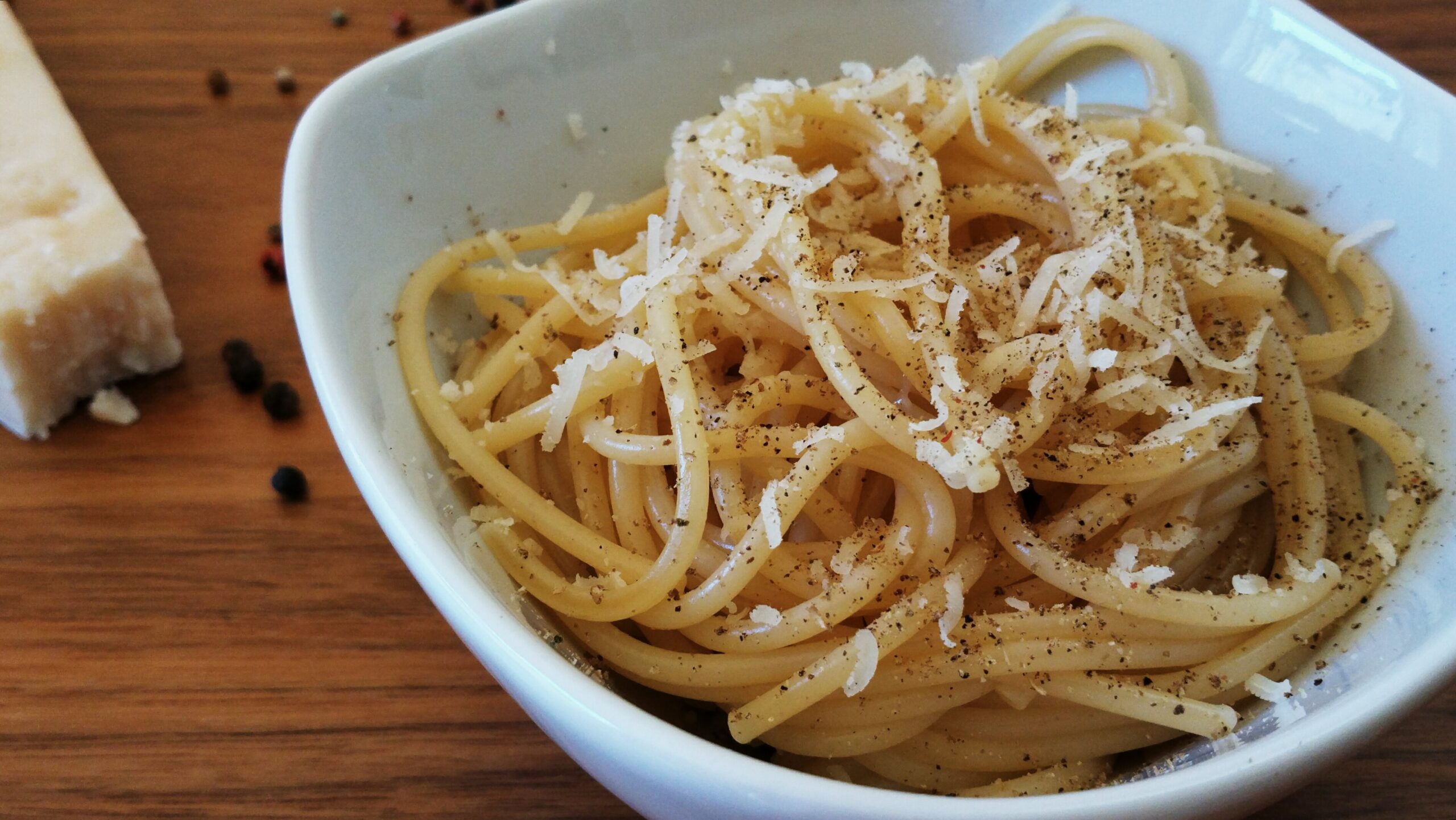
Cacio e pepe means cheese and pepper, and that is nearly the whole shopping list. The creaminess comes from Pecorino Romano and starchy pasta water, with no cream or butter. There are few ingredients to buy, but the sauce can turn grainy if the cheese meets too much heat, so most of this recipe is about controlling that one moment.
Serves: 4 | Time: about 25 minutes
Ingredients
- 400 g spaghetti or tonnarelli
- 120 to 150 g Pecorino Romano, very finely grated
- 1½ to 2 tablespoons whole black peppercorns
- Salt for the pasta water
Pecorino Romano is salty, so use about half the salt you would normally put in the pot. Grate the cheese yourself on the finest holes you have. Coarse shreds melt slowly and are the usual cause of lumps.
Method
- Crush the peppercorns coarsely in a mortar or under a heavy pan. Grate the cheese into a bowl and leave it near the stove.
- Boil the pasta in lightly salted water, using a little less water than usual so it becomes starchier. Stop cooking about 2 minutes before the packet time.
- While it cooks, toast the pepper in a wide dry pan over medium heat for 30 to 60 seconds, until fragrant. Add a small ladle of pasta water and let it simmer.
- Scoop out 2 cups of pasta water and set it aside to cool for a minute. Move the pasta into the pan with tongs.
- Toss the pasta over medium heat, adding splashes of water, until it is just al dente and sitting in a little cloudy liquid. Take the pan off the heat and let it stand for about 30 seconds.
- Stir a few spoonfuls of the warm, not boiling, water into the cheese to make a thick, smooth paste.
- Add the paste to the pasta and toss hard, adding water a tablespoon at a time, until the sauce is glossy and coats each strand.
- Serve at once on warm plates with a little more pepper and Pecorino.
Why the sauce goes grainy
Cheese proteins tighten when they get too hot, and they squeeze out fat and clump together. Starch from the pasta water gets in the way of that and helps the fat and water stay mixed. That is why taking the pan off the heat and making a paste first both help. The same finishing idea is explained in our mantecatura guide.
If something goes wrong
- Grainy or stringy sauce: Take the pan off the heat, add a tablespoon of cooler pasta water and toss hard. Small grains can loosen, but heavy clumps will not fully recover.
- Too thin: Keep tossing for a few seconds. It thickens as it cools slightly.
- Too thick or sticky: Add warm pasta water a spoonful at a time.
- Too salty: Use less salt in the pot next time, and loosen the sauce with plain warm water rather than more pasta water.
Choosing the pasta
Tonnarelli is the Roman choice, thick and square-edged with plenty of bite. Spaghetti is easiest to find, and bucatini also works. Bronze-cut pasta releases more starch and has a rougher surface, as covered in bronze-cut vs Teflon pasta.
Variations
- Half Parmesan: Replace up to half the Pecorino with Parmigiano Reggiano for a milder, nuttier sauce.
- Lemon zest: Add a little at the end. It is not traditional, but it freshens the richness.
- Gluten-free: Corn or rice pasta releases less starch, so keep extra water on hand and toss for longer.
Serving and storage
The sauce is at its best in the first few minutes. Serve it with something plain and sharp, such as a green salad with lemon or simply cooked greens. Leftovers keep for a day or two in the fridge. Reheat them over low heat with a splash of water, tossing all the time, and expect a less silky result.
Frequently asked questions
Does cacio e pepe contain butter or cream?
The Roman version has neither. Some modern recipes add a little butter because it makes the sauce more forgiving, but the flavor is softer.
Can I use pre-grated cheese?
It is best avoided here. It is usually coarser and drier, and it melts less evenly.
Can I make the sauce ahead?
No. It depends on hot pasta and fresh cooking water, so it needs to be made at the last minute.
More from PastaLoverz
Cacio e pepe belongs to the four classic Roman pastas, along with amatriciana and carbonara. For the reasoning behind starchy water, read our pasta water guide, and for other common problems see pasta cooking mistakes.
Further reading

Syed Yasar Arafat is the founder of PastaLoverz.com and a food research enthusiast with a focused interest in pasta varieties, traditional Italian cuisine, and balanced eating. Through PastaLoverz.com, he publishes well-researched articles that explain pasta types, cooking methods, and nutritional considerations in clear, practical terms to help readers make informed food choices.