
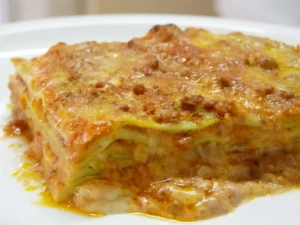
Lasagne Verdi is a traditional Italian spinach pasta made with fresh eggs and finely blended spinach, giving the sheets their signature green color. Originating in Northern Italy, especially Emilia- Romagna, it is commonly used in layered lasagna with ragu and bechamel sauce.
Unlike regular lasagna sheets, Lasagne Verdi adds flavor, color, and subtle nutrition to baked pasta dishes. Its soft texture and rich taste make it ideal for authentic Italian recipes, whether prepared in classic trattorias or home kitchens.
Table of Contents
- What Is Lasagne Verdi
- Origin and Cultural Significance
- Ingredients and Dough Composition
- How to Make Lasagne Verdi at Home
- How to Cook Lasagne Verdi Perfectly
- Best Sauces and Fillings
- Nutritional Profile
- Buying and Storage Tips
- Common Mistakes to Avoid
- Frequently Asked Questions
- Final Thoughts
- Call to Action
1: What is Lasgne Verdi?
Lasagne Verdi is a traditional Italian spinach pasta made with eggs and finely blended spinach, which gives the sheets their distinctive green color. Originating in Northern Italy, especially Emilia-Romagna, it is commonly layered with ragu and bechamel sauce to create a rich, authentic lasagne dish
Lasagne Verdi refers to spinach-infused pasta sheets traditionally used in layered baked dishes. Cooks blend fresh spinach into egg pasta dough, creating green sheets with a subtle earthy flavor.
Unlike regular lasagna sheets, this version delivers:
- A richer taste
- Better visual presentation
- Slightly softer texture
- Added micronutrients
The spinach is integrated directly into the dough rather than used as a filling.
2: Origin and Cultural Significance of Lasagne Verdi
Lasagne Verdi comes from Emilia-Romagna, the same region that gave the world tagliatelle and Tortellini. In Bologna, families traditionally prepare it for festive meals.
Authoritative culinary sources such as Pasta Evangelists, Eataly, and Serious Eats highlight its role in authentic Bolognese cuisine. Traditional Lasagna alla Bolognese often alternates green sheets with ragù and béchamel.
The green color symbolizes freshness and craftsmanship.
3: Ingredients and Dough Composition of Lasagna Verdi
Authentic Lasagne Verdi contains:
- 00 flour or finely milled durum wheat
- Fresh eggs
- Blanched spinach
- A pinch of salt
Professional Italian producers such as De Cecco and artisan brands sold through Eataly emphasize high-quality semolina and slow-drying techniques.
Why Spinach Matters
Spinach:
- Adds chlorophyll for natural color
- Contributes a mild vegetal flavor
- Improves the elasticity of the dough
- Enhances nutritional value
The key is removing excess moisture before blending it into the flour.
4: How to Make Lasagne Verdi at Home?
Step 1: Prepare the Spinach
Blanch fresh spinach for 1 minute. Drain and squeeze out all moisture. Puree until smooth.
Step 2: Form the Dough
Mix flour and salt on a clean surface. Create a well, then add eggs and spinach puree. Incorporate gradually.
Step 3: Knead
Knead for 8 to 10 minutes until smooth and elastic.
Step 4: Rest
Wrap and rest for 30 minutes to allow the gluten to relax.
Step 5: Roll
Use a pasta machine or rolling pin. Aim for thin sheets suitable for layering.
Step 6: Cut
Trim into rectangular sheets.
This method aligns with professional techniques demonstrated by Food52 and Italian culinary schools.
5: How to Cook Lasagne Verdi Perfectly?
To cook Lasagne Verdi correctly:
- Boil in salted water for 1 to 2 minutes if fresh
- Drain and lay flat on clean towels
- If using dried sheets, follow the package timing
- Slightly undercook before baking
For no-boil assembly, ensure the sauce contains enough moisture to hydrate the sheets during baking.
Pro Tip
Reserve sauce generously between layers. Dry layers cause cracking.
6: Best Sauces and Fillings for Lasagne Verdi
Lasagne Verdi pairs beautifully with:
- Traditional Bolognese ragù
- Béchamel sauce
- Ricotta and spinach filling
- Mushroom cream sauce
- Roasted vegetable layers
The earthy tone of spinach complements slow-cooked meat sauces particularly well.
For inspiration on pairing, explore guides from Serious Eats and traditional Emilia-Romagna recipe archives.
7: Nutritional Profile of Lasagne Verdi
Lasagne Verdi provides complex carbohydrates for energy, protein from eggs, and iron and folate from spinach, along with a moderate amount of dietary fiber. Compared to plain lasagna sheets, Lasagne Verdi offers slightly higher micronutrient density due to the spinach blended into the dough.
A typical 100-gram serving of traditional Lasagne Verdi (dry) contains approximately:
- Calories: 340–370 kcal
- Carbohydrates: 65–72 g
- Protein: 11–14 g
- Fat: 2–4 g
- Fiber: 2–4 g
- Iron: 10–15% of daily value
- Folate: 8–12% of daily value
Values vary depending on brand and whether the pasta contains eggs.
Why Spinach Improves the Nutritional Value of Lasagne Verdi?
The spinach in Lasagne Verdi contributes:
- Natural iron for oxygen transport
- Folate for cell production
- Vitamin A for immune support
- Antioxidants such as lutein
While the spinach content is moderate, it still enhances the micronutrient profile compared to regular white pasta sheets.
Protein and Energy Balance
It delivers steady-release carbohydrates from durum wheat, making it suitable for sustained energy.
The egg content slightly increases protein levels, supporting muscle repair and satiety.
When layered with lean meat, vegetables, and balanced sauce portions, Lasagne Verdi can form part of a well-rounded meal.
8: Whole Wheat and Gluten-Free Options
For higher fiber intake, some producers offer:
- Whole-wheat Lasagne Verdi
- Spinach sheets made with semolina blends
- Gluten-free spinach lasagna sheets made from rice or corn flour
Whole-wheat versions increase fiber content significantly and may support digestive health.
Gluten-free options allow individuals with gluten sensitivity to enjoy the same traditional structure and layering benefits.
9:Is Lasagne Verdi Healthy?
It can be part of a healthy diet when portion size and fillings are balanced. The pasta itself provides carbohydrates and moderate protein, while the spinach adds micronutrients.
The overall health impact depends more on:
- Cheese quantity
- Meat fat content
- Sauce composition
- Portion size
Choosing vegetable-rich fillings and controlled béchamel layers improves nutritional balance.
Lasagne Verdi contains complex carbohydrates, moderate protein from eggs, and small amounts of fiber. Compared to plain lasagna sheets, it provides slightly higher micronutrient density due to its spinach content.
9: Buying and Storage Tips
When purchasing :
- Choose bronze-cut pasta for better sauce grip
- Check for vibrant natural green color
- Avoid artificial coloring
Store dried sheets in a cool, dry cupboard.
Refrigerate fresh sheets and use within 2 to 3 days.
Freeze for longer storage.
10: Common Mistakes to Avoid
- Not squeezing spinach dry
- Rolling sheets too thick
- Skipping resting time
- Under-seasoning layers
- Using dry fillings
Balanced moisture ensures perfect texture after baking.
11: Frequently Asked Questions
Lasagne Verdi is spinach-infused lasagna pasta made in Emilia-Romagna by blending fresh spinach into egg dough to create green sheets for layered baked dishes.
Q: What is Lasagne Verdi?
Lasagne Verdi is spinach-infused lasagna pasta made by blending fresh spinach into egg dough, creating green pasta sheets traditionally used in Northern Italian baked dishes.
It is especially popular in Emilia-Romagna and commonly layered with ragù and béchamel.
Q: Why is Lasagne Verdi green?
It is green because cooks incorporate blanched spinach directly into the pasta dough before rolling it into sheets.
The chlorophyll from spinach gives the pasta its natural vibrant color.:
Q: What is it made of?
The traditional one contains:
- flour or durum wheat semolina
- Fresh eggs
- Blanched spinach
- Salt
Some modern versions may use semolina and water without eggs.
Q: Is it healthier than regular lasagna sheets?
It contains added micronutrients from spinach, including iron and folate. However, overall health value depends on the filling and portion size.
The pasta itself offers slightly higher nutritional density than plain sheets.:
Q: Do you need to boil it before baking?
Fresh requires 1–2 minutes of boiling before layering.
Many dried versions do not require pre-boiling if the sauce contains enough moisture.
Always check package instructions.
Q: Can you freeze it?
Yes. You can freeze fresh sheets by placing parchment paper between layers and sealing them in an airtight bag.
You can also freeze assembled lasagna before baking.
Q: What sauce pairs best with it?
Traditional Bolognese ragù with béchamel pairs best with Lasagne Verdi.
The spinach flavor complements slow-cooked meat sauces, mushroom cream sauces, and ricotta fillings.
Q: Is it the same as spinach lasagna?
Yes. Lasagne Verdi simply means “green lasagna” in Italian. It refers specifically to spinach-based pasta sheets.
Q: Can you make it without eggs?
Yes. Some regional and dietary versions omit eggs and use semolina, spinach, water, and salt.
The texture becomes slightly firmer.
Q: How thick should its sheets be?
Its sheets should be thin but not transparent. They must hold filling without tearing.
A medium pasta machine setting works best for layering.
Q: Does its taste differ from regular lasagna sheets
Yes. It has a mild, earthy flavor from spinach, while regular sheets taste neutral and wheat-forward.
The difference is subtle but noticeable.
Q: Is it gluten-free?
Traditional Lasagne Verdi contains wheat flour and is not gluten-free.
However, gluten-free spinach lasagna sheets are available, made with rice- or corn-based flour blends.
Q: How long does it take to bake?
Most layered dishes made with Lasagne Verdi are baked at 180°C (350°F) for 30–45 minutes.
Cover with foil for the first half to prevent drying.
Q: Can you use it for other dishes?
Yes. You can cut sheets into:
- Tagliatelle
- Pappardelle
- Cannelloni rolls
It works well beyond traditional layered lasagna.
Q: Why does the moisture level in your spinach puree completely alter the dough structure?
The secret to a perfect batch of green pasta sheets comes down to moisture control during the initial mixing stage. Freshly blanched spinach holds an immense amount of water, and if you fail to wring it out completely before blending it into your flour well, the excess liquid will overwhelm the recipe. This extra moisture dilutes the eggs, prevents a strong gluten network from forming, and results in a sticky, unmanageable dough that tears easily when you run it through the pasta rollers.
Q: How does adding spinach affect the texture and elasticity of green lasagna sheets?
When you introduce finely blended greens into traditional egg pasta dough, you are changing how the proteins bind together. The plant fibers introduce tiny interruptions in the gluten matrix, which actually makes the cooked sheets slightly softer and more delicate on the palate than standard white pasta. However, to maintain excellent dough elasticity so the sheets do not break apart under the weight of heavy meat layers, it is vital to use finely milled double-zero flour and let the dough rest long enough to relax the proteins.
Q: Why do traditional northern Italian recipes pair this green pasta with both ragu and bechamel?
The classic pairing of lasagne verdi with a rich meat ragu and a creamy, velvety bechamel sauce is a masterpiece of culinary balance. The subtle, earthy undertone of the spinach-infused pasta cuts directly through the deep, savory fats of slow-simmered beef and pork. At the same time, the smooth creaminess of a white roux-based sauce coats the delicate surface of the green layers, keeping the entire baked dish moist and structurally unified without ever overwhelming the fresh flavor of the noodles.
Q: Can you skip the boiling step when using fresh homemade lasagne verdi?
While many commercial dried sheets are sold as no-boil options, fresh homemade green pasta sheets should always receive a quick par-boil before assembly. Dropping the fresh sheets into a pot of rolling, salted boiling water for just sixty seconds sets the starches and locks in that beautiful, vibrant green color. Skipping this step means the raw dough will aggressively absorb the moisture from your sauces while baking, which often leaves the final dish dry, dense, and unevenly cooked at the center.
Q: What is the best way to prevent cooked green pasta sheets from sticking together before assembly?
Once your spinach sheets emerge from their quick par-boil, they release surface starches that make them incredibly tacky. To prevent them from gluing themselves together into an unusable clump, immediately plunge them into an ice bath to halt the cooking process, then lay them out in a single layer on clean linen kitchen towels.
Patting them dry removes the loose surface moisture, ensuring they are perfectly primed to grip your ragu and cheese layers without sliding around or tearing during the layering process.
Q: What region of Italy is it from?
It originates in Emilia-Romagna, particularly Bologna, where it is part of the traditional Lasagna alla Bolognese.
Comparison:
Here is a clean comparison table in simple text form, comparing traditional Lasagne Verdi with regular lasagna sheets. It is formatted without complex code or markdown lines so you can copy and paste it directly into your text area:
Comparison Element: Color and Appearance
Lasagne Verdi: Vibrant green sheets colored naturally with spinach chlorophyll
Regular Lasagna Sheets: Standard pale yellow or off white sheets from plain egg dough
Comparison Element: Core Ingredients
Lasagne Verdi: Double zero flour, fresh eggs, blanched spinach puree, and salt
Regular Lasagna Sheets: Double zero flour or semolina, fresh eggs, and salt
Comparison Element: Flavor Profile
Lasagne Verdi: Distinctive mild flavor with a subtle earthy and vegetal undertone
Regular Lasagna Sheets: Neutral, classic wheat forward flavor that acts as a blank canvas
Comparison Element: Dough Texture
Lasagne Verdi: Slightly softer and more tender on the palate due to vegetable fibers
Regular Lasagna Sheets: Firmer with a more traditional elastic stretch and chew
Comparison Element: Best Sauce Pairings
Lasagne Verdi: Rich meat ragu, creamy bechamel, mushroom creams, and ricotta
Regular Lasagna Sheets: Universal compatibility from heavy marinara to chunky tomato sauces
Comparison Element: Nutritional Density
Lasagne Verdi: Higher in micronutrients, including natural iron, folate, and vitamin A
Regular Lasagna Sheets: Standard baseline for complex carbohydrates and egg proteins
Great pasta starts with mastering the basics: proper cooking technique, correct water usage, smart sauce pairing, and avoiding common mistakes. These fundamentals directly impact texture, flavor, and how well the sauce clings to pasta.
By following a reliable pasta cooking guide, understanding water science for pasta, choosing the best pasta for each sauce, and learning common pasta mistakes, you can consistently cook pasta that tastes balanced, structured, and restaurant-quality.
Summary:
Exploring the rich culinary landscape of Northern Italy highlights Lasagne Verdi as a true masterpiece of traditional scratch cooking. Originating from the culinary hub of Emilia-Romagna, this vibrant green variation transforms the standard layered baked dishes we know into an authentic, flavor-packed experience.
The magic lies entirely in the preparation of the fresh spinach dough. By blending vibrant greens directly into a classic egg pasta base, cooks create delicate sheets that offer a beautiful pop of color along with a subtle, earthy undertone. It is an intentional choice that changes both the presentation and the overall depth of the meal.
What makes this classic dish stand out is how the tender green sheets interact with hearty fillings. In traditional Italian kitchens, these spinach-infused layers are perfectly paired with a slow-simmered meat ragu and a velvety bechamel sauce to create a flawless balance of fats and textures.
Whether you are rolling out fresh homemade dough or utilizing premium dried options, managing the moisture of your sauces and correctly par-boiling the sheets ensures a tender bite without any structural tearing. Embracing these foundational steps allows any home cook to elevate a simple weeknight dinner into a comforting, restaurant-quality celebration of Italian heritage.
12: Final Thoughts
It represents Northern Italian culinary precision and tradition. Its spinach-infused sheets enhance flavor, structure, and visual appeal in baked pasta dishes.
When prepared with proper moisture balance and quality ingredients, it elevates classic lasagna into a refined, authentic experience.
For deeper pasta exploration, read our guides on Chifferi pasta, Strozzapreti, and Chickpea Pasta on PastaLoverz.
13: Call to Action
Have you tried making Lasagne Verdi at home?
Share your experience in the comments and explore more authentic pasta knowledge at PastaLoverz. Discover traditional shapes, cooking techniques, and expert insights to perfect your pasta craft. 🍝

Syed Yasar Arafat is the founder of PastaLoverz.com and a food research enthusiast with a focused interest in pasta varieties, traditional Italian cuisine, and balanced eating. Through PastaLoverz.com, he publishes well-researched articles that explain pasta types, cooking methods, and nutritional considerations in clear, practical terms to help readers make informed food choices.

3 Responses