
Orecchiette with Broccoli Rabe and Sausage is a rustic Southern Italian-inspired pasta dish built around small ear-shaped pasta, pleasantly bitter greens, savory sausage, garlic, chile, and cheese. It is hearty without requiring a heavy cream sauce, and the ingredients create a remarkably balanced combination.
This recipe takes a practical home-cooking approach while respecting the character of the dish. The goal is tender broccoli rabe, beautifully browned sausage, al dente orecchiette, and a lightly glossy sauce made from olive oil, aromatics, cheese, and reserved pasta water.
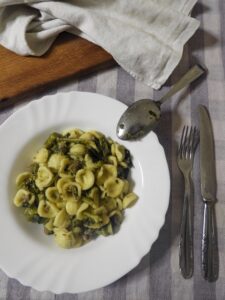
What Is Orecchiette with Broccoli Rabe and Sausage?
Orecchiette means “little ears” in Italian, referring to the pasta’s small, rounded shape. Its shallow bowl is particularly useful for catching pieces of sausage, chopped greens, garlic, and sauce.
Broccoli rabe, also known as rapini, is a leafy vegetable with small broccoli-like florets and a distinctive bitter edge. That bitterness is not something to eliminate completely. Instead, it provides contrast against rich sausage, olive oil, and salty cheese.
The dish draws inspiration from Puglia, where orecchiette is one of the region’s most recognizable pasta shapes. Italy’s official tourism website identifies orecchiette as a particularly iconic traditional pasta of Puglia and highlights its concave shape as ideal for holding sauces and other ingredients.
A traditional Puglian preparation often pairs orecchiette with turnip greens, garlic, chile, and other strongly flavored ingredients. This sausage version builds on the same idea of contrasting bitter greens with rich, savory flavors.
Why This Pasta Combination Works
The strength of Orecchiette with Broccoli Rabe and Sausage comes from contrast.
The sausage provides richness and savory depth. Broccoli rabe contributes bitterness and freshness. Garlic adds aroma, chile flakes bring heat, olive oil ties the ingredients together, and Pecorino Romano or Parmesan supplies salty, savory character.
The shape of orecchiette also matters.
Its curved center catches small ingredients instead of allowing them to remain at the bottom of the plate. Every forkful can therefore contain pasta, greens, sausage, and sauce.
That makes the dish feel satisfying without relying on cream or a heavy tomato sauce.
Ingredients You Need
For approximately 4 generous servings, prepare:
- 12 ounces (340 g) dried orecchiette
- 1 pound (450 g) Italian sausage, mild or hot
- 1 large bunch of broccoli rabe, approximately 12–16 ounces
- 4 garlic cloves, thinly sliced or minced
- 3 tablespoons extra-virgin olive oil, plus more to finish
- ½ teaspoon red pepper flakes, or to taste
- ½ cup finely grated Pecorino Romano or Parmesan
- ½–1 cup reserved pasta water
- 1 teaspoon fresh lemon juice, optional
- Freshly ground black pepper
- Salt
Choosing the Sausage
Mild and hot Italian sausage both work well.
Hot sausage creates a more assertive dish, while mild sausage allows the broccoli rabe and garlic to play a larger role.
If you use raw sausage, cook it thoroughly. According to the USDA Food Safety and Inspection Service, uncooked sausage containing ground pork, beef, lamb, or veal should reach 160°F (71°C), while poultry sausage should reach 165°F (74°C).
For food-safety guidance, you can also consult the official USDA Food Safety and Inspection Service sausage guidelines.
How to Prepare Orecchiette with Broccoli Rabe and Sausage
1. Prepare the Broccoli Rabe
Wash the broccoli rabe thoroughly.
Trim away especially tough lower stems, then cut the remaining greens into manageable pieces.
Bring a large pot of salted water to a boil. Blanch the broccoli rabe for about 1–2 minutes, then transfer it to cold water if you want to preserve a brighter green color.
Drain thoroughly.
Blanching is optional. You can also cook the greens directly in the skillet, especially if you enjoy their stronger bitter character.
2. Brown the Sausage
Remove the sausage from its casings if using sausage links.
Heat about 1 tablespoon of olive oil in a large skillet over medium heat.
Add the sausage and break it into small pieces with a wooden spoon.
Allow the meat to brown before stirring constantly. Those browned pieces on the bottom of the pan contribute valuable flavor.
Cook until the sausage is fully cooked.
Transfer it to a plate while leaving the flavorful fat in the skillet.
3. Cook the Orecchiette
Bring a large pot of water to a rolling boil and season it generously with salt.
Add the orecchiette and cook until al dente according to the package instructions.
Start tasting a little before the suggested cooking time ends.
Do not add oil to the cooking water.
The James Beard Foundation recommends properly salting pasta water and specifically advises against adding oil because it can interfere with sauce adhesion. It also recommends saving pasta water because its starches can add body to sauces.
Before draining, reserve at least 1 cup of pasta water.
4. Build the Garlic and Broccoli Rabe Base
Return the skillet to medium-low heat.
Add the remaining olive oil, garlic, and red pepper flakes.
Cook gently until the garlic becomes fragrant and softened.
Avoid letting the garlic become dark brown because it can develop a harsh, bitter flavor.
Add the broccoli rabe and toss it through the seasoned oil.
Return the browned sausage to the skillet.
5. Finish the Pasta
Add the drained orecchiette directly to the skillet.
Pour in approximately ⅓ cup of reserved pasta water.
Toss vigorously.
Add more pasta water a tablespoon or two at a time until the ingredients come together into a lightly glossy coating.
Remove the skillet from strong heat.
Add the grated cheese gradually while continuing to toss.
The goal is not a pool of sauce. Instead, the pasta should be lightly coated, with the sausage and greens distributed throughout.
Taste and adjust with freshly ground black pepper.
Add salt only if necessary because both sausage and Pecorino can already be quite salty.
A small squeeze of lemon juice can provide a fresh finishing note.
How to Balance Broccoli Rabe’s Bitterness
One of the most important aspects of Orecchiette with Broccoli Rabe and Sausage is balancing the greens.
Broccoli rabe has a naturally bitter character, and that is part of what makes it interesting.
The trick is to balance the bitterness rather than overwhelm it.
Sausage supplies fat and savory flavor.
Olive oil softens the edges.
Cheese adds saltiness and umami.
Garlic and chile provide aromatic intensity.
Blanching the broccoli rabe briefly can also make the bitterness more approachable.
If your particular bunch is especially strong, you can increase the amount of sausage slightly or finish the dish with a little more cheese and lemon.
Avoid simply adding lots of salt. Salt can enhance flavor, but excessive salt will not fix an unbalanced dish.
How to Build the Sauce
Orecchiette with Broccoli Rabe and Sausage does not require a thick sauce.
In fact, the best version is often lightly coated, allowing olive oil and starchy pasta water to bind the ingredients together.
Pasta releases starch into its cooking water as it cooks. The James Beard Foundation explains that this starch can add body to a sauce and recommends incorporating reserved pasta water when finishing pasta with sauce.
The final tossing stage is therefore important.
Rather than simply placing cooked pasta on a plate and spooning the sausage mixture over it, combine everything in the skillet.
This lets the pasta absorb some of the seasoning while the starch helps create a cohesive finish.
You can learn more about this technique in the PastaLoverz Pasta Water Science Guide.
For broader pasta techniques, explore our Pasta Cooking Guide.
Common Mistakes to Avoid
Overcooking the Broccoli Rabe
Mushy greens can make the dish feel heavy.
Cook the broccoli rabe until tender while preserving some texture.
Burning the Garlic
Garlic should become fragrant and lightly softened.
Once it turns very dark, it can introduce unpleasant bitterness.
Forgetting Pasta Water
This is one of the easiest mistakes to make.
Reserved pasta water gives you a useful tool for adjusting the consistency of the sauce.
Overcooking the Orecchiette
Orecchiette should retain a pleasant bite.
Remember that pasta can continue cooking slightly when tossed with hot ingredients in the skillet.
Using Too Much Cheese
Cheese should complement the sausage and greens rather than completely cover them.
Pecorino Romano is naturally assertive, so start conservatively and add more at the table if desired.
Making the Dish Too Salty
Sausage, cheese, and salted pasta water all contribute seasoning.
Taste the finished dish before adding additional salt.
Delicious Variations
Orecchiette with Broccoli Rabe and Sausage is flexible enough to adapt to different preferences.
Turkey Sausage
Replace pork sausage with turkey sausage for a different flavor profile.
If using poultry sausage, remember to cook it to 165°F (74°C), as recommended by USDA guidance.
Vegetarian Version
Leave out the sausage and add cannellini beans, sautéed mushrooms, or toasted breadcrumbs.
A few toasted breadcrumbs can provide a pleasant contrast against the soft pasta and greens.
Extra-Spicy Version
Increase the red pepper flakes and choose hot Italian sausage.
You can also add a little fresh chile at the end.
Lemon and Herb Version
Add lemon zest, lemon juice, and fresh parsley just before serving.
This works particularly well if the sausage is rich.
Parmesan Version
Pecorino Romano provides a sharper, saltier character.
Parmesan offers a somewhat milder finish.
Either works beautifully.
What to Serve With It
Because Orecchiette with Broccoli Rabe and Sausage is already substantial, side dishes can remain simple.
A crisp green salad with lemon vinaigrette works particularly well.
Roasted peppers, tomatoes, or a small vegetable soup are also good options.
If you want bread, choose something crusty that can mop up the remaining olive oil and sauce.
You can also serve the pasta with roasted vegetables for an even more vegetable-forward meal.
For another vegetable-focused pasta recipe, explore the PastaLoverz Roasted Vegetable Whole-Wheat Pasta.
If you are experimenting with other pasta combinations, our Pasta Pairing Guide is another useful resource.
Storage and Reheating
Store leftovers in an airtight container in the refrigerator.
According to the USDA Food Safety and Inspection Service, cooked leftovers should generally be used within 3–4 days and reheated to 165°F (74°C).
When reheating, add a splash of water or broth to loosen the pasta.
Warm it gently in a skillet rather than blasting it over high heat.
The sauce may not be quite as silky as it was when freshly prepared, but gradual reheating helps preserve the texture.
If the pasta seems dry, add a little liquid and toss frequently.
For additional food-safety information, consult the official USDA Food Safety Basics guidance.
Nutrition Notes
Orecchiette with Broccoli Rabe and Sausage combines carbohydrates from pasta, protein and fat from sausage and cheese, and vegetables from broccoli rabe.
The nutritional profile can vary considerably depending on the sausage, amount of cheese, olive oil, and serving size.
For a lighter plate, reduce the sausage and cheese slightly, increase the broccoli rabe, and measure the olive oil rather than pouring freely from the bottle.
For a more substantial meal, combine a moderate pasta serving with additional vegetables.
The goal is not to remove every rich ingredient. Instead, build a meal with a sensible balance of pasta, vegetables, protein, and fat.
Frequently Asked Questions
Is Orecchiette with Broccoli Rabe and Sausage traditional Italian food?
The combination is inspired by Southern Italian cooking, particularly the culinary traditions of Puglia.
Orecchiette is strongly associated with the region, while orecchiette with bitter greens is one of Puglia’s signature preparations. Italy’s official tourism site highlights orecchiette as an iconic Puglian pasta and describes the traditional pairing with turnip greens.
The sausage version is a popular variation rather than a claim that every Puglian household prepares the dish identically.
Can I use broccoli instead of broccoli rabe?
Yes.
Regular broccoli is milder and less bitter, so the finished dish will taste different.
If you prefer a gentler vegetable flavor, broccoli is an easy substitution.
Do I have to blanch broccoli rabe?
No.
Blanching is optional.
It can soften the greens and moderate bitterness, while direct sautéing produces a more pronounced flavor.
What sausage should I use?
Mild or hot Italian sausage both work well.
Pork sausage is common, but chicken or turkey sausage can also be used.
Always follow safe cooking temperatures for the type of sausage you select.
What cheese is best?
Pecorino Romano is an excellent choice because of its salty and assertive flavor.
Parmesan is a good alternative if you prefer something slightly milder.
Why is my sauce oily?
Usually, there is too much oil relative to the pasta water, or the ingredients have not been tossed enough.
Add a small amount of reserved pasta water and toss vigorously.
The starch helps bring the liquid and fat together.
Can I make this recipe without cheese?
Yes.
The dish will have less salty and savory depth, but toasted breadcrumbs, extra garlic, lemon zest, and herbs can add character.
Can I freeze the leftovers?
You can freeze them, although the pasta and greens may soften after thawing.
For the best texture, refrigeration and prompt consumption are preferable.
How do I keep my orecchiette with broccoli rabe and sausage from becoming dry? To keep the dish moist and glossy, reserve at least one cup of starchy pasta water before draining. Finish tossing the pasta, sausage, and greens together over low heat while gradually splashing in the pasta water. The starch emulsifies with the olive oil, creating a silky sauce that coats the orecchiette without needing heavy cream.
Can I make orecchiette with broccoli rabe and sausage ahead of time? Yes, you can prep the ingredients in advance by blanching the broccoli rabe and cooking the sausage a day early. If fully assembling the dish ahead of time, store it in the refrigerator for up to 3 days. Reheat gently in a skillet over low heat with a splash of water or broth to restore its silky texture.
PastaLoverz Pro Tip
For the best Orecchiette with Broccoli Rabe and Sausage, do not think of the skillet as simply a place where you combine cooked ingredients.
Treat it as the final cooking stage.
Finish the orecchiette in the sausage-and-greens mixture with a splash of pasta water.
Toss continuously for about a minute, then remove the pan from the heat before adding the cheese.
That final toss distributes the sausage, greens, garlic, and sauce into the little cups of the orecchiette.
One more trick: reserve more pasta water than you think you need.
A dry-looking skillet can often be rescued with a tablespoon or two of warm starchy water.
Conclusion
Orecchiette with Broccoli Rabe and Sausage delivers the kind of satisfying flavor that makes simple Italian-inspired cooking so appealing.
The recipe does not depend on a complicated sauce.
Instead, it builds flavor in layers: browned sausage, aromatic garlic, bitter greens, fruity olive oil, chile, pasta starch, and salty cheese.
The key is technique.
Cook the pasta al dente, reserve the cooking water, brown the sausage properly, avoid burning the garlic, and finish everything together in the skillet.
Once you understand that method, you can adapt the dish to your pantry without losing its character.
For more pasta techniques and recipes, visit PastaLoverz and explore the Pasta Pairing Guide for more ideas.

Syed Yasar Arafat is the founder of PastaLoverz.com and a food research enthusiast with a focused interest in pasta varieties, traditional Italian cuisine, and balanced eating. Through PastaLoverz.com, he publishes well-researched articles that explain pasta types, cooking methods, and nutritional considerations in clear, practical terms to help readers make informed food choices.