
Spaghetti all’assassina is a spicy tomato pasta from Bari, in Puglia. Dried spaghetti cooks directly in a hot skillet, with tomato broth added a little at a time, so the strands turn tender with crisp, browned edges. It serves 4 and takes about 30 to 35 minutes of close attention.
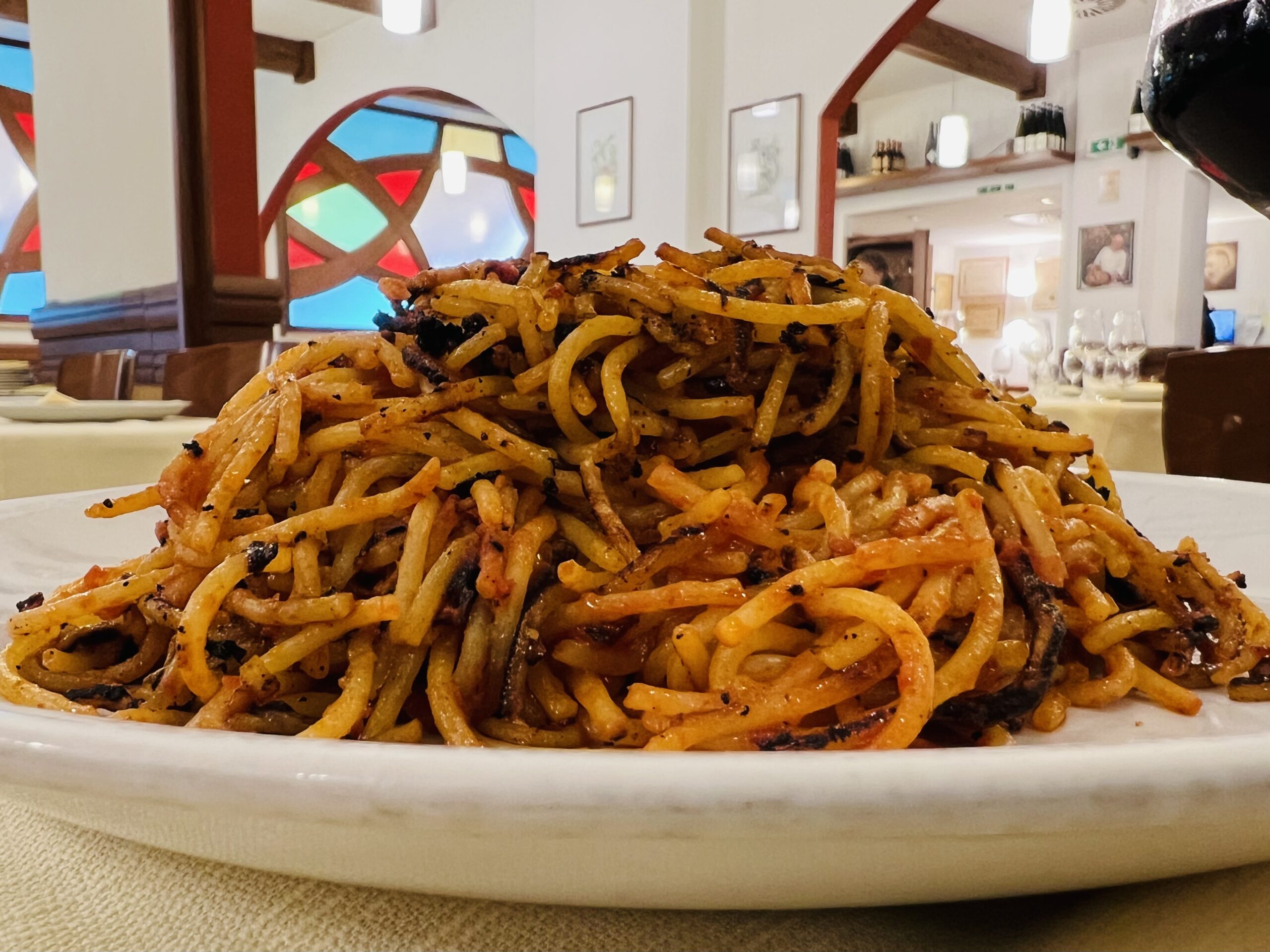
Where does it come from?
The name means roughly “assassin’s spaghetti”, a nod to its heat and fierce-looking cooking method. The dish is commonly linked to the Bari restaurant Al Sorso Preferito in the late 1960s. Cooks still disagree about the pan, the amount of chili and whether the pasta should start completely raw.
You can read more from the International Assassina Accademia and La Cucina Italiana. For more on the region’s cooking, see our regional pasta guide.
Ingredients
- 400 g dried spaghetti
- 400 g tomato passata
- 2 tablespoons tomato paste
- 900 ml to 1 liter water
- 5 to 6 tablespoons extra-virgin olive oil
- 3 garlic cloves, sliced or lightly crushed
- 1/2 to 1 teaspoon dried chili flakes
- Salt
- A small pinch of sugar (optional)
The pan matters. Use your widest heavy skillet, so the strands can lie flat against the hot surface. Cast iron and heavy steel hold heat well, and stainless steel also works if you watch the heat closely.
Instructions
- Make the broth. In a saucepan, whisk the water with about 250 g of the passata, the tomato paste and some salt. Keep it at a gentle simmer.
- Flavor the oil. Heat the oil in the skillet over medium-high heat. Cook the garlic and chili briefly until fragrant, without letting the garlic darken.
- Build the base. Add the remaining passata carefully, as it will sizzle. Spread it across the pan and cook for 2 to 3 minutes until slightly thickened.
- Add the spaghetti. Lay the dry strands across the pan. If they stick out, guide them in as the ends soften. Leave them until red-brown patches form underneath, then turn them with tongs.
- Add broth in stages. Add a ladle of hot broth and let it mostly absorb or evaporate before adding the next. Move the strands occasionally, not constantly.
- Keep alternating. Between additions, let the strands fry against the pan. Continue for about 12 to 20 minutes, until the pasta is cooked through but still has some bite. You may not need all the broth.
- Crisp and serve. When it’s nearly tender, stop adding liquid and let the pan dry out. When the bubbling turns into a sharper sizzle, check for browned patches and turn once more. Season and serve right away.
Tips and common mistakes
- Keep the broth hot. Cold liquid slows the cooking and interrupts browning.
- Add liquid gradually. Too much at once stops a crust from forming.
- Control the heat. Red-brown patches add flavor, but black garlic or tomato tastes bitter. Lower the heat if it darkens quickly.
- Don’t expect every strand to be crunchy. The aim is crisp edges with tender spaghetti.
- Stay at the stove. The moisture changes quickly, so this dish needs your attention.
Variations
- Milder: reduce or leave out the chili.
- More tomato: add a little extra paste to the broth, and watch that it doesn’t scorch.
- With herbs: add a little chopped parsley or basil just before serving.
Serving and storage
Serve it with a green salad, grilled vegetables or bread. The crisp texture fades as it sits, so it’s best eaten immediately.
Refrigerate leftovers within 2 hours and eat them within 2 to 3 days. Reheat in a skillet with a little oil, letting the base crisp again, until piping hot.
Frequently asked questions
Do you boil the spaghetti first?
Traditional versions cook it raw in the skillet, although some restaurants pre-cook it briefly to save time.
Why is my spaghetti sticking?
Some sticking is what forms the crust. A lot of sticking can mean too little oil, or heat that’s too high.
Can I use fresh spaghetti?
Dried is the better choice. Fresh pasta holds more moisture and doesn’t suit this method.
Is it vegetarian?
The ingredients here are, as there’s no cheese or meat.
Can I prepare it in advance?
You can make the broth ahead, but cook the pasta just before serving.
For more, see our pasta cooking guide, pasta pairing guide and orecchiette guide, another classic from Puglia.

Syed Yasar Arafat is the founder of PastaLoverz.com and a food research enthusiast with a focused interest in pasta varieties, traditional Italian cuisine, and balanced eating. Through PastaLoverz.com, he publishes well-researched articles that explain pasta types, cooking methods, and nutritional considerations in clear, practical terms to help readers make informed food choices.