
Bigoli pasta is a thick, rustic Italian pasta traditionally made in the Veneto region. Known for its rough texture and dense structure, bigoli holds rich sauces better than many other long pasta shapes. Its coarse surface allows bold ingredients such as anchovies, duck ragù, and slow-cooked tomato sauces to cling beautifully to every strand.
1:What is Bigoli?
Bigoli is a long, thick, coarse-textured pasta native to Veneto. Made for sauces that cling, it’s more substantial than spaghetti and more rustic. Bigoli is often made with whole-wheat or mixed flour, sometimes enriched with eggs.
This pasta isn’t about elegance. It’s about satisfying heft and flavor. The rough surface grabs oily, rich, or meaty sauces in a smooth way.
2:History of Bigoli
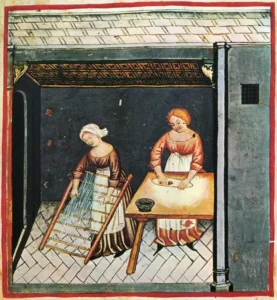
3:Ingredients & Texture of Bigoli
Originally, its dough is simple: soft wheat flour (sometimes whole-wheat or buckwheat), water, and salt. Eggs weren’t always part of the mix, though some regional recipes include them. :contentReference[oaicite:3]{index=3}
The defining feature is texture. Bigoli is extruded through bronze or wooden dies via a bigolaro. That gives a rough and porous outer layer. The thick strand (≈ 3-4 mm in diameter) and rustic shape make Bigoli ideal for clingy sauces and bold flavors. :contentReference[oaicite:4]{index=4}
4:How Bigoli is Made?
The bigolaro is a large press, originally hand-operated, that forces the dough through coarse dies. The result is a noodle with heft and “bite.” In many homes, Bigoli are still made using such presses. :contentReference[oaicite:5]{index=5}
After extrusion, the traditional type may be hung or laid over wooden rods to dry slightly; the dried artisan tries to mimic texture via bronze dies and slow drying. Fresh Bigoli cooks faster; dried takes a bit more time.
5:Classic Pairings & Sauces
Bigoli in Salsa (Onions & Anchovies)
This is among the most iconic: onions slowly cooked until sweet, anchovies (or salted sardines) dissolved into the oil, sometimes breadcrumbs: simple ingredients, bold flavor. In Venice, this is often eaten during lean days, including Christmas Eve, Ash Wednesday, and Good Friday.
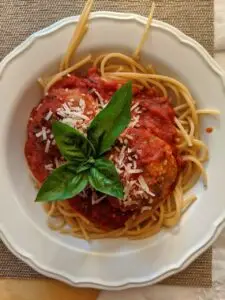
Bigoli con l’Anatra (Duck Ragù)
Rich duck ragù is another canonical pairing. The fatty, deeply flavored sauce complements its weight and chew. You’ll find it in Vicenza and around Padua, especially in autumn festivals. :contentReference[oaicite:8]{index=8}
Sardines, Fish & Oily Seafood
Where fresh sardines or anchovies are readily available, they shine with sardelle or fish-based sauces. Garlic, olive oil, lemon, or herbs highlight the pasta’s texture.
Other Meat & Vegetable Combinations
Mushrooms, butter, seasonal greens, or sausage ragùs are natural fits. Bigoli handles bold matches: game, offal, or rich meat stocks all pair well. Home cooks often adapt according to what’s local.
6:Recipes Worth Trying
Classic in Salsa (Venetian Style)
- Slice 2 large white onions thinly. Sweat in olive oil over low to medium heat until golden and sweet (≈ 30 min).
- Add 4-5 anchovy fillets (or salted sardines), break them into the onion until they melt. Add a splash of white wine or water to loosen the mixture.
- Cook 400 g in well-salted boiling water until al dente. Save some pasta water.
- Drain and toss in the pan with the sauce over gentle heat for 1 min, adding pasta water to bind. Finish with parsley and toasted breadcrumbs if desired.
This highlights its texture and flavor — simple, honest, deeply satisfying.
Bigoli with Duck Ragù (Bigoli con l’Anatra)
- Braise diced onion, carrot, and celery until soft. Add diced duck and brown well.
- Add red wine, reduce; then add broth and simmer until tender.
- Cook Bigoli until al dente. Drain, toss into ragù to absorb flavor.
- Serve with optional grated hard cheese (Parmesan or Grana) and finish with a drizzle of good oil.

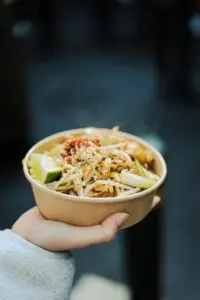
Quick Weeknight Bigoli with Mushrooms & Lemon Gremolata
- Sauté garlic, shallots, and mushrooms until browned.
- Add a splash of white wine, reduce the heat, and add butter and lemon zest.
- Cook; drain; toss with the sauce; finish with parsley gremolata (parsley + lemon + garlic) and reserved pasta water.
This keeps Bigoli’s character while cutting down time and fuss.
7:Buying, Cooking & Storage of Bigoli
Buying Tips
Seek out fresh Italian delis or artisanal pasta makers. For dried Bigoli, look for bronze-cut and whole-grain labeling. Check diameter: around 3-4 mm is traditional. :contentReference[oaicite:11]{index=11}
Cooking Tips
- Use plentiful water and salt. Bigoli needs room to cook evenly.
- Fresh: cook briefly (taste often). Dried artisan Bigoli: allow more time, but avoid overcooking.
- Finish the sauce and pasta together in the pan for a minute or two, using reserved pasta water to bind the sauce to the noodles.
Storage
When fresh, use within 1-2 days or freeze. Dried: store in a cool, dry space. Once opened, use an airtight container. Moisture ruins the texture quickly.
Comparison: Bigoli vs. Other Long Italian Pastas
| Pasta Variety | Primary Region | Traditional Tool | Texture & Surface | Best Sauce Pairing |
| Bigoli | Veneto | Bigolaro (Press) | Coarse & Thick | Duck ragù or anchovy/onion salsa |
| Spaghetti | Southern Italy | Bronze or Teflon Die | Smooth & Thinner | Tomato-based or oil-based sauces |
| Pici | Tuscany | Hand-rolled | Dense & Chewy | Wild boar ragù or garlic and oil |
| Bucatini | Lazio | Extrusion Die | Hollow center, smooth | Aromatic or hearty red sauces |
8:Variations Across Regions
Its variations across regions stay close to tradition but reflect local flour and sauce preferences.
While Veneto remains its birthplace, nearby areas such as Padua, Vicenza, and Treviso introduce subtle but meaningful differences.
One of the most recognized regional styles is Bigoli mori, made with whole-grain or buckwheat flour, which gives the pasta a darker color, deeper flavor, and firmer chew.
Some households also enrich the dough with duck or hen eggs, especially for festive or winter dishes, creating a slightly softer texture without changing the pasta’s signature thickness.
Across these regions, the length and thickness remain consistent, preserving its identity as a heavy, sauce-gripping strand. What changes most is the sauce.
Padua favors anchovy-forward preparations, Vicenza leans toward slow-cooked meat sauces, and Treviso often highlights onions and preserved fish. These variations show how it adapts locally while staying Bigoli unmistakably.
9:Why Keep It in Your Pantry?
Bigoli earns its place in the pantry because it delivers texture, nutrition, and reliability in everyday cooking.
This pasta holds its shape, resists overcooking, and pairs effortlessly with simple ingredients like onions, olive oil, anchovies, or leftover vegetables.
Its dense structure and rough surface allow sauces to cling rather than slide off, making even minimalist recipes feel complete and intentional.
From a nutritional standpoint, whole-grain or buckwheat flour pasta offers more fiber and sustained energy than refined pasta. More importantly, it transforms pantry staples into meals with presence.
Once you experience its chew and weight, lighter pastas can feel thin by comparison. That lasting satisfaction explains why it has remained a regional staple for centuries and why it deserves a permanent spot in a modern kitchen.
10:FAQs Bigoli
Q: Can I substitute it?
Yes. Good substitutes include especially thick whole-wheat spaghetti or Pici. They’ll approximate the chew and sauce-holding, but lose some rusticity.
Q: How do you pronounce Bigoli?
It is pronounced “BEE-go-lee” in Venetian Italian, with emphasis on the first syllable. In English, you may also hear “bee-GO-lee,” which is acceptable but less traditional.
Q: What is Bigoli pasta?
It is a long, thick pasta from the Veneto region of Italy. It resembles extra-thick spaghetti and is known for its rough texture, which helps sauces cling more effectively.
Q: Is it a whole grain?
Traditional types often use whole wheat, buckwheat, or mixed flours. Modern commercial versions may use semolina. Always check the ingredient label if whole-grain content matters to you.
Q: Is it the same as spaghetti?
No. It is thicker, denser, and rougher than spaghetti. Spaghetti is made with refined semolina and has a smoother surface, while delivering a heartier bite.
Q: What sauce is traditionally served with it?
Classic pairings include anchovy and onion sauce, duck ragù, and other slow-cooked, savory sauces. The pasta’s thickness supports bold, salty flavors.
Q: Why is it so thick?
It was designed to be filling and durable. Its thickness is achieved through extrusion through a traditional bigolaro, which produces dense strands with a coarse surface.
Q: Is this pasta egg-based?
No. An authentic one is made with flour and water only, making it naturally egg-free and suitable for many vegan dishes.
Q: How long does it take to cook?
Dried type typically cooks in 10–14 minutes. Fresh cooks faster, usually in 6–8 minutes. Taste early to maintain an al dente texture.
Q: Can you substitute it with another pasta?
Yes. If unavailable, thick spaghetti, Pici, or bucatini can be used as substitutes, though they lack the rustic texture.
Q: Is this pasta healthy?
Whole-grain or buckwheat type provides more fiber and minerals than refined pasta. Nutritional value depends on flour type and portion size.
Q: What region is it from?
It originates in Veneto, especially Venice and the surrounding areas, where it remains a staple of traditional cuisine.
Q: Why is duck egg traditionally used in some regional Bigoli dough recipes?
While the most ancient, baseline version of bigoli relied strictly on soft wheat flour and water, several inland sub-regions of Veneto—particularly around Vicenza and Padua—began enriching the dough with duck eggs. Historically, ducks were far more prevalent than chickens in the marshy, water-logged plains of the Veneto countryside. From a structural standpoint, duck yolks are significantly larger and contain a much higher fat and protein content than chicken eggs. When forced through a heavy press, this extra fat yields an incredibly dense, luxurious, and resilient noodle with an amplified al dente snap that acts as a natural flavor counterpart to gamey sauces like Bigoli con l’Anatra.
Q: What is a Bigolaro, and can you replicate its results with modern kitchen appliances?
A bigolaro is a historic, heavy-duty mechanical pasta press patented in 1604 by a Paduan inventor. It features a long cylindrical chamber attached to a bench or stool, where the cook sits and manually turns a steering wheel attached to a screw-driven plunger, forcing the dense dough downward through a thick brass die.
Replicating this exact texture with a modern electric countertop extruder or a standard rolling attachment is incredibly difficult. Modern consumer kitchen appliances are built with slick plastic or Teflon components that lack the high-friction resistance of brass or wood. More importantly, domestic motors will often overheat or strip their gears if fed a dough as dry, dense, and unyielding as traditional bigoli dough.
Q: How does the thickness of Bigoli change its cooking chemistry compared to Spaghetti?
Because a strand of bigoli averages a massive 3 to 4 millimeters in diameter (nearly double the thickness of standard spaghetti), its internal cooking chemistry requires a completely different approach:
The Core Gradient: When boiling bigoli, the exterior layers of the noodle absorb heat and water long before the dense center does. If boiled too aggressively over roaring heat, the outside of the pasta can become soft and gummy while the inside core remains completely raw and chalky.
The Solution: Bigoli must be cooked in a very large pot of water kept at a steady, rolling simmer rather than an aggressive, violent boil. This allows heat to gently penetrate the dense core uniformly, ensuring a cohesive, muscular chew across the entire thickness of the strand.
Q: Why is Bigoli in Salsa traditionally served cold or at room temperature during lean holidays?
The legendary Venetian dish Bigoli in Salsa (anchovies and onions melted in olive oil) carries deep cultural rules regarding temperature. Because it was historically designated as a “lean day” dish for religious fasts like Christmas Eve and Good Friday, it was prepared in massive batches ahead of time so home cooks wouldn’t have to labor on holy days.
As the dish sits and cools to room temperature, the porous, coarse exterior of the bigoli continuously drinks in the savory, salted olive oil emulsion. Serving it slightly warm or at room temperature allows the sweet notes of the slow-sweated white onions and the umami of the dissolved anchovies to taste much more pronounced than they would if masking the flavor behind a steaming, piping-hot temperature.
Perfect pasta comes down to mastering a few core fundamentals: using the right cooking method, understanding how water and starch interact, pairing the right pasta with the right sauce, and avoiding common mistakes.
When these elements come together, your pasta has a better texture, improved flavor, and holds sauce more effectively. To build these skills, follow a complete pasta cooking guide, learn the water science behind pasta, explore the best pasta for each sauce, and understand common pasta mistakes. These foundational techniques will help you cook better pasta every time, no matter the shape or recipe.
Pastina Pasta: 7 Reasons It’s the Ultimate Comfort Food
Best Pasta for Alfredo Sauce: 7 Picks for Creamy Perfection
Pasta Shape and Sauce Pairing Guide: 7 Secrets of Success
Strozzapreti Pasta: 7 Facts & How to Cook It Perfectly
Alphabet Pasta: 7 Best Secrets for Fun Tiny Soup Shapes
Summary: The Rustic Charm of Bigoli Pasta
Bigoli pasta is a signature staple of Venetian heritage, celebrated for its substantial thickness and uniquely coarse texture. Traditionally crafted from durum wheat semolina or whole-wheat flour, these dense, spaghetti-like strands were historically extruded through a hand-operated press known as a bigolaro.
This artisanal production method creates a porous, rough surface specifically designed for sauce absorption, allowing it to grip heavy, traditional pairings like Bigoli in Salsa (anchovies and onions) or a rich, slow-cooked duck ragù. Unlike standard long pasta, Bigoli offers a robust al dente bite that holds up against bold, oily, and meaty flavors, making it an essential pantry item for those seeking an authentic Northern Italian culinary experience.
Where can I find an authentic form?
Look at Italian specialty stores, farmers’ markets, and online artisan pasta sellers. In Veneto, you’ll find them fresh in delis and trattorias. Labels with bronze dies, whole-grain flours, or buckwheat versions are good indicators.

Syed Yasar Arafat is the founder of PastaLoverz.com and a food research enthusiast with a focused interest in pasta varieties, traditional Italian cuisine, and balanced eating. Through PastaLoverz.com, he publishes well-researched articles that explain pasta types, cooking methods, and nutritional considerations in clear, practical terms to help readers make informed food choices.

Hi, Neat post. There is an issue together with your web site in web explorer, may check
this? IE nonetheless is the market leader and a large section of other people
will omit your excellent writing due to this problem.