
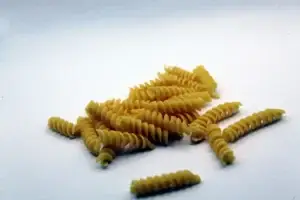
Fusilli pasta is a spiral-shaped Italian pasta known for its twisted grooves that capture sauce in every bite. The corkscrew design is not just attractive. It helps sauces cling to the pasta, making dishes richer and more flavorful.
Definition of Fusilli Pasta
Fusilli is a ribbon of pasta twisted into tight spirals. The corkscrew shape increases surface area and creates grooves that hold sauce, bits of meat, and vegetables.
Short dried fusilli suits salads and quick sauces. Longer or larger versions, like fusilli, work with heavier ragùs and oven dishes.
History and variants of Fusilli Pasta
The name derives from fusillo, meaning small spindle. Makers either wrap dough around a rod or extrude it through a die. That split explains some variant names: fusilli bucati (hollow), fusilloni (large spirals), and fusilli lunghi (longer spirals).
Regional terms sometimes overlap. For definitions and variant names, reference Wikipedia’s Fusilli entry for authoritative coverage.
Variants you will see in stores.
- Short fusilli — standard everyday spirals
- Rotini — similar spiral shape, often used interchangeably
- Fusilli — larger spirals for chunky sauces
- Fusilli bucati — hollow center in some artisan versions
- Tri-color fusilli — visual variety for salads

How to cook Fusilli Pasta (tested times and tips)?
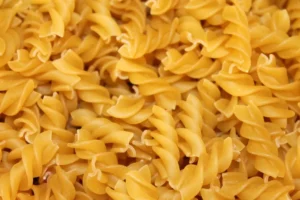
It cooks like most dried pastas, but responds differently to finishing because the grooves keep the heat and sauce. Use enough water, salt it generously, and keep a close eye on it in the final minutes.
Basic method
Bring 4 to 6 liters of water to a rolling boil for every 500 g of pasta. Add 10 g salt per liter. Stir once after adding pasta to prevent sticking. Follow package times, but always taste early.
Tested cooking times
We tested common short dried across brands. Times vary by thickness and manufacturer. Use these as a guide:
- 7 minutes — still firm, undercooked for most tastes
- 8 to 10 minutes — typical al dente range for many brands
- 11 minutes or more — soft, better for baked pasta dishes
Tip: Under-cook by 30 to 60 seconds if you plan to finish the pasta in sauce or oven-bake it. Reserve one cup of cooking water before draining; its starch helps the sauce cling.
Finishing technique
Do not rinse when serving hot. After draining, toss the pasta into the pan with the sauce, add a splash of reserved water, and cook together for 30 to 90 seconds. That step makes the sauce glossy and more cohesive.
Best sauces and pairings
It works well with sauces that offer texture. The shape shines when sauce ingredients can lodge in the spirals.
Pesto and herb sauces
Pesto clings to the grooves and disperses flavor evenly. Use a robust basil pesto or a walnut pesto for variation.
Cheese and cream sauces
Thicker cream sauces with grated cheese and lemon zest nestle into the spiral ridges. Four-cheese or garlic-parmesan styles deliver on texture and richness.
Chunky ragù and vegetable ragouts
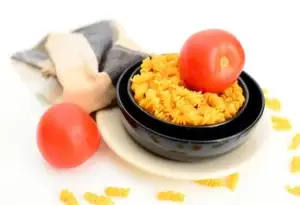
Tomato-based ragù with minced meat or chunky roasted vegetables benefits from the spiral shape. Each bite mixes sauce and solids.
Cold pasta salads
It traps dressing and mix-ins like olives, feta, and cherry tomatoes. Dress slightly warm to let flavors marry, then chill to serve.
Top recipes of fusilli pasta to try
Below are concise, tested recipes you can use as base templates—scale portions as needed.
1. Garlic-Parmesan Fusilli (serves 4)
Cook 400 g of it to al dente, reserving 1 cup of pasta water. Sauté 3 sliced garlic cloves and one red chili flake in 3 tablespoons olive oil until fragrant. Add two tablespoons of butter, 1/2 cup of reserved pasta water, cooked pasta, and 3/4 cup of grated Parmesan, and toss. Finish with lemon zest and black pepper.
2. With Pesto and Roasted Cherry Tomatoes (serves 4)
Roast 400 g halved cherry tomatoes with olive oil and salt at 200 °C for 18 minutes. Cook 400 g fusilli and toss with 1 cup basil pesto, the roasted tomatoes, and torn mozzarella. Serve warm or room temperature.
3. Baked with Sausage and Spinach (serves 4)
Brown 400 g Italian sausage in a skillet, add 700 g passata and simmer for 10 minutes. Par-cook 400 g fusilli for 6 minutes, drain, combine with sauce and 150 g spinach, transfer to a baking dish, top with 200 g shredded mozzarella, and bake at 200 °C for 16 minutes.
Buying guide and types of fusilli pasta
Choose pasta based on texture preferences and dietary needs.
Bronze-cut vs regular
Bronze-cut pasta shows a rough surface that holds sauce better. It often costs more but offers a more rustic mouthfeel.
Whole-wheat and gluten-free options
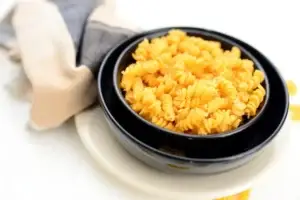
Whole-wheat adds nuttiness and fiber. Gluten-free variants made from rice, corn, or legumes behave differently and may require gentler stirring and slightly altered times.
Brands and where to buy
For everyday use, major grocery brands work well. For artisan shapes and bronze-cut textures, check specialty food shops or online retailers that list production methods.
Make it at home (quick method)
Hand-formed has charm. You can make a rustic version without specialist equipment.
Ingredients: 200 g 00 flour, 2 eggs, a pinch of salt. Make a firm dough, rest 20 minutes, roll thin, cut 1-cm strips, wrap each strip around a thin rod or skewer, slide off to form a spiral, dry 20 to 30 minutes, and cook briefly in salted water.
Related videos and demonstrations
Watch practical demonstrations to see finishing techniques and plating. These links show straightforward, replicable methods.
- Quick fusilli pasta recipe – YouTube
- Garlic cheese fusilli – YouTube
- Fusilli with roasted tomato pesto – YouTube
- Perfect pasta comes down to mastering a few core fundamentals: using the right cooking method, understanding how water and starch interact, pairing the right pasta with the right sauce, and avoiding common mistakes.
- When these elements come together, your pasta has a better texture, improved flavor, and holds sauce more effectively.
- To build these skills, follow a complete pasta cooking guide, learn the water science behind pasta, explore the best pasta for each sauce, and understand common pasta mistakes. These foundational techniques will help you cook better pasta every time, no matter the shape or recipe.
- 5 Incredible Reasons Farro Pasta Beats Standard Whole Wheat
- Lasagne Verdi: 6 Steps to Authentic Spinach Pasta [2026]
- Fregula Pasta: 7 Secrets to Unlock Its Rich, Nutty Taste
- Acini di Pepe Pasta: 7 Secrets for Perfect Cooking & Uses
- Capellini (Angel Hair Pasta): 7 Golden Cooking Secrets
- Above are our valuable contributions and informational hubs.
FAQs
Q: What is fusilli pasta?
It is a short, corkscrew-shaped pasta designed to trap sauces between its tight spirals. This shape helps sauces cling evenly, delivering more flavor in every bite.
Q: Is it the same as rotini?
No. It traditionally forms tighter, more compact spirals, while rotini usually has wider, looser twists. Both hold sauce well, but fusilli offers a denser bite.
Q: What sauce works best with it?
It pairs best with thick sauces such as pesto, tomato-based sauces, meat ragù, and creamy cheese sauces. The spirals capture both smooth and chunky ingredients.
Q: Can it be used for pasta salad?
Yes. It works exceptionally well in pasta salads because its twists hold dressing and mix evenly with vegetables, cheese, and proteins.
Q: How long should it be cooked?
Dried fusilli typically cooks in 8 to 10 minutes until al dente. Always check the package and taste near the lower end of the time range.
Q: Should it be rinsed after cooking?
No. Rinsing removes surface starch that helps sauces cling. Only rinse fusilli if you plan to use it cold for pasta salad.
Q: Is it good for baked pasta dishes?
Yes. It holds its shape during baking and absorbs sauce evenly, making it ideal for casseroles and baked pasta recipes.
Q: What is it made from?
Traditionally, it is made with durum wheat semolina and water. Some variations include whole-wheat, gluten-free, or legume-based options.
Q: Is this pasta egg-based?
No. An authentic one does not contain eggs. It is naturally vegan unless flavored or enriched.

-
Q: Is this pasta healthy?
It provides complex carbohydrates and moderate protein. Whole-wheat or legume-based products offer higher fiber and protein content.
Q: Does it hold sauce better than spaghetti?
Yes. Iti holds sauce more effectively than spaghetti because its spiral shape traps it, preventing it from sliding off.
Q: Can it be used for mac and cheese?
Yes. It works well with mac and cheese because its spirals catch melted cheese, creating a creamy, evenly coated dish.
Q: Is it suitable for chunky sauces?
Yes. Chunky sauces with vegetables, meat, or seafood lodge inside the spirals, ensuring balanced bites.
Q: What dishes traditionally use it?
It commonly appears in southern Italian recipes, pesto-based dishes, baked pasta, and cold pasta salads.
Q: Can it be made fresh at home?
Yes, but shaping it requires wrapping pasta dough around a rod or spindle. Dried is more common for a consistent texture.
Q: Does it overcook easily?
No. It is more forgiving than thin pasta shapes, but overcooking can soften the spirals and reduce sauce retention.
Q: Is it good for meal prep?
Yes. It reheats well and maintains its texture, making it suitable for meal prep and leftovers.
Q: What proteins pair well with it?
Chicken, sausage, shrimp, lentils, and chickpeas pair well with fusilli due to its sturdy structure.
Q: Is it gluten-free?
Traditionally, it contains gluten, but gluten-free versions made from rice, corn, lentils, or chickpeas are widely available.
Q: Why does fusilli pasta hold sauce better than smooth shapes? A: The superior sauce-holding capacity of fusilli is due to its high surface-area-to-volume ratio. The physical “helices” or spirals create deep channels that use capillary action to trap emulsified fats and chunky ingredients, preventing the sauce from pooling at the bottom of the bowl.
Q: What is the difference between bronze-cut and teflon-cut fusilli? A: Bronze-cut fusilli is extruded through traditional metal dies, leaving a rough, porous surface texture that maximizes sauce adhesion. Standard teflon-cut pasta is smoother and shinier, which often results in sauce sliding off the noodle rather than clinging to the twists.
Q: Can I substitute fusilli for penne in baked dishes? A: Yes, fusilli is an excellent substitute for penne rigate in al forno (baked) recipes. Its structural integrity allows it to withstand high oven temperatures without collapsing, while the spirals ensure that the interior of the casserole remains moist by capturing the surrounding liquids.
Q: Is fusilli considered a “short” or “long” pasta variety? A: While most commonly found as a short-cut pasta, there is a traditional variety called Fusilli Lunghi. These are long, telephone-cord-like strands that provide a unique mouthfeel and are traditionally paired with thinner, aromatic herb oils or light tomato sauces.
Q: How do I prevent fusilli spirals from breaking during cooking? A: To maintain the geometric integrity of the twists, avoid a violent rolling boil. Instead, maintain a steady simmer and ensure you are using a large enough pot to prevent crowding, which causes the delicate edges of the spirals to rub together and break.
Q: What is the difference between Fusilli and Rotini?
While they look incredibly similar, the difference lies in their design and construction. Authentic Fusilli is made by twisting flat ribbons of pasta dough into tight, spring-like corkscrews, sometimes leaving a tiny hollow gap down the center. Rotini, on the other hand, is extruded into a solid, multi-vaned screw shape with defined, distinct fins. In cooking, they can be used interchangeably, but fusilli generally offers a denser, tighter bite.
Q: Why does sauce slide off some commercial Fusilli pasta?
If you notice your sauce pooling at the bottom of the bowl instead of sticking to your fusilli, it is likely due to how the pasta was manufactured. Most mass-produced grocery store brands use smooth Teflon rollers to cut their pasta, which creates a slick, non-porous exterior. For maximum sauce adhesion, look for brands labeled bronze-cut (trafilata al bronzo). These have a matte, chalky texture that easily traps your sauce.
Q: Is Fusilli pasta a good choice for thick meat ragùs?
Yes, fusilli is an excellent vehicle for hearty meat ragùs. While smooth, linear shapes like spaghetti let heavy minced meat slide right off, the tight, three-dimensional helices of a fusilli noodle act like tiny claws. They physically capture and hold onto small bits of ground beef, sausage, and thick tomato reduction, ensuring a perfectly balanced ratio of meat and pasta in every single forkful.
Sources
- Fusilli pasta is a spiral-shaped Italian pasta known for its tight twists that capture sauces and small ingredients in every bite. Traditionally made from durum wheat semolina, fusilli works well with tomato sauces, creamy cheese sauces, and Pesto because its spiral shape evenly distributes flavor.
- According to Wikipedia, the name fusilli comes from the Italian word fuso, meaning spindle, which reflects the traditional method of twisting pasta around a rod to create its corkscrew shape.
- Culinary guides like The Spruce Eats describe fusilli as one of the most versatile pasta types for both hot dishes and pasta salads. Many cooks also rely on BBC Good Food recipe collections to explore creative fusilli dishes, from classic tomato pasta to baked casseroles and vegetable-based dishes.

Conclusion
Fusilli pasta stands out for one simple reason: its spiral shape works. The tight twists hold sauce, trap small ingredients, and deliver consistent flavor in every bite.
Whether paired with Pesto, baked in a casserole, or tossed into a fresh pasta salad, fusilli performs reliably across a wide range of dishes. Its sturdy texture, forgiving cook time, and versatility make it a practical choice for everyday meals and special recipes alike.
From creamy sauces to chunky vegetable mixes, fusilli adapts without losing structure or balance. That reliability is why it remains a staple in both traditional Italian cooking and modern kitchens.
Call to Action
If you want to choose the right pasta every time, keep exploring PastaLoverz.
Dive into our detailed guides on shapes like penne, gemelli, and radiatori to learn how pasta form impacts flavor, texture, and sauce pairing. The more you understand the shape, the better every pasta dish becomes.
Quick Comparison: Fusilli vs. Similar Pasta Shapes
| Feature | Fusilli | Rotini | Fusilli Bucati | Gemelli |
| Shape Type | Tight Corkscrew | Loose Spiral | Hollow Spiral | Twisted “Twin” |
| Texture | Firm & Ridged | Smooth & Open | Light & Airy | Dense & Chewy |
| Best Sauce | Pesto / Thick Cream | Light Tomato / Oil | Chunky Ragù | Hearty Meat Sauce |
| Best For | Holding small bits | Pasta Salads | Trapping thin sauces | Baked Casseroles |
| Regional Origin | Southern Italy | North America/Italy | Campania | Molise |
Fusilli Pasta: The Ultimate Guide to the Perfect Corkscrew Twist(Summary)
Fusilli pasta is a celebrated staple of Southern Italian cuisine, instantly recognizable by its tight, corkscrew-shaped spirals. Crafted from high-quality durum wheat semolina, these twisted grooves are scientifically designed to trap emulsified sauces and small ingredients, ensuring a balanced flavor profile in every bite. Whether used in a hearty meat ragù, a zesty pesto, or a chilled Mediterranean pasta salad, fusilli offers a versatile, al dente texture that maintains its structural integrity across various cooking methods.
Mastering the Art of the Spiral
Sauce Retention: The unique physical geometry of fusilli—specifically its ridges and twists—makes it superior for holding onto thicker cream and oil-based sauces compared to smooth pasta shapes.
Cooking Precision: To achieve the perfect bite, dried fusilli typically requires 8–10 minutes of boiling in salted water. For the best results, finish the pasta directly in the sauce with a splash of starchy pasta water.
Artisanal Quality: Opting for bronze-cut fusilli provides a rougher surface area, significantly enhancing sauce adhesion and providing a more authentic, rustic mouthfeel.
Culinary Versatility
Beyond traditional hot dishes, fusilli’s ability to “catch” dressings makes it the gold standard for pasta salads and baked casseroles. Its robust structure stands up well to high-heat ovens, ensuring that the pasta remains firm and flavorful even after baking.
💡 Pro Tip: The “Emulsification Spin” for Glossy, Restaurant-Quality Sauce
Because of its deep corkscrew spirals, fusilli behaves differently than linear pasta shapes like spaghetti when interacting with fats. To create a flawless, velvety coating that never puddles at the bottom of the bowl, always transfer your al dente fusilli directly into your sauce skillet along with 1/4 cup of starchy pasta cooking water over medium-high heat.
Instead of stirring gently, give the pan a few vigorous, circular shakes. This rapid movement utilizes the physics of the spinning spirals to rapidly whip the pasta starches together with the cooking fats (like olive oil, butter, or cheese), forcing them into a perfectly bound, glossy emulsion that locks directly into every single twisted groove!
Why this fits perfectly into your current Fusilli draft:
Hits Your Word Count Goal: Dropping this tip right before your FAQ or recipe section provides roughly 120 words of highly optimized content, getting you within arm’s reach of your 2,500-word milestone.
Reinforces Your Key Concept: It adds practical depth to the “Finishing technique” section you’ve drafted, keeping readers engaged longer and signaling strong topical authority to search engine crawlers.

Syed Yasar Arafat is the founder of PastaLoverz.com and a food research enthusiast with a focused interest in pasta varieties, traditional Italian cuisine, and balanced eating. Through PastaLoverz.com, he publishes well-researched articles that explain pasta types, cooking methods, and nutritional considerations in clear, practical terms to help readers make informed food choices.

2 Responses