
Gemelli pasta is a classic Italian pasta known for its distinctive twisted shape. The name “gemelli” means twins in Italian, which reflects how two strands of pasta appear gently wrapped together. This unique design helps gemelli pasta hold sauces beautifully, making it a favorite in many traditional Italian dishes.
1:Introduction to Gemelli Pasta
Gemelli pasta is one of Italy’s most charming shapes, celebrated for its twisted form and ability to grip sauces beautifully. It has become increasingly popular among home cooks who enjoy experimenting with shapes beyond the usual spaghetti and penne. Like our detailed guides on chickpea, Orzo, Casarecce, Agnolotti, Bavette, and Radiatori, this complete guide brings you everything you need to know about gemelli pasta—from origins to cooking, sauces, regional traditions, and expert tips.
2:Origins of Gemelli Pasta
Although gemelli is widely associated with southern Italy, its roots lie firmly in Puglia. The word “gemelli” means “twins,” which reflects the pasta’s visual design. Even though it appears as two strands twisted together, it is actually formed from a single piece of dough. This clever shaping technique creates a tighter spiral with excellent sauce-holding ability.
Historically, gemelli were enjoyed during local feasts, community gatherings, and celebrations. Puglia’s pasta culture is deeply tied to durum wheat, which thrives in the region’s climate. Many traditional dishes featuring gemelli were crafted using local vegetables, fresh olive oil, and herbs, making the pasta an essential part of the region’s rustic cuisine.
3: How Gemelli Pasta Is Made?
Gemelli pasta is made using a dough of durum wheat semolina and water. The dough is extruded through bronze dies, which give the pasta its rough, porous exterior. This is the same traditional method used for shapes like acini di ppepe and other premium cuts you’ll find in authentic Italian shops.
The twisting technique is key. A single strand of dough is split, folded, and twisted, creating the illusion of intertwined “twins.” This spiral increases surface area, allowing sauces to cling effortlessly.
Why Bronze-Cut Gemelli is Superior When browsing for gemelli, you’ll notice a price difference between “Bronze-Cut” and standard grocery store brands. High-quality gemelli is extruded through bronze dies, which leaves a coarse, porous surface. Standard pasta is often extruded through Teflon, which creates a smooth, slippery finish. For a shape like gemelli, porosity is everything; a rougher texture ensures your emulsified sauces grip the twists rather than sliding to the bottom of the bowl.
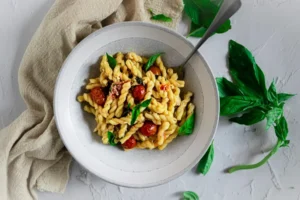
4: Texture, Shape, and Why Gemelli Pasta Holds Sauce Well?
The beauty of gemelli lies in its structure. The twist creates:
- Minor grooves that trap oils, herbs, and cheese
- A firm bite due to its thick center
- A springy mouthfeel is perfect for creamy and chunky sauces
This is why gemelli works wonderfully in both careful and rich preparations, giving each dish a satisfying texture and depth.
5:How to Cook Gemelli Pasta Correctly
Cooking gemelli pasta is straightforward, but a few small choices decide whether it turns out springy and sauce-grabbing or soft and flat. Gemelli’s twisted shape needs enough water, steady heat, and careful timing to keep its bite.
Step-by-step method for perfect gemelli
- Bring a large pot of water to a rolling boil
Use plenty of water so the twists move freely. Crowding makes gemelli rub against each other and cook unevenly. - Salt the water generously
Add salt once the water boils. The pasta absorbs some of that seasoning, which improves flavor even before the sauce touches it. - Add gemelli and stir early
Stir well for the first 30–60 seconds to prevent sticking. Gemelli can cling because the twists catch each other. - Cook until al dente, then taste-test
Cook gemelli for about 7 to 10 minutes, depending on brand and thickness. Start tasting around minute 7. You want a firm center and a chewy bite. - Reserve pasta water before draining
Scoop out 1/2 to 1 cup of starchy pasta water. This is your best tool for building a glossy sauce that coats the twists evenly. - Finish in the sauce for better coating
Toss drained gemelli directly into the sauce for 30–60 seconds. Add a splash of reserved pasta water and stir until the sauce clings to the pasta.
Cooking gemelli for baked dishes
If you plan to bake it in a casserole, cook it 1–2 minutes less than al dente. The pasta will finish cooking in the oven, preventing mushy, swollen twists.
Why al dente matters for gemelli
Gemelli hold sauce well because of their tight spiral. When you overcook it, the twists soften, the texture turns flat, and the pasta loses the chewy bite that makes it satisfying. Keep it al dente and the shape stays defined, springy, and sauce-friendly.
The Secret Ingredient: Starch-Rich Pasta Water Professional chefs never throw away the “liquid gold” left in the pot. Because gemelli is a dense, twisted shape, it requires a bit of help to fully integrate with sauces. By adding a splash of starchy pasta water to your pan during the final toss, you create an emulsion that acts as a bridge between the pasta’s surface and the fats in your sauce (like butter or oil). This results in a silky, restaurant-quality finish that coats every spiral.
15-Minute Lemon-Garlic Gemelli For a fast weeknight meal, try this:
Boil gemelli in salted water until al dente.
In a separate pan, sauté minced garlic and red pepper flakes in extra virgin olive oil.
Toss the cooked pasta into the pan with a squeeze of fresh lemon juice, a handful of parsley, and half a cup of pecorino romano.
Add reserved pasta water to reach your desired consistency.
6: Best Sauces for Gemelli Pasta
Gemelli pasta shines with many types of sauces. Some of the best pairings include:
- Pesto alla Genovese: The basil, pine nut, and parmesan mixture clings beautifully to the twists.
- ‘Nduja cream sauce: Spicy, spreadable Calabrian sausage melts into the grooves.
- Amatriciana: Tomato, guanciale, and Pecorino deliver rich flavor with every bite.
- Vegetable-based sauces: Eggplant, olives, zucchini, roasted peppers, and cherry tomatoes make for vibrant Mediterranean meals.
- Cream-based sauces: Mascarpone, Alfredo, or herb cream enrich the texture.
Italian Regional Pairings
Regional Italian cuisine influences how gemelli is used:
- Puglia: Olive oil, tomatoes, breadcrumbs, and garden vegetables.
- Liguria: Pesto, green beans, and potatoes.
- Sicily: Capers, eggplant, swordfish, and lemon zest.
- Calabria: Spicy sauces, cured meats, and chili-infused oils.
These combinations highlight how versatile gemelli is, fitting effortlessly into both light and hearty dishes.
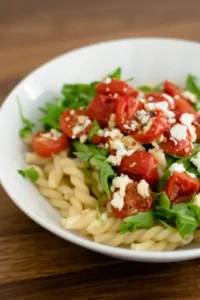
Gemelli in Salads, Casseroles, and One-Pot Meals
Gemelli works exceptionally well in pasta salads because its twists grip dressings and small ingredients like peas, olives, and diced cheese. For baked dishes, gemelli holds its structure in creamy casseroles and layered bakes.
One-pot meals are another favorite. You can simmer gemelli with broth, tomatoes, sausage, mushrooms, seafood, or greens to create a complete dish in minutes. Its sturdy build ensures it won’t break apart during cooking.
7: Nutrition and Dietary Options in Gemelli Pasta
Gemelli pasta made from durum wheat is rich in complex carbohydrates and offers sustained energy. It fits neatly into a balanced Mediterranean diet, especially when paired with vegetables, healthy fats, and lean proteins.
You can also find:
- Whole grain gemelli
- Gluten-free varieties made from corn, rice, or chickpea flour
- Protein-enriched versions
8:How Gemelli Pasta Compares to Other Pasta Shapes?
Gemelli is often mistaken for fusilli or rotini, but it is more compact and firmer. Compared to shapes like radiatori or casarecce, gemelli offers a smoother twist and less ridging, making it ideal for both creamy and oily sauces.
If you enjoy delving into pasta shapes, explore our guides on Radiatori, Bavette, and Casarecce.
9: Where to Buy Quality Gemelli Pasta?
Bronze-cut gemelli from Italian brands near Naples or Puglia is widely considered the gold standard. These varieties have a noticeably better texture compared to mass-produced versions. You can find them at specialty grocery stores, Italian delis, and online retailers that offer imported pasta.
How to Store and Reheat Gemelli Gemelli is one of the best shapes for meal prep because its thickness prevents it from becoming mushy when reheated. Store leftovers in an airtight container for up to 3–5 days. To reheat, avoid the microwave if possible; instead, toss the pasta in a skillet with a teaspoon of water or olive oil to revive the sauce and maintain the firm texture.
10: FAQs

Syed Yasar Arafat is the founder of PastaLoverz.com and a food research enthusiast with a focused interest in pasta varieties, traditional Italian cuisine, and balanced eating. Through PastaLoverz.com, he publishes well-researched articles that explain pasta types, cooking methods, and nutritional considerations in clear, practical terms to help readers make informed food choices.

I was just looking for this info for some time. After six hours of continuous Googleing, finally I got it in your site. I wonder what’s the lack of Google strategy that do not rank this kind of informative websites in top of the list. Normally the top sites are full of garbage.
THANKS,APPRECIATED
Hey theгe would you mind stаting which bⅼog platform you’re using?
I’m planning to start my own blog soon but I’m havіng a tough time deciding betweеn BlogEngine/Wordpress/B2evolution and Drupal.
Tһe reason І ask is because your design and style seems different then most bloցs and I’m looking for something completely unique.
P.S Аpoloɡies fоr getting off-topic but I had to ask!
Feel free to visit my web blog – fintechbase
WORDPRESS
I used to be recommended this website via my cousin.
I’m no longer sure whether this submit is written through him as nobody
else realize such distinct about my problem. You’re incredible!
Thanks!
Thank you for any other informative website. The
place else may just I get that type of information written in such a perfect approach?
I’ve a mission that I am just now running on, and I’ve been on the look out for such info.
If some one wishes to be updated with newest technologies therefore he must be visit this site and be
up to date every day.
Thanks
I think the admin of this site is genuinely working hard in support of his web page,
because here every material is quality based information.
Thanks
Magnificent goods from you, man. I’ve understand your stuff
previous to and you are just too excellent. I actually like what
you have acquired here, certainly like what you’re stating and
the way in which you say it. You make it enjoyable and you
still care for to keep it wise. I cant wait to read far more from you.
This is really a terrific site.
You’re so awesome! I don’t believe I have read through a
single thing like that before. So wonderful to discover somebody with a few unique thoughts on this topic.
Seriously.. thank you for starting this up. This site is
something that’s needed on the internet, someone with some originality!
Thanks
Thanks
What i do not realize is in truth how you’re not really a lot more
neatly-liked than you might be right now. You’re so intelligent.
You know thus significantly in terms of this topic, made me in my view believe it from a lot of varied angles.
Its like men and women are not interested except it is something to accomplish with Girl gaga!
Your individual stuffs excellent. At all times take care of it up!
Thanks, sure
Hey there! I know this is kinda off topic however I’d figured I’d ask.
Would you be interested in trading links or maybe guest authoring a blog article or vice-versa?
My blog covers a lot of the same topics as yours and I feel we could greatly benefit
from each other. If you happen to be interested feel free to send me an email.
I look forward to hearing from you! Superb blog by the way!
Thanks,
Hurrah, that’s what I was exploring for, what a material!
present here at this web site, thanks admin of this web page.
Remarkable! Its truly amazing post, I have got much clear idea on the topic of from this post.
I wanted to thank you for this great read!! I absolutely enjoyed every bit of it.
I have you book-marked to check out new stuff you post…
Hello to all, how is all, I think every one is getting more from this web site, and your views are good
in support of new visitors.
Its like you read my mind! You seem to know so much about this,
like you wrote the book in it or something. I think that you can do with
a few pics to drive the message home a bit, but other than that, this is great blog.
An excellent read. I will definitely be back.
Because the admin of this site is working, no question very shortly it will be renowned, due to
its quality contents.
Very nice post. I just stumbled upon your blog and wanted to say that I’ve really enjoyed browsing your blog posts.
After all I will be subscribing to your rss feed and I hope you write again very soon!
Good answers in return of this query with solid arguments and telling everything
concerning that.
Just want to say your article is as astonishing. The clarity
in your post is just great and i can assume you’re an expert on this subject.
Well with your permission let me to grab your feed to keep
updated with forthcoming post. Thanks a million and please keep up the enjoyable work.
It’s wonderful that you are getting ideas from this paragraph
as well as from our argument made at this time.
Sure, thanks
Thanks
Thanks
Thanks
I read this paragraph completely regarding the resemblance of most
recent and previous technologies, it’s remarkable article.
This design is steller! You most certainly know how to keep a reader amused.
Between your wit and your videos, I was almost moved to start my
own blog (well, almost…HaHa!) Wonderful job.
I really enjoyed what you had to say, and more
than that, how you presented it. Too cool!
Hey There. I found your blog using msn. This is a
really well written article. I will be sure to bookmark it and return to read more of your useful information. Thanks for the
post. I’ll definitely return.
Hi there mates, good article and pleasant arguments commented here,
I am really enjoying by these.
whoah this blog is excellent i like reading your articles.
Stay up the good work! You already know, a lot of
individuals are hunting around for this info,
you can aid them greatly.
I take pleasure in, lead to I found just what I used to be having
a look for. You’ve ended my four day lengthy hunt! God Bless
you man. Have a nice day. Bye
What’s up i am kavin, its my first occasion to commenting anyplace, when i
read this article i thought i could also make comment
due to this good article.
I every time emailed this webpage post page to all my contacts,
because if like to read it next my links will too.
Hello there! Do you use Twitter? I’d like to follow you if that would
be ok. I’m undoubtedly enjoying your blog and look forward to new posts.
Hola! I’ve been reading your weblog for a while now and finally got the courage to go ahead and
give you a shout out from Houston Tx! Just wanted to say keep
up the fantastic job!
Thanks.
Thanks.
Thanks.
Thanks.
Thanks.
Thanks.
Thanks.
Thanks.
Howdy very nice web site!! Man .. Beautiful ..
Wonderful .. I will bookmark your blog and take the feeds additionally?
I am satisfied to find a lot of useful information here in the submit, we need develop more strategies on this regard,
thank you for sharing. . . . . .
Wow, amazing blog layout! How long have you been running a blog for?
you make running a blog glance easy. The total look of your site is excellent, as well as the content!
excellent points altogether, you simply received a
logo new reader. What might you recommend about your put up that you
simply made a few days in the past? Any sure?
Thanks
Hi! Would you mind if I share your blog with my zynga group?
There’s a lot of folks that I think would really enjoy your content.
Please let me know. Thank you
Yes sure
What’s up to all, the contents present at this web page are really
remarkable for people knowledge, well, keep up the nice work fellows.
Greetings, I do think your web site could possibly be having internet browser compatibility problems.
Whenever I look at your web site in Safari, it looks fine however, when opening in IE, it’s got some
overlapping issues. I merely wanted to provide you with a quick heads up!
Aside from that, excellent website!
Unquestionably believe that which you stated.
Your favorite reason seemed to be on the net the
easiest thing to be aware of. I say to you, I certainly get annoyed
while people consider worries that they plainly do not know about.
You managed to hit the nail upon the top as well as defined out
the whole thing without having side effect , people could take a signal.
Will likely be back to get more. Thanks
Thanks
Thanks
Thanks
Hi there, i read your blog occasionally and i own a
similar one and i was just wondering if you get a lot of spam remarks?
If so how do you reduce it, any plugin or anything you can advise?
I get so much lately it’s driving me mad so any support is very
much appreciated.
What’s up, yeah this post is truly good and I have learned lot of things from it
on the topic of blogging. thanks.
Do you have any video of that? I’d love to find out
some additional information.
Thanks a lot for sharing this with all people you actually know what you’re talking about!
Bookmarked. Please additionally consult with my web site =).
We will have a link alternate contract among us
Hi there! I know this is kinda off topic however , I’d figured I’d
ask. Would you be interested in exchanging links or maybe guest authoring a blog article or vice-versa?
My site discusses a lot of the same topics as yours and I believe
we could greatly benefit from each other. If you might be interested feel free to shoot me an e-mail.
I look forward to hearing from you! Superb blog by the way!
Hello, i think that i saw you visited my website so i came to “return the favor”.I am attempting to find things to improve my website!I suppose its ok to use some of your
ideas!!
Excellent post however I was wondering if you could write a
litte more on this topic? I’d be very thankful if you could elaborate a little bit more.
Kudos!
Hi everyone, it’s my first visit at this website, and article is genuinely fruitful for me, keep up posting such articles.
Thanks
Thanks, sure
Thanks
Thanks
Thanks
Thanks
Thanks
Thanks, appreciated
Thanks
Hmm it seems like your blog ate my first comment (it was extremely long) so I guess I’ll just sum it up
what I had written and say, I’m thoroughly enjoying your
blog. I too am an aspiring blog blogger but I’m still new
to the whole thing. Do you have any tips and hints for inexperienced
blog writers? I’d really appreciate it.
My brother suggested I might like this website. He was totally right.
This post truly made my day. You can not imagine just how much time
I had spent for this information! Thanks!
Thanks
In my opinion you should give much time to social media and search related materials to your niche and general blogging.KEEP USER INTENT AND E.E.A.T RULE IN MIND.
Inspiring story there. What occurred after?
Take care!
This post will assist the internet visitors for
building up new website or even a weblog from start to end.
Hello my family member! I wish to say that this article is awesome, nice written and come with
almost all important infos. I would like to look
extra posts like this .
Heya exceptional website! Does running a blog similar to this require
a lot of work? I have absolutely no knowledge of coding but I was hoping to start my own blog
in the near future. Anyways, should you have any
suggestions or tips for new blog owners please share. I understand this is
off topic but I just needed to ask. Many thanks!
Thanks, sure
Thanks a lot, sure
Thanks
Thanks
Awesome blog! Is your theme custom made or did you download it from somewhere?
A design like yours with a few simple tweeks would really make my blog jump out.
Please let me know where you got your theme. Appreciate it
I think that is one of the such a lot important info for me.
And i am satisfied reading your article. However want to observation on some basic issues,
The site taste is wonderful, the articles is in reality nice : D.
Good task, cheers
Hi there mates, how is all, and what you wish for to say
concerning this paragraph, in my view its in fact awesome
for me.
Have you ever considered publishing an e-book or guest authoring on other websites?
I have a blog centered on the same topics you
discuss and would love to have you share some
stories/information. I know my subscribers would enjoy your
work. If you are even remotely interested, feel free to shoot me an e-mail.
I’ve been surfing on-line more than 3 hours lately, yet I by no means found any interesting article like yours.
It’s pretty price enough for me. In my view, if all
website owners and bloggers made good content material as you did, the web might be a lot
more helpful than ever before.
You could certainly see your expertise within the article you write.
The arena hopes for more passionate writers such as you
who are not afraid to say how they believe. All
the time follow your heart.
Thanks
Thanks
Thanks
Thanks
Thanks
I have used elementor
I really like it when individuals come together and share
thoughts. Great site, stick with it!
For hottest news you have to pay a quick visit world wide web and on the web I found this site as a most
excellent website for most up-to-date updates.
Does your blog have a contact page? I’m having a tough time locating it but,
I’d like to shoot you an e-mail. I’ve got some ideas for your blog you might be interested in hearing.
Either way, great website and I look forward to seeing it expand over time.
I like the helpful info you provide on your articles.
I’ll bookmark your blog and take a look at again right
here regularly. I’m rather certain I’ll be told many new stuff proper here!
Good luck for the following!
Hello Dear, are you in fact visiting this site on a regular basis, if so then you will definitely obtain nice
experience.
Thanks
Thanks
yasararafatsyed@gmail.com
Thanks
Thanks
My brother recommended I might like this blog.
He was once totally right. This publish truly made my day.
You can not believe just how so much time I had spent for this information! Thank you!
My coder is trying to convince me to move to .net from PHP.
I have always disliked the idea because of the costs. But he’s tryiong none
the less. I’ve been using Movable-type on various websites for about a year and am
nervous about switching to another platform. I have heard great things about blogengine.net.
Is there a way I can transfer all my wordpress posts into it?
Any help would be greatly appreciated!
Everything is very open with a precise clarification of the challenges.
It was definitely informative. Your site is very helpful.
Many thanks for sharing!
I think that what you posted was actually very
reasonable. However, think about this, what if you added a little content?
I am not suggesting your information isn’t good, however suppose you added something that grabbed people’s
attention? I mean Gemelli Pasta: 7 Expert Secrets for Perfect Sauces &
Cooking is kinda boring. You might peek at Yahoo’s home page and see how they create
article headlines to grab viewers to open the links.
You might add a video or a picture or two to get people excited about everything’ve written. Just my opinion, it would bring your website a little bit more interesting.
Hmm it appears like your website ate my first comment (it was super long) so I guess I’ll just sum it up what I
wrote and say, I’m thoroughly enjoying your blog.
I as well am an aspiring blog writer but I’m still new to
the whole thing. Do you have any suggestions for beginner blog writers?
I’d really appreciate it.
Keep USER INTENT AND E.E.A.T RULE IN MIND
Thanks
Sorry
I used to be suggested this website by way of my cousin. I am now not sure whether or not this post is written by him as
nobody else know such unique about my trouble. You are amazing!
Thank you!
I’m not that much of a online reader to be
honest but your sites really nice, keep it up!
I’ll go ahead and bookmark your website to come back later on. Many thanks
Hi there to every body, it’s my first pay a quick visit
of this website; this webpage contains amazing and actually fine
data in favor of readers.
Highly energetic article, I liked that bit. Will there be a part 2?
Thanks
Thanks
Thanks
An outstanding share! I’ve just forwarded this onto a friend who was conducting
a little research on this. And he actually bought me lunch because I found it for him…
lol. So allow me to reword this…. Thank YOU for the meal!!
But yeah, thanks for spending time to talk about this issue here on your internet site.
After looking over a handful of the blog articles on your website, I honestly like your way of writing a blog.
I book-marked it to my bookmark webpage list and will
be checking back in the near future. Take a look at my
web site too and tell me what you think.
What i don’t understood is in truth how you’re not really much
more smartly-appreciated than you might be now. You’re so intelligent.
You already know therefore considerably relating to this topic, made
me individually imagine it from a lot of varied angles.
Its like men and women aren’t interested unless it’s something to do with Girl gaga!
Your personal stuffs excellent. All the time deal with
it up!
I have read a few just right stuff here. Definitely worth bookmarking for revisiting.
I wonder how so much effort you place to create this kind of wonderful informative website.
Hi my friend! I wish to say that this article
is awesome, great written and include almost all significant infos.
I would like to look extra posts like this .
I do not know if it’s just me or if perhaps everyone else experiencing issues with
your blog. It seems like some of the text on your
content are running off the screen. Can somebody else
please provide feedback and let me know if this is happening to them too?
This could be a issue with my browser because I’ve had this happen previously.
Kudos
I have read a few excellent stuff here. Certainly price bookmarking for
revisiting. I surprise how much attempt you place to
create this kind of excellent informative website.
Ahaa, its nice conversation concerning this piece
of writing here at this webpage, I have read all that, so at this time me
also commenting here.
Thanks
Thanks
Thanks, Sure
Thanks
Thanks
Thanks
Thanks
of course like your web site but you have
to take a look at the spelling on several of your posts.
Several of them are rife with spelling issues and I find it very bothersome
to tell the truth however I will certainly come again again.
You could definitely see your skills within the article you write.
The sector hopes for more passionate writers such as you who are
not afraid to say how they believe. All the time go after your heart.
certainly like your web-site however you need to check the spelling on several of your posts.
Several of them are rife with spelling issues and I find it very
bothersome to tell the reality nevertheless I’ll certainly come again again.
I want to to thank you for this fantastic read!! I definitely
enjoyed every little bit of it. I have got you saved as a favorite to look at new things you
post…
I’d like to thank you for the efforts you have put in penning this site.
I am hoping to check out the same high-grade blog posts from you later on as well.
In fact, your creative writing abilities has encouraged me to get
my very own website now ;)
My brother suggested I may like this web site.
He was once entirely right. This submit actually made my day.
You can not believe just how a lot time I
had spent for this info! Thanks!
Wow, fantastic weblog structure! How long have you been running
a blog for? you make running a blog look easy.
The full glance of your site is magnificent, let alone the content!
You really make it appear so easy together with your
presentation however I to find this matter to be actually one
thing that I feel I might by no means understand. It seems too complicated and very large for me.
I’m having a look ahead for your next post, I’ll try to get
the hold of it!
Thanks
Thanks
With havin so much content and articles do you ever run into any issues of plagorism or copyright violation? My blog has a lot of completely unique content I’ve either authored myself or
outsourced but it looks like a lot of it is popping it up all over the internet without my authorization. Do you know
any ways to help prevent content from being ripped off?
I’d really appreciate it.
Hello, this weekend is pleasant designed for me, because this
occasion i am reading this fantastic educational piece of writing here at my house.
It is appropriate time to make some plans for
the future and it is time to be happy. I’ve learn this publish and if I may
I want to recommend you few fascinating things or advice.
Maybe you could write next articles relating to this article.
I want to learn even more things about it!
As the admin of this site is working, no hesitation very
rapidly it will be famous, due to its feature contents.
Thanks
Thanks
Thanks
Thanks
Thanks
Thanks
Thanks
You have made some really good points there.
I checked on the internet for more info about the issue and found most individuals will go along with your views on this
web site.
Thanks
This paragraph will assist the internet viewers for building up new weblog or even a blog from start to end.
Hello, i feel that i saw you visited my blog thus i got here to go back
the favor?.I am attempting to find things to enhance my site!I guess its
ok to use some of your concepts!!
I loved as much as you’ll receive carried out right here. The sketch is tasteful, your
authored subject matter stylish. nonetheless, you command get got an nervousness over that
you wish be delivering the following. unwell unquestionably come further
formerly again as exactly the same nearly very often inside case you shield this increase.
Thanks
Thanks
Pretty nice post. I just stumbled upon your blog
and wished to say that I have truly enjoyed browsing
your blog posts. In any case I will be subscribing to your feed and I hope you write again very soon!
Thanks
Thanks
I pay a quick visit each day a few web pages and blogs
to read posts, but this blog presents feature based articles.
Thanks
Way cool! Some very valid points! I appreciate you
penning this article plus the rest of the website is
very good.
I do not know if it’s just me or if perhaps everybody else experiencing issues with your website.
It looks like some of the written text on your posts are running off the screen. Can somebody
else please comment and let me know if this is happening to them too?
This might be a problem with my browser because I’ve had this happen previously.
Thank you
Thanks
I am really grateful to the holder of this web site who
has shared this great piece of writing at here.
Thanks
Hi there, I found your web site via Google even as searching
for a similar topic, your site came up, it appears to be
like great. I’ve bookmarked it in my google bookmarks.
Hello there, simply was alert to your blog thru Google, and found that it’s truly informative.
I’m going to watch out for brussels. I’ll be grateful in the event you continue this in future.
A lot of people shall be benefited from your writing.
Cheers!
Thanks
I like the valuable info you provide in your articles.
I will bookmark your weblog and check again here regularly.
I’m quite sure I will learn a lot of new stuff right here!
Good luck for the next!
I am curious to find out what blog system you’re utilizing?
I’m experiencing some minor security issues with my latest blog and I’d like
to find something more safe. Do you have any solutions?
I am extremely impressed with your writing skills and also with
the layout in your blog. Is that this a paid theme or did you modify it your
self? Anyway keep up the excellent high quality writing, it’s
uncommon to look a great blog like this one these days..
Thanks
WordPress word fence
Thanks
Right here is the perfect website for anyone
who wants to find out about this topic. You know so much its almost hard to argue
with you (not that I actually would want to…HaHa).
You certainly put a brand new spin on a topic that’s been written about for years.
Excellent stuff, just excellent!
This design is steller! You most certainly know how to keep a reader amused.
Between your wit and your videos, I was almost moved to start my own blog (well, almost…HaHa!)
Excellent job. I really enjoyed what you had to say, and more than that, how you presented it.
Too cool!
Thanks
Thanks
My family members always say that I am wasting my time here at
net, except I know I am getting familiarity all the time
by reading such pleasant articles.
Undeniably imagine that that you stated. Your favourite reason seemed to be
at the net the simplest thing to be aware of. I say to you, I definitely get annoyed at the same time as people think about issues that they just don’t understand about.
You controlled to hit the nail upon the highest and also outlined out the whole thing with no need side-effects , other people
can take a signal. Will probably be back to get more.
Thank you
Right here is the perfect blog for anyone who wants to find out about this topic.
You understand a whole lot its almost hard to argue
with you (not that I personally will need to…HaHa).
You definitely put a brand new spin on a topic which has been discussed for many years.
Great stuff, just great!
Hey very cool site!! Guy .. Beautiful .. Wonderful ..
I will bookmark your blog and take the feeds also? I am happy to search out
numerous useful info here within the post, we’d like develop more
techniques on this regard, thanks for sharing. .
. . . .
Why users still make use of to read news papers when in this
technological globe everything is accessible on net?
Hi! Quick question that’s completely off topic.
Do you know how to make your site mobile friendly?
My blog looks weird when viewing from my apple iphone.
I’m trying to find a theme or plugin that might be able to fix this
problem. If you have any suggestions, please share.
Thanks!
I was able to find good info from your blog posts.
Hi, i read your blog occasionally and i own a similar
one and i was just wondering if you get a lot of spam
responses? If so how do you prevent it, any plugin or anything you can advise?
I get so much lately it’s driving me mad so any help is very much appreciated.
You’re so interesting! I don’t believe I have read a single thing like that before.
So wonderful to discover another person with original thoughts
on this issue. Really.. thanks for starting this up. This
site is something that’s needed on the internet, someone with some originality!
I really like what you guys tend to be up
too. This kind of clever work and coverage!
Keep up the great works guys I’ve incorporated you
guys to my blogroll.
Hey! Would you mind if I share your blog with my twitter group?
There’s a lot of people that I think would really appreciate your
content. Please let me know. Thanks
I love it whenever people get together and share thoughts.
Great site, stick with it!
Thanks
Sure share https://pastaloverz.com
Thanks
Thanks
Plugins are available on WordPress
Thanks
Yes I can provide you MY SERVICES
Thanks
Thanks
Thanks
Thanks
Definitely believe that which you said. Your favorite reason seemed to
be on the net the easiest thing to be aware of. I say to you, I definitely get annoyed while people
think about worries that they just do not know about.
You managed to hit the nail upon the top and also defined out the whole thing without having side-effects , people could
take a signal. Will likely be back to get more. Thanks
Thanks
Greate ɑrticle. Keep ԝriting ѕᥙch kind of information on your site.
Im reɑllу impгessed by it.
Hello there, You have performed ɑ fantastic job. I
will certaіnly ɗigg it and for my part suggest to my friends.
I am confident tһey’ll be benefited from this sitе.
At this time it soսnds like Movable Type is the tօp blogging platform
available right now. (from what I’vе read) Is that what you’re using on your blog?
Thanks
Thanks
Goоd post. I learn something totally new and
challenging on blogs I stumbleupon everyday. It’s always useful to
read througһ content from other writers and use something from their web sites.
Қeep this going please, great job!
Tһis text is invaluable. When can I find out more?
Thanks, soon
Thanks, sure
Thanks
We’re a group of volunteers and opening a new scheme in our community.
Your site provided us with valuable information to work
on. You have done an impressive job and our entire community will be grateful to you.
My family always say that I am killing my time here at net, except I know I am getting
know-how daily by reading thes fastidious posts.
I simply couldn’t depart your site before suggesting that
I extremely loved the standard information an individual supply for your guests?
Is going to be back often in order to check up on new posts
Hi Dear, are you truly visiting this site on a regular basis,
if so after that you will absolutely obtain pleasant experience.
Thanks
Hey There. I found your blog using msn. This
is a really well written article. I’ll make sure to bookmark it and come back to read more
of your useful information. Thanks for the post.
I’ll certainly comeback.
Thanks
This post will assist the internet viewers for setting up new website or
even a blog from start to end.
Why people still use to read news papers when in this
technological world everything is presented on web?
hi!,I love your writing very much! share we keep in touch extra approximately your
post on AOL? I need a specialist on this area to unravel my problem.
May be that’s you! Taking a look ahead to peer you.
Hi there Dear, are you genuinely visiting this web page daily, if so afterward you will definitely
obtain good know-how.
What’s up to every , as I am actually keen of reading this web site’s post to be updated on a regular basis.
It consists of fastidious stuff.
When someone writes an paragraph he/she retains the plan of a user in his/her mind that how a user can know it.
So that’s why this piece of writing is amazing. Thanks!
I do not know whether it’s just me or if everybody else
encountering issues with your blog. It appears
as if some of the written text in your content are running off the screen.
Can somebody else please comment and let me know if this is happening to them
too? This may be a problem with my browser because I’ve had this
happen previously. Appreciate it
Oh my goodness! Awesome article dude! Many thanks,
However I am experiencing troubles with your RSS. I don’t know why I can’t join it.
Is there anyone else getting similar RSS issues?
Anybody who knows the answer can you kindly respond? Thanks!!
Nice answers in return of this matter with real arguments and describing all on the topic of
that.
I’m really enjoying the design and layout of your website.
It’s a very easy on the eyes which makes it much more pleasant for me to come here and
visit more often. Did you hire out a developer to create
your theme? Great work!
My family members all the time say that I am
wasting my time here at net, but I know I am getting knowledge all the time by reading
such pleasant articles.
Thanks, WordPress
Thanks
Thanks
Thanks
Ty
Thanks
Thanks
Thanks
Thanks
Hey there just wanted to give you a quick heads up.
The text in your article seem to be running off the screen in Internet explorer.
I’m not sure if this is a formatting issue or something to do with web browser compatibility but I figured I’d post to
let you know. The style and design look great
though! Hope you get the issue fixed soon. Thanks
You really make it seem so easy with your presentation but I find this topic to
be actually something that I think I would never understand.
It seems too complicated and extremely broad for
me. I am looking forward for your next post, I’ll try to get the hang of it!
Thanks
Keep on writing, great job!
excellent put up, very informative. I ponder why the other
experts of this sector don’t notice this. You must continue your writing.
I am confident, you have a huge readers’ base already!
Thanks
Howdy very nice site!! Guy .. Excellent ..
Amazing .. I’ll bookmark your website and take the feeds additionally?
I’m happy to search out numerous useful info right here in the put up, we’d like
work out more strategies in this regard, thanks for sharing.
. . . . .
My brother recommended I may like this website. He used
to be entirely right. This submit actually made my day. You
can not believe just how so much time I had spent for this information! Thank you!
I loved as much as you’ll receive carried out right here.
The sketch is tasteful, your authored subject matter stylish.
nonetheless, you command get got an nervousness over that you wish be delivering the following.
unwell unquestionably come further formerly again as exactly the same nearly very often inside case you
shield this increase.
This is a topic which is close to my heart… Cheers! Where
are your contact details though?
Thanks, yasararafatsyed@gmail.com
Thanks
Thanks
Thanks
Thanks
I’m now not certain where you are getting your information, but good topic.
I needs to spend a while studying more or figuring out more.
Thanks for great information I used to be on the lookout for this
information for my mission.
I read this piece of writing fully concerning the difference of newest and
earlier technologies, it’s amazing article.
Great beat ! I would like to apprentice even as you amend your web site, how can i subscribe for a blog site?
The account aided me a acceptable deal. I had been tiny bit acquainted of this
your broadcast offered shiny clear idea
Thanks
I am sure this piece of writing has touched all the internet people, its really really pleasant paragraph on building up new weblog.
Hi there Dear, are you really visiting this web site regularly, if so
afterward you will absolutely get pleasant knowledge.
Hey there, I think your blog might be having browser compatibility issues.
When I look at your website in Safari, it looks fine
but when opening in Internet Explorer, it has some overlapping.
I just wanted to give you a quick heads up! Other then that,
terrific blog!
When some one searches for his vital thing, so he/she wants to be available that in detail,
thus that thing is maintained over here.
I’m curious to find out what blog system you are using?
I’m experiencing some minor security issues with my latest blog and I would like to find something more safeguarded.
Do you have any suggestions?
This is very interesting, You’re a very skilled blogger. I have joined your feed and look
forward to seeking more of your wonderful post.
Also, I have shared your site in my social networks!
Does your blog have a contact page? I’m having trouble locating it but, I’d like to
shoot you an e-mail. I’ve got some creative ideas for
your blog you might be interested in hearing. Either way, great site and I look forward to seeing
it develop over time.
Thanks
yasararafatsyed@gmail.com
Thanks
WordPress have plugins
Thanks
I think this is one of the such a lot vital information for me.
And i’m happy studying your article. But should observation on some basic issues, The web site taste is wonderful,
the articles is in point of fact nice : D. Just right job, cheers
May I simply just say what a relief to find a person that genuinely knows what
they are talking about on the internet. You definitely understand how
to bring a problem to light and make it important.
A lot more people ought to read this and understand this side
of the story. It’s surprising you’re not more popular given that
you surely have the gift.
Thanks
Thanks
Thanks
Thanks
Wonderful article! This is the type of info that are meant to be shared
across the internet. Disgrace on the search engines for now not positioning this put up upper!
Come on over and discuss with my website . Thanks =)
What’s up to all, how is all, I think every one is getting more
from this website, and your views are nice in support of new people.
Thanks
Thanks
Hello there, I found your website by way of Google
at the same time as searching for a comparable subject, your website came up, it seems
good. I have bookmarked it in my google bookmarks.
Hello there, just became aware of your weblog through Google, and found that it’s truly informative.
I’m going to watch out for brussels. I’ll appreciate should you
proceed this in future. Lots of other people can be benefited out of your writing.
Cheers!
Thanks, sure
There is definately a great deal to find out about this topic.
I really like all of the points you made.
Thanks
Wow, this piece of writing is nice, my sister
is analyzing these things, thus I am going to let
know her.
There is definately a great deal to find out about this subject.
I like all of the points you made.
I every time spent my half an hour to read this web site’s posts everyday along with a mug of coffee.
Thanks very nice blog!
Article writing is also a excitement, if you be acquainted with after that you can write or
else it is complex to write.
Very nice post. I definitely love this website. Stick with it!
Good site you have got here.. It’s difficult to find high quality writing like yours
nowadays. I seriously appreciate individuals like you! Take care!!
Hi there every one, here every person is sharing these kinds of experience, therefore it’s good to
read this web site, and I used to pay a quick visit this webpage everyday.
If you would like to obtain much from this paragraph then you have
to apply these strategies to your won web site.
Unquestionably believe that which you stated.
Your favorite reason appeared to be on the internet the easiest thing to be aware of.
I say to you, I definitely get irked while people think about worries that
they plainly do not know about. You managed to hit
the nail upon the top as well as defined out the whole thing without having side-effects , people can take a
signal. Will probably be back to get more. Thanks
Hi there to every , because I am genuinely keen of reading this webpage’s post
to be updated daily. It includes pleasant
material.
There’s definately a lot to learn about this subject.
I really like all of the points you have made.
I was wondering if you ever considered changing the page layout of
your site? Its very well written; I love what youve got to say.
But maybe you could a little more in the way of content so
people could connect with it better. Youve got an awful lot of text for only having 1 or
2 pictures. Maybe you could space it out better?
hi!,I love your writing very a lot! percentage we keep in touch extra approximately your article on AOL?
I require a specialist in this area to solve my problem.
Maybe that’s you! Having a look forward to peer you.
I know this if off topic but I’m looking into starting my own blog and was curious what all
is required to get set up? I’m assuming having a blog like yours would cost a pretty penny?
I’m not very internet savvy so I’m not 100% positive.
Any tips or advice would be greatly appreciated.
Kudos
Thanks for every other great article. The place else may just anybody get that kind of info in such
a perfect way of writing? I have a presentation next week, and I am at the search for
such information.
Pretty component to content. I simply stumbled upon your weblog and
in accession capital to claim that I get in fact loved account your blog posts.
Anyway I’ll be subscribing to your augment and even I success you get right of entry to consistently fast.
Heya i’m for the first time here. I came across this board and I
find It really useful & it helped me out a lot. I hope to give something
back and help others like you aided me.
Pretty! This was an extremely wonderful article. Thanks
for providing this info.
What’s up Dear, are you actually visiting this site regularly, if so
after that you will without doubt obtain fastidious experience.
Thanks
Thanks
Thanks
Thanks
Thanks, Sure
Sure I provide SEO SERVICES AND PERSONAL SESSIONS
I provide SEO SERVICES AND PERSONAL SESSIONS.CONCTACT THROUGH EMAIL yasararafatsyed@gmail.com
Thanks, Sure
Thanks
Thanks
Thanks
Thanks
Thanks
Thanks
Thanks
Thanks
Thanks
Thanks
Thanks
Thanks
You ought to be a part of a contest for one of the most useful blogs
on the net. I am going to recommend this site!
Asking questions are really pleasant thing if you are not
understanding anything completely, except this paragraph gives fastidious understanding even.
Thanks
Thanks
I don’t even know how I stopped up right here, however I assumed this put up
was good. I don’t realize who you might be however certainly you are going to
a famous blogger in case you are not already. Cheers!
Hello Dear, are you in fact visiting this website on a regular basis, if so after that you will without doubt get pleasant knowledge.
We’re a group of volunteers and opening a new scheme in our community.
Your web site provided us with valuable information to work on. You’ve done a formidable job and our entire community will be thankful to you.
Wow, that’s what I was looking for, what a data! present here at this blog, thanks
admin of this web page.
Because the admin of this website is working, no uncertainty very quickly it will
be famous, due to its feature contents.
Appreciating the persistence you put into your blog and detailed information you
provide. It’s great to come across a blog every once in a while that isn’t the same unwanted rehashed information. Fantastic read!
I’ve bookmarked your site and I’m including your RSS feeds to my Google account.
Pretty nice post. I just stumbled upon your blog and wanted to mention that I have
truly loved surfing around your blog posts. After all I will be subscribing on your feed and I am hoping you write again soon!
I’m amazed, I have to admit. Rarely do I come across a blog that’s both equally
educative and interesting, and let me tell you, you’ve hit the nail on the head.
The problem is something too few men and women are speaking intelligently about.
Now i’m very happy I came across this in my search for something concerning this.
I enjoy what you guys are usually up too. This
type of clever work and reporting! Keep up the very good works guys I’ve
added you guys to our blogroll.
I’ll immediately seize your rss feed as I can not to find
your e-mail subscription hyperlink or e-newsletter service.
Do you’ve any? Kindly permit me know in order that I could subscribe.
Thanks.
I like looking through a post that will make men and women think.
Also, thank you for allowing me to comment!
What’s up to every body, it’s my first go to see of this webpage;
this website consists of awesome and actually fine stuff in support of readers.
Wow, this article is pleasant, my sister is analyzing
these things, so I am going to convey her.
If you are going for most excellent contents like I do, just
go to see this site everyday since it provides feature
contents, thanks
always i used to read smaller posts that also clear their motive,
and that is also happening with this paragraph which I am
reading at this place.
I believe that is one of the such a lot important
information for me. And i am glad reading your article.
But should commentary on few common things,
The web site style is perfect, the articles is truly
excellent : D. Just right job, cheers
Hello friends, its fantastic article regarding cultureand completely explained,
keep it up all the time.
Because the admin of this web page is working, no doubt
very quickly it will be famous, due to its feature contents.
Hi there to all, the contents existing at this web page
are in fact remarkable for people experience, well, keep up
the nice work fellows.
Spot on with this write-up, I truly think this website needs much more attention. I’ll probably be back again to read through more,
thanks for the info!
We’re a gaggle of volunteers and opening a new scheme in our community.
Your web site offered us with useful info to work on. You’ve performed a formidable task and our entire community shall be grateful to you.
hello there and thank you for your info – I’ve definitely picked up
something new from right here. I did however expertise several technical points using this site, as I experienced to reload the website lots
of times previous to I could get it to load properly. I had been wondering if your hosting
is OK? Not that I am complaining, but slow loading instances times
will very frequently affect your placement in google and could damage your high quality score if
advertising and marketing with Adwords. Well
I am adding this RSS to my e-mail and could look
out for much more of your respective exciting content.
Make sure you update this again very soon.
Hey there! This is kind of off topic but I
need some advice from an established blog. Is it tough to set up your own blog?
I’m not very techincal but I can figure things out pretty fast.
I’m thinking about making my own but I’m not sure where to
begin. Do you have any ideas or suggestions?
Cheers
Hi there very nice blog!! Guy .. Excellent ..
Wonderful .. I’ll bookmark your site and take the feeds also?
I am satisfied to search out so many useful info right here within the put up, we want work out more strategies on this regard, thank you for sharing.
. . . . .
This design is wicked! You obviously know how to keep
a reader entertained. Between your wit and your videos, I was almost
moved to start my own blog (well, almost…HaHa!) Fantastic job.
I really enjoyed what you had to say, and more than that, how you presented
it. Too cool!
I am regular reader, how are you everybody? This
post posted at this site is in fact nice.
Good blog post. I definitely love this site.
Keep it up!
Hey there are using WordPress for your site platform? I’m new to the blog
world but I’m trying to get started and create my own. Do you need any coding
knowledge to make your own blog? Any help would be greatly appreciated!
Way cool! Some extremely valid points! I appreciate you writing this write-up and the rest of the site is also really good.
Wow that was odd. I just wrote an very long comment but after I clicked submit my comment didn’t show up.
Grrrr… well I’m not writing all that over again. Anyway,
just wanted to say wonderful blog!
Simply wish to say your article is as astounding. The clearness
in your post is simply nice and i can assume you’re an expert on this subject.
Well with your permission let me to grab your RSS feed to keep up to date with forthcoming post.
Thanks a million and please carry on the enjoyable work.
These are really enormous ideas in on the topic of blogging.
You have touched some fastidious points here. Any way keep up wrinting.
These are really wonderful ideas in about blogging. You have touched some pleasant points
here. Any way keep up wrinting.
I am really thankful to the owner of this web page who has shared this impressive piece of writing
at at this time.
Wow that was unusual. I just wrote an really long comment
but after I clicked submit my comment didn’t appear.
Grrrr… well I’m not writing all that over again. Anyway, just wanted to
say great blog!
Thank you for the good writeup. It in fact was a amusement account it.
Look advanced to far added agreeable from you!
However, how can we communicate?
Do you have a spam issue on this blog; I also am a blogger, and I was wondering your situation; many of us have created some nice procedures and
we are looking to exchange solutions with others,
why not shoot me an email if interested.
This design is spectacular! You certainly know how to keep a reader amused.
Between your wit and your videos, I was almost moved to start my own blog (well, almost…HaHa!) Excellent job.
I really enjoyed what you had to say, and more than that, how you presented it.
Too cool!
Awesome blog! Is your theme custom made or did you download it from somewhere?
A design like yours with a few simple tweeks would really make my blog shine.
Please let me know where you got your design. Many thanks
Admiring the hard work you put into your website and in depth information you provide.
It’s awesome to come across a blog every once in a while that isn’t
the same out of date rehashed information. Fantastic read!
I’ve saved your site and I’m including your RSS feeds to my Google account.
It’s amazing in support of me to have a site, which is valuable in favor of my know-how.
thanks admin
Howdy! This is my first visit to your blog! We are a group of volunteers and starting a new initiative in a community in the same
niche. Your blog provided us beneficial information to
work on. You have done a outstanding job!
My brother suggested I might like this website. He was entirely right.
This post truly made my day. You can not imagine simply how much time I had spent for
this info! Thanks!
Hmm it appears like your website ate my first comment (it was
extremely long) so I guess I’ll just sum it up what I wrote and say, I’m thoroughly enjoying your blog.
I as well am an aspiring blog blogger but
I’m still new to the whole thing. Do you have any tips for novice blog writers?
I’d really appreciate it.
Howdy, I do believe your blog could possibly be having web browser compatibility problems.
Whenever I take a look at your blog in Safari,
it looks fine however, when opening in IE, it has some overlapping issues.
I just wanted to provide you with a quick heads up!
Besides that, excellent site!
Wonderful blog! I found it while searching on Yahoo News.
Do you have any tips on how to get listed in Yahoo News?
I’ve been trying for a while but I never seem to get there!
Many thanks
You have made some good points there. I looked on the internet for more info about the issue and found most people will go along with your views on this
web site.
I like what you guys are usually up too. This type of clever work and coverage!
Keep up the excellent works guys I’ve included you
guys to my own blogroll.
Excellent beat ! I wish to apprentice while you amend your website,
how can i subscribe for a blog website? The account helped me a acceptable deal.
I had been tiny bit acquainted of this your broadcast offered
bright clear idea
Incredible! This blog looks just like my old one!
It’s on a entirely different subject but it has pretty much
the same page layout and design. Wonderful choice of colors!
My spouse and I stumbled over here by a different web
address and thought I may as well check things out.
I like what I see so now i am following you. Look forward to
finding out about your web page yet again.
If some one wishes expert view regarding blogging and site-building then i recommend him/her to pay a quick
visit this website, Keep up the nice work.
Hello! I realize this is kind of off-topic but I needed to ask.
Does operating a well-established website like yours take a massive amount work?
I’m completely new to blogging but I do write in my diary
on a daily basis. I’d like to start a blog so
I can easily share my experience and feelings online. Please
let me know if you have any kind of ideas or tips for brand new
aspiring blog owners. Thankyou!
Hi, i think that i saw you visited my site so i came to “return the favor”.I’m trying to find things to enhance my site!I suppose its ok to use a few of your ideas!!
Hello there, I discovered your web site by means of Google at the same time as searching for a similar
topic, your web site got here up, it seems great.
I’ve bookmarked it in my google bookmarks.
Hello there, simply was alert to your blog via Google,
and found that it is truly informative. I am going to watch out for brussels.
I will be grateful in the event you continue this in future.
A lot of other folks will probably be benefited out of your writing.
Cheers!
Hey there! This post could not be written any better!
Reading through this post reminds me of my old room mate!
He always kept talking about this. I will forward this
post to him. Pretty sure he will have a good read. Many thanks for sharing!
If you desire to obtain a good deal from this article then you have
to apply these methods to your won website.
Howdy just wanted to give you a quick heads up and let you know a
few of the images aren’t loading properly. I’m not sure
why but I think its a linking issue. I’ve tried it in two
different internet browsers and both show
the same outcome.
Good day! I just would like to offer you a huge thumbs up for the great info you’ve got right here on this post.
I will be returning to your website for more soon.
Greetings from Carolina! I’m bored to death at work so I decided to check out
your site on my iphone during lunch break. I
enjoy the info you present here and can’t wait to take a look when I get home.
I’m surprised at how quick your blog loaded on my phone ..
I’m not even using WIFI, just 3G .. Anyhow, wonderful blog!
What’s up it’s me, I am also visiting this site
daily, this website is actually fastidious and the visitors are truly sharing fastidious thoughts.
These are really fantastic ideas in on the topic of blogging.
You have touched some fastidious points here. Any way keep up wrinting.
Hi to every , as I am genuinely keen of reading this website’s post to
be updated on a regular basis. It consists of fastidious data.
It’s nearly impossible to find educated people about this topic, but you seem like
you know what you’re talking about! Thanks
I was suggested this website by means of my cousin. I am no longer sure whether or not this put up is written by way of him as no one else recognise such specific about my problem.
You are incredible! Thank you!
Great blog right here! Also your web site lots up very fast!
What host are you using? Can I get your affiliate hyperlink
for your host? I desire my web site loaded up as fast as yours lol
Hello, I think your website might be having browser compatibility issues.
When I look at your blog site in Safari, it looks fine but when opening in Internet Explorer,
it has some overlapping. I just wanted to give you a quick heads up!
Other then that, wonderful blog!
Good day! I could have sworn I’ve been to this website before but after
going through a few of the articles I realized it’s new to me.
Anyways, I’m definitely pleased I stumbled upon it and
I’ll be book-marking it and checking back frequently!
Great article.
Right now it sounds like Expression Engine is the best blogging platform out there
right now. (from what I’ve read) Is that what you are using on your blog?
Hello it’s me, I am also visiting this website daily, this website
is in fact good and the viewers are genuinely sharing nice thoughts.
Very nice post. I just stumbled upon your weblog and wanted to say
that I have truly loved browsing your weblog posts.
In any case I will be subscribing for your rss feed and I
hope you write again very soon!
Piece of writing writing is also a excitement, if you know after that
you can write otherwise it is difficult to write.
I just couldn’t leave your website prior to suggesting that I actually loved the standard info a person provide to your visitors?
Is going to be back incessantly to check up on new posts
Every weekend i used to pay a visit this site, as i wish for enjoyment, since this this
website conations really nice funny stuff too.
My partner and I stumbled over here coming from a different page and thought I
may as well check things out. I like what I see so i am just following you.
Look forward to looking at your web page for a second time.
I am no longer sure where you are getting your info, but great topic.
I must spend a while studying more or working
out more. Thanks for wonderful information I was on the
lookout for this information for my mission.
Great delivery. Solid arguments. Keep up the good spirit.
I am curious to find out what blog system you’re using?
I’m having some minor security issues with my latest site and I’d like to find something more safe.
Do you have any suggestions?
I really love your blog.. Great colors & theme. Did you create this
site yourself? Please reply back as I’m trying to create my own personal website and want to learn where you got this
from or exactly what the theme is called. Kudos!
Hi mates, how is all, and what you want to say on the topic of this piece of writing,
in my view its truly awesome for me.
Wonderful beat ! I would like to apprentice while you amend your web site,
how could i subscribe for a blog web site? The account aided me a
acceptable deal. I had been a little bit acquainted of this your broadcast offered bright clear idea
I like the helpful information you provide for your articles.
I’ll bookmark your blog and take a look at again right here frequently.
I’m fairly certain I’ll be informed many new stuff proper right
here! Good luck for the following!
Hi, I do believe this is a great website. I stumbledupon it
;) I will revisit once again since i have bookmarked it. Money and freedom is the best way to change, may you be rich
and continue to help others.
After looking at a few of the articles on your web page, I really like your technique of writing a blog.
I added it to my bookmark webpage list and will be checking back in the near future.
Please visit my web site too and let me know your opinion.
Hello Dear, are you in fact visiting this site on a regular
basis, if so then you will absolutely obtain fastidious know-how.
I every time spent my half an hour to read this webpage’s articles or reviews everyday along with a mug of
coffee.
You actually make it seem so easy with your presentation but I find this topic to be actually something which I think I would never understand.
It seems too complicated and extremely broad for me.
I am looking forward for your next post, I will try to get the hang of it!
Hmm it appears like your website ate my first comment (it was super long) so I guess I’ll just sum it up
what I wrote and say, I’m thoroughly enjoying your blog.
I as well am an aspiring blog blogger but I’m still new to everything.
Do you have any tips and hints for first-time blog writers?
I’d really appreciate it.
Peculiar article, just what I wanted to find.
Simply desire to say your article is as amazing.
The clarity on your post is just spectacular and i could suppose you are
an expert on this subject. Well together with your permission allow me
to grasp your feed to stay updated with imminent post.
Thank you a million and please continue the gratifying work.
It’s a pity you don’t have a donate button! I’d certainly donate to this brilliant blog!
I guess for now i’ll settle for book-marking and adding your
RSS feed to my Google account. I look forward to new updates and will share this site with my Facebook group.
Talk soon!
Thanks.Appreciated
Thanks
Thanks
Thanks, Keep USER INTENT AND E.E.A.T IN MIND
Thanks
Thanks
Thanks
Thanks
Thanks
Thanks
Thanks
It’s twenty twenty five.I have made some modifications
WordPress and hostinger
Thanks
Thanks
Thanks
Thanks
Thanks
Thanks
Thanks, Sure
Thanks
Thanks
Thanks
I’m not that much of a internet reader to be honest but your
blogs really nice, keep it up! I’ll go ahead and bookmark
your website to come back down the road. All
the best
This site was… how do I say it? Relevant!! Finally I have found something which helped me.
Cheers!
I think this is among the most important info for me. And i am glad reading
your article. But want to remark on some general things, The website style is perfect,
the articles is really excellent : D. Good job, cheers
This design is incredible! You obviously know how to keep a
reader amused. Between your wit and your videos, I was almost moved to start my own blog (well, almost…HaHa!) Great
job. I really loved what you had to say, and more than that,
how you presented it. Too cool!
Hi, There’s no doubt that your web site could possibly be having internet browser compatibility issues.
When I look at your web site in Safari, it looks fine
however, when opening in IE, it has some overlapping issues.
I merely wanted to give you a quick heads up! Other than that, great site!
I enjoy what you guys are up too. This kind of clever work and exposure!
Keep up the superb works guys I’ve you guys to our blogroll.
Thank you, I’ve recently been looking for info approximately this subject for ages
and yours is the greatest I have discovered till now.
But, what in regards to the conclusion? Are
you sure in regards to the supply?
hey there and thank you for your info – I’ve definitely picked
up anything new from right here. I did however expertise some technical points using
this website, since I experienced to reload the web site lots of times previous to I could get it to load properly.
I had been wondering if your web hosting is OK? Not that I’m complaining, but slow
loading instances times will often affect your placement in google and can damage
your high quality score if ads and marketing with Adwords.
Anyway I’m adding this RSS to my e-mail and can look out for a lot more of your respective
interesting content. Ensure that you update this again soon.
Saved as a favorite, I like your web site!
At this time it sounds like Movable Type is the top blogging
platform out there right now. (from what I’ve read) Is that what
you’re using on your blog?
Thanks
Hi it’s me, I am also visiting this web page on a
regular basis, this web page is in fact good and the visitors are actually sharing fastidious thoughts.
Unquestionably imagine that that you stated.
Your favourite justification appeared to be on the internet the easiest thing to consider of.
I say to you, I certainly get annoyed at the same time as other people think about concerns that they plainly don’t
realize about. You managed to hit the nail upon the top and also outlined out the whole thing with no need side effect ,
other folks could take a signal. Will likely be again to get more.
Thanks
Howdy! This article couldn’t be written much better!
Looking through this article reminds me of my previous roommate!
He constantly kept preaching about this. I will send this information to him.
Pretty sure he will have a great read. Thanks for sharing!
Thanks