
Bavette pasta is a traditional ribbon-shaped pasta from the Liguria region of Italy. It looks similar to spaghetti but has a flatter shape that helps sauces cling better to every strand.
What Is Bavette Pasta?
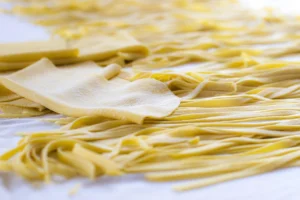
Bavette pasta is a narrow, flat ribbon similar to linguine but slightly thicker and more curved. Many cooks love it for its ability to hold light sauces while still keeping a springy bite.
According to Wikipedia (external link), Bavette is traditional to Liguria, where basil and olive oil dominate local cooking.
On Pastaloverz, you can explore shapes that share similar textures, such as Orzo and Lasagne- verdi

History And Origin In Liguria And Genoa
Its roots lie in Genoa. Ligurian cooks preferred flat shapes because they picked up aromatic sauces like pesto, pine nuts, and fresh herbs.
Sources like Pasta Evangelists confirm that Bavette started as a humble noodle for simple home cooking. Over time, it became a signature element in the region’s identity.
Bavette Pasta vs Linguine vs Trenette
This comparison helps you understand why Bavette works so well with certain sauces:
- Bavette is slightly wider and flatter, ideal for Pesto.
- Linguine is narrower and lighter.
- Trenette often comes with ridges and a firmer texture.
The shape differences influence which condiments attach well. For example, creamy sauces cling more evenly to Bavette than to linguine.
How To Cook Bavette Pasta Perfectly Al Dente?
Cooking Bavette requires attention and proper timing. Follow this method:
- Use four liters of water for every 400 grams of pasta.
- Add a tablespoon of salt when the water boils.
- Cook the Bavette for one minute less than the package suggests.
- Reserve half a cup of pasta water before draining.
- Finish the pasta in the sauce so the starch binds everything together.
Best Traditional Italian Sauces for it
Bavette pasta is versatile, yet certain sauces highlight its character better than others:
- Pesto alla Genovese
- Puttanesca
- Mediterranean seafood sauces
- Light tomato basil sauces
- Lemon and herb dressings
Guides on Barilla show how this shape pairs perfectly with both oil-based and herb-based sauces.
With Pesto Alla Genovese Step By Step
This recipe is central to genuine Ligurian cooking. For authentic results, follow this sequence:
- Warm a serving bowl to prevent the pesto from seizing.
- Prepare fresh basil, pine nuts, garlic, salt, olive oil, and Parmigiano.
- Pound everything in a mortar for the best flavor, or blend briefly.
- Cook the Bavette al dente and toss it with two spoonfuls of pasta water.
- Coat with pesto immediately, using gentle movement.
Giallo Zafferano offers a helpful step-by-step version: Bavette With Pesto (external link).
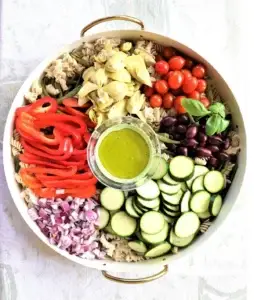
Easy Bavette Pasta Alla Puttanesca Recipe
If you want a quick dish, try this Bavette pasta alla puttanesca recipe. This sauce uses tomatoes, olives, capers, and garlic. Italian cooking blogs like Bake To The Roots explain it well: Easy Bavette Puttanesca.
Pairing With Seafood Recipes
Seafood sauces pair well with Bavette because its shape wraps lightly around fish, shrimp, or calamari. Consider these combinations:
- Mussels in white wine
- Shrimp and lemon zest
- Tuna with cherry tomatoes
- Clams and parsley
Vegan Meal Ideas
Plant-based meals work exceptionally well with Bavette. Vegetables adhere naturally to the flat surface. Try these ideas:
- Pesto made with cashews instead of cheese
- Grilled zucchini and chili flakes
- Roasted cherry tomatoes with thyme
- Sautéed mushrooms with garlic

Creamy Sauce Recipes
If you want a smooth meal, Bavette pairs well with creamy sauces without feeling heavy. You can try:
- Cream and lemon zest
- Creamy mushroom sauce
- Fresh herb cream
- Tomato cream reduction
Health Benefits and Nutrition Facts
Bavette pasta supports balanced eating when you treat it as a foundation rather than the focus of the plate. Made from durum wheat semolina,
it delivers complex carbohydrates that release energy gradually, helping you feel satisfied for longer than refined or highly processed grains.
Like most traditional Italian pasta shapes, Bavette is naturally low in fat and contains moderate plant-based protein.
This makes it a reliable option for meals built around vegetables, legumes, seafood, or lean meats.
Cooking Bavette al dente further improves its nutritional profile by slowing digestion and supporting steadier blood sugar levels.
Whole-wheat Bavette adds another layer of benefit. The intact grain provides more dietary fiber, which supports digestion, improves satiety, and helps regulate appetite.
This version works especially well for people looking to increase their fiber intake without changing their cooking habits or portion sizes.
Nutritionally, Bavette performs best in Mediterranean-style meals. Pairing it with olive oil, vegetables, herbs, and protein creates a dish that feels filling without being heavy or calorie-dense.
Nutrition Overview (Per Typical Dry Serving ~56g)
| Nutrient | Standard Bavette (Durum Wheat) | Whole-Wheat Bavette |
|---|---|---|
| Calories | ~200 kcal | ~190–200 kcal |
| Carbohydrates | 40–42 g | 38–40 g |
| Protein | 7–8 g | 8–9 g |
| Fiber | 2–3 g | 5–7 g |
| Fat | <1 g | <1 g |
| Key Minerals | Iron, magnesium | Iron, magnesium, zinc |
Values vary by brand and production method.
How to Make Bavette Healthier in Practice
- Add vegetables like spinach, zucchini, tomatoes, or broccoli
- Use olive oil, herbs, and aromatics instead of heavy cream
- Pair with lean protein such as fish, legumes, or grilled chicken
- Keep portions moderate and serve with a side salad
When prepared thoughtfully, Bavette fits easily into a nutritious diet. The shape itself does not determine health impact. What matters most is cooking method, portion size, and ingredient balance.
Gluten-Free Alternatives
You can find gluten-free Bavette made from rice flour, corn flour, or a mixture of alternative grains. Some producers deliver a close-to-authentic texture, though cooking times may vary. These versions are ideal for sensitive diets.
Buy Online Italy Delivery
Many shops ship it worldwide. Italian specialty stores deliver directly from Italy. They provide high-quality cuts that feel close to traditional Ligurian versions.
Classic Dinner Ideas
You can explore many meals using this shape:
- Bavette with Pesto and Potatoes
- Bavette with clams
- Bavette with sun-dried tomatoes
- Bavette with fresh basil and lemon

FAQ
Q: Is Bavette pasta the same as linguine?
No. Bavette is wider and flatter than linguine, with a slightly thicker profile. This shape allows Bavette to hold heavier and oil-based sauces more evenly than linguine.
Q: Why is Bavette pasta commonly paired with Pesto?
Bavette pairs well with Pesto because its flat surface evenly spreads basil, olive oil, and cheese. This prevents the sauce from sliding off and creates a smooth, cohesive bite, which is why it is traditional in Ligurian cooking.
Q: Can Bavette be used in creamy pasta dishes?
Yes. Bavette works well with cream-based sauces because its width supports richer textures without becoming heavy. The sauce coats the pasta evenly rather than pooling at the bottom of the plate.
Q: What is the best substitute for Bavette pasta?
The best substitutes are linguine or Trenette. Linguine offers a similar length and structure, while Trenette is slightly wider and holds sauce better.
Q: Does Bavette pasta work with seafood?
Yes. Bavette pairs especially well with seafood sauces, including shellfish, light tomato sauces, and olive oil–based preparations. Its texture balances delicate seafood without overpowering it.
Q: Is Bavette better for oil-based or tomato sauces?
Bavette performs best with oil-based, pesto-style, and light tomato sauces. Its flat shape distributes sauce evenly without masking subtle flavors.
Q: How long should Bavette be cooked?
Bavette usually cooks in 9 to 11 minutes, depending on thickness. Cooking it al dente preserves its structure and prevents it from becoming limp under the sauce.
Q: Is Bavette suitable for beginners?
Yes. Bavette is easy to cook and forgiving. As long as it is not overcooked, it performs consistently across a wide range of sauces.
Q: What is the difference between Bavette, Linguine, and Spaghetti?
Answer: While all three are long-cut pastas, the difference lies in the cross-section geometry. Spaghetti is perfectly cylindrical, while Linguine is elliptical (oval).
Bavette pasta, however, is flatter and slightly convex, resembling a tiny ribbon. This increased surface area allows Bavette to carry heavier emulsified sauces and herb-infused oils more effectively than traditional round pasta.
Q: Why is Bavette sometimes referred to as “Trenette” or “Linguine Fini”?
Answer: In different regions of Italy, particularly Liguria, Bavette is often part of a broader family of flat pastas used for Pesto alla Genovese.
While “Linguine Fini” refers to a narrower cut, Bavette is prized in modern gastronomy for its thicker “bite,” which provides a superior al dente experience that holds up better against high-heat sautéing.
Q: How do I prevent Bavette from clumping or sticking during boiling?
Answer: Because Bavette is a flat pasta, the strands have a higher tendency to “sandwich” together. To prevent starch-induced sticking, ensure you use a large volume of rapidly boiling salted water and stir immediately upon immersion.
This helps the protein network in the durum wheat set properly, keeping the strands distinct and silky without the need for adding oil to the pot.
Q: What is the primary difference between Bavette pasta, Linguine, and Spaghetti?
While all three belong to the long-cut family, the core distinction lies entirely in their cross-section geometry. Spaghetti is perfectly round and cylindrical, whereas Linguine features a flat, narrow, and elliptical shape. Bavette pasta, however, is flatter and slightly convex, closely resembling a very subtle, narrow ribbon. This specific physical design provides an increased surface area, meaning Bavette pasta can carry heavier emulsified glazes, thick herb pastes, and broken seafood sauces much more effectively without letting the ingredients slide to the bottom of your plate.
Q: Why does authentic Genovese pesto pair better with Bavette pasta than standard round noodles?
In traditional Ligurian gastronomy, Bavette pasta is considered the absolute gold standard for pairing with Pesto alla Genovese. Because basil pesto is an unheated, oil-and-cheese-based emulsion, it requires a flat, broad surface to grip onto. The slightly curved, ribbon-like structure of Bavette pasta catches the pine nut fragments, grated cheeses, and aromatic olive oil perfectly as you toss them together. Rounded noodles lack this texture-gripping geometry, which is why substituting them often results in the oil separating and pooling, while Bavette pasta guarantees a silky, uniform coating in every single bite.
Perfect pasta comes down to mastering a few core fundamentals: using the right cooking method, understanding how water and starch interact, pairing the right pasta with the right sauce, and avoiding common mistakes.
When these elements come together, your pasta has a better texture, improved flavor, and holds sauce more effectively. To build these skills, follow a complete pasta cooking guide, learn the water science behind pasta, explore the best pasta for each sauce, and understand common pasta mistakes.
These foundational techniques will help you cook better pasta every time, no matter the shape or recipe.
Bucatini Pasta: 7 Powerful Secrets for Perfect Recipes
Pasta Cooking: 9 Powerful Secrets for Perfect Results
Casarecce Pasta: 11 Essential Secrets for Perfect Sauce
Rigatoni Pasta: 7 Reasons It’s the Best Shape for Big Flavor
Cappelletti Pasta: 7 Amazing Secrets of This Italian Classic
Are our valuable contributions and informative hubs
Explore more shapes on Pastaloverz
- Orzo Pasta Guide
Technical Mastery for the Perfect “Al Dente” Bite
To avoid common “sticky mistakes,” mastering the starch-to-water ratio is essential. The durum wheat protein network in high-quality Bavette requires a large volume of rapidly boiling salted water to set correctly, ensuring a silky, distinct texture.
Pro Tip: Finish the pasta directly in the pan with a splash of starchy pasta water to create a cohesive, restaurant-quality glaze.
Why You Should Never Rinse Your Cooked Strands
One of the most common mistakes home cooks make when preparing Bavette pasta is rinsing the cooked noodles under cold tap water after draining. Rinsing strips away the valuable surface starches that were released during the boiling process. For a flat, ribbon-like shape like Bavette pasta, these native starches are absolute gold; they act as a natural binding agent that pulls your cooking waters and fats into a cohesive, velvety glaze. Instead of rinsing, transfer your Bavette pasta directly from the boiling pot straight into your simmering skillet, allowing those beautiful, starch-coated surfaces to marry perfectly with your sauce.
Strategic Sauce Pairings and Regional Flavors
Bavette’s robust structure makes it exceptionally versatile across Mediterranean gastronomy:
Seafood Excellence: Its flat profile wraps elegantly around shrimp, clams, and calamari in white wine reductions.
Traditional Pesto: The surface area is specifically evolved to grip the oil-and-cheese base of authentic basil pesto.
Piquant Classics: It provides a sturdy foundation for bold, aromatic dishes like Bavette alla Puttanesca.
Nutritional Profile and Healthy Substitutions
As a staple of the Mediterranean diet, Bavette offers complex carbohydrates and plant-based proteins. For enhanced dietary benefits, whole-wheat Bavette provides a significant increase in dietary fiber, supporting digestion and prolonged satiety.
Substitution Note: If Bavette is unavailable, Trenette or Linguine serve as the most accurate structural alternatives to maintain the intended dish integrity.
Bavette Pasta: The Definitive Culinary Summary
Bavette pasta is a premium, long-cut Italian noodle originating from the coastal region of Liguria. Characterized by its narrow, flat, and slightly convex cross-section, Bavette pasta serves as a more robust and texturally satisfying alternative to traditional spaghetti or thin linguine. This unique geometric shape provides an increased surface area that allows Bavette pasta to carry emulsified herb oils, rich seafood reductions, and traditional Genovese pesto far more effectively than perfectly rounded strands.
Because it is manufactured from high-protein durum wheat semolina, high-quality Bavette pasta maintains its structural integrity and signature al dente snap even when subjected to high-heat pan sautéing. When you integrate Bavette pasta into a balanced Mediterranean diet alongside fresh vegetables and lean proteins, it offers a slow-digesting source of complex carbohydrates that elevates everyday home cooking into an authentic Italian dining experience.
💡 PastaLoverz Pro Tip: The Emulsion Essential
To prevent your Bavette pasta from clumping or suffering from “sticky mistakes” after boiling, you must master the pan-emulsion technique. Because Bavette pasta features flat, ribbon-like strands, it has a natural tendency to sandwich together if left to dry in a colander.
To avoid this, always pull your Bavette pasta out of the boiling water roughly 60 seconds before it reaches full cook time and drop it directly into your sauté pan with your sauce. Immediately add a generous splash (about a quarter-cup) of starchy pasta cooking water to the pan and toss vigorously over high heat; the starch binds with the fats to create a velvety glaze that coats every single strand of Bavette pasta, ensuring a silky texture that stays perfectly separated on the plate.
Conclusion and Call to Action
Bavette pasta stands out for its balance of simplicity and performance. Its flat, slightly wider shape allows sauces to coat evenly.
- making it especially effective with Pesto, olive oil–based preparations, and light seafood dishes
- . At the same time, it has enough structure to handle creamier sauces without losing its clean, refined bite. What makes Bavette reliable is its versatility. It respects delicate flavors while still delivering satisfaction, which is why it remains closely linked to Ligurian cooking yet adapts easily to modern kitchens.
- Once you understand how it behaves with sauce and timing, it becomes an easy shape to reach for when you want consistent results without complication.
Call to Action
If Bavette sparked your interest, continue exploring pasta shapes and pairings at Pastaloverz.com. You may also enjoy our guides on:
- Pasta shapes that work best with Pesto
- Linguine vs Bavette comparisons
- Seafood-friendly pasta choices
Subscribe for weekly pasta tips, technique guides, and recipe inspiration to cook with more confidence and precision every time.

Syed Yasar Arafat is the founder of PastaLoverz.com and a food research enthusiast with a focused interest in pasta varieties, traditional Italian cuisine, and balanced eating. Through PastaLoverz.com, he publishes well-researched articles that explain pasta types, cooking methods, and nutritional considerations in clear, practical terms to help readers make informed food choices.

2 Responses