
- Shape: Snail-shell (Curved, pinched, and hollow)
- Best For: Heavy meat ragù, thick vegetable pestos, and baked mac & cheese.
- Cooking Time: 9–11 minutes for Al Dente.
- Key Benefit: Superior “sauce trapping” compared to standard shells.
Lumache pasta is a snail-shaped Italian pasta designed specifically to hold thick sauces inside its curved, partially closed shell. Its ridged surface and compact, “pouch-like” shape make it an elite choice for creamy sauces, chunky ragù, and hearty baked pasta dishes. While casual cooks often pick pasta shapes at random, the physics of lumache pasta improves the coverage and flavor balance of every single bite.
1. What Is Lumache Pasta?
Lumache pasta is a short, hollow pasta shape formed into a tight curve that resembles a snail shell (lumaca means snail in Italian). Unlike standard elbow macaroni, which is a simple open tube, the lumache shell has one end “pinched” or partially closed. This creates a small pouch that literally scoops up sauce like a miniature bowl.
This pasta belongs to the short-shaped category, much like Chifferi pasta, but with a deeper curve. In professional kitchens, it is often favored for its “bite”—a thick, chewy texture that doesn’t go mushy under the weight of heavy ingredients.
2. Origin and History of Lumache Pasta
Originating from central and southern Italy, Lumache was born in regions famous for slow-cooked, robust sauces. Historically, these areas needed pasta shapes that could withstand long cooking times and oven-baking without losing structural integrity
. According to La Cucina Italiana, these descriptive shapes helped home cooks identify exactly which pasta would “trap” the heavy meat sauces typical of the region.
Culinary archives from Academia Barilla further explain that these shapes evolved as a response to the “ragù culture” of Italy.
As tomatoes and meat became staples in Italian cooking, the need for a pasta that could serve as a vehicle for these chunky ingredients became paramount. Lumache, with its hidden cavity, was the perfect engineering solution.
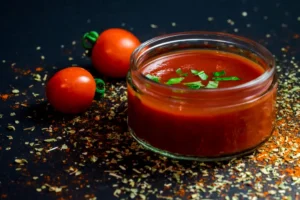
3. Shape, Texture, and Size of Lumache Pasta
The defining characteristic of Lumache is its pinched end. One end of the tube is partially closed or narrowed, which creates a “pouch” effect. Most commercial Lumache is rigate (ridged).
These external ridges serve a functional purpose: they create friction, allowing thin oils and tomato juices to cling to the outside while the hollow center captures the heavier solids.
- Small Lumache: Ideal for soups and minestrone, where you want a bit of broth in every shell.
- Standard Lumache: The best for everyday meals and thick marinara.
- Lumache Grandi: Large versions used for stuffing (similar to manicotti) or heavy baked dishes.
4. Best Sauces for Lumache Pasta
Choosing the right sauce for Lumache is the difference between a good meal and a great one. Here is how to pair it:
Thick & Meaty Sauces
Lumache is the “Sauce King” for Meat ragù, sausage and mushroom sauces, or lentil-based tomato blends. The chunks of meat literally hide inside the pasta curve, giving you a surprise burst of flavor in every bite.
Creamy & Cheese Sauces
The hollow center acts like a pipe, filling up with Alfredo or Gorgonzola sauces. It is a superior alternative to Cavatappi when using very heavy creams.
If you are making baked Mac and Cheese, Lumache provides a much more satisfying “cheese-to-pasta” ratio than standard elbows do.
5. Pros and Cons of Lumache Pasta
| Pros (Advantages) | Cons (Disadvantages) |
|---|---|
| Excellent sauce “trapping” capability. | Can take longer to cook than flat pasta. |
| Sturdy enough for heavy baking and reheating. | Harder to find in standard grocery stores. |
| The unique snail shape is great for visual presentation. | Not ideal for thin, oil-based broths or aglio e olio. |
6. 5 Tips to Cook Lumache Pasta Perfectly
- The Water Ratio: Use 4–5 liters of water per 500g of pasta. Because Lumache is hollow, it needs plenty of room to circulate so it doesn’t nest inside itself.
- Salt the Boil: Add sea salt only after the water reaches a rolling boil. This season, the pasta dough is throughout.
- The 9-Minute Rule: Most Lumache take 9–11 minutes. Start tasting at 8 minutes for true al dente.
- Don’t Rinse: Keep the starch on the pasta; it helps the sauce “glue” to the ridges.
- Finish in the Pan: Toss the pasta with your sauce and a splash of pasta water for 60 seconds. To avoid common pasta mistakes, never add oil to the boiling water.

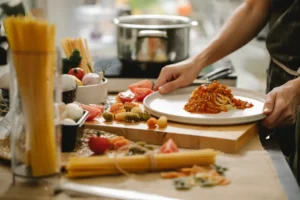
7. Step-by-Step Cooking Guide (The Chef’s Method)
Cooking Lumache requires a bit more attention than spaghetti because the water can get trapped inside the “pouches,” cooling the core of the pasta more slowly than the outside.
Step 1: Preparation — Fill a large pot with cold water. For every pound of Lumache, use at least 4 quarts of water. Set to high heat.
Step 2: The Salt — Once the water is at a “vigorous” boil, add 2 tablespoons of kosher salt. It should taste like the ocean.
Step 3: The Drop — Add the Lumache all at once. Stir immediately and continue stirring every 2 minutes. This prevents the “pockets” from sticking together.
Step 4: The Al Dente Check — At the 8-minute mark, fish one shell out. Cut it in half. You should see a tiny white dot in the center of the pasta wall. It’s nearly ready.
Step 5: The Emulsion — Reserve 1 cup of pasta water. Drain the pasta and immediately add it to your simmering sauce. Add 1/4 cup of the reserved water and toss over high heat. This creates an emulsion that turns thin sauce into a creamy glaze.
8. Lumache vs. Other Pasta Shapes
While many prefer Conchiglie (shells), Lumache offers a tighter seal, keeping the sauce warmer for longer. Unlike Penne, which allows sauce to flow through, Lumache creates a “flavor pocket.”
- vs. Conchiglie: Shells are open on both ends. Sauce slides off. Lumache is pinched on one end, keeping the sauce trapped.
- vs. Rigatoni: Rigatoni is great for large chunks, but it doesn’t “hold” cream as well as the curved Lumache.
- vs. Elbows: Elbows are smooth and simple. Lumache is ridged and complex, making it the “premium” version of macaroni.
9. Nutritional Analysis: Is Lumache Pasta Healthy?
Lumache is traditionally made from durum wheat semolina. This type of wheat is high in gluten and protein, which gives the pasta its signature “snap.” From a nutritional standpoint, it is a complex carbohydrate that provides sustained energy release.
Pairing it with vegetables and lean proteins aligns with the Mediterranean Diet, which the Harvard T.H. Chan School of Public Health ranks as one of the top healthy eating patterns. One cup of cooked Lumache contains roughly 200 calories, 7g of protein, and 40g of carbohydrates.

10. Lumache vs. Gluten-Free Alternatives
If you are gluten-intolerant, legume-based Lumache (chickpea or lentil) is a fantastic alternative. These versions can provide up to 15g of protein per cup, aligning with current global nutrition trends emphasizing plant-based proteins. Chickpea pasta Lumache holds its shape surprisingly well during boiling compared to other GF shapes.
11. Proper Storage and Reheating Tips
Because Lumache is thick, it stores better than delicate shapes like angel hair. If you have leftovers, store them in an airtight container with a little extra sauce. The pasta will continue to absorb the sauce overnight, making it even more flavorful the next day.
To Reheat: Avoid the microwave if possible, as it can make the ridges rubbery. Instead, place the Lumache in a skillet with a tablespoon of water or milk, cover, and steam over medium heat for 3-4 minutes.

12. Frequently Asked Questions
Q: Is Lumache good for pasta salad?
Yes! It works great with creamy dressings, though light vinaigrettes may pool at the bottom. The ridges help hold herbs and spices in place even when chilled.
Q: Can I substitute shells for Lumache?
You can, but shells won’t hold as much “hidden” sauce as the tightly curved Lumache. If substituting, use a medium shell for the closest texture match.

Q: Why is my Lumache sticking together?
This usually happens if you don’t use enough water or if you don’t stir during the first 2 minutes of boiling. The “nests” need constant motion initially.
Q: Why is Lumache pasta better for thick sauces than Penne? A: The main advantage is the surface area and geometry. While Penne is a hollow tube that allows sauce to flow through, Lumache features a pinched, pouch-like end.
This physical “trap” ensures that chunky meat ragùs and thick creams are captured inside the shell rather than sliding off. In culinary physics, this creates a better sauce-to-pasta ratio in every bite.
Q: Is Lumache pasta made from a different dough than standard macaroni? A: Most premium Lumache is crafted from 100% durum wheat semolina and extruded through bronze dies.
This traditional extrusion process creates a rough, porous texture ( rigate ) that acts like “velcro” for sauces. While standard grocery store macaroni is often smooth and mass-produced, authentic Lumache is designed to be sturdier, maintaining its al dente snap even in heavy baked dishes.
Q: Why is reserving pasta water so important when cooking Lumache? A: Because Lumache pasta is a thick-walled, ridged shape, it requires a strong physical bond with the sauce to avoid “slippage.” When you boil lumache, the water becomes saturated with high-quality semolina starch. Adding a splash of this “liquid gold” to your sauce creates an emulsification—a molecular bridge between the fats in your sauce and the carbohydrates in the pasta. This ensures the sauce clings to the ridges and fills the internal cavity, rather than pooling at the bottom of the bowl.
Q: Can you substitute Whole Wheat Lumache for regular semolina versions? A: Yes, you can substitute them at a 1:1 ratio, but be mindful of the cooking time and texture. Whole wheat Lumache pasta contains the bran and germ of the grain, which provides more fiber but also creates a grainier mouthfeel.
While regular lumache has a classic al dente snap, the whole wheat version is heartier and pairs best with robust, earthy flavors like roasted garlic, kale, or walnut pestos. Check the package carefully, as whole wheat varieties often require 1–2 additional minutes to soften the exterior ridges.
Q: Why is Lumache pasta better for thick sauces than Penne or standard macaroni?
A: The primary advantage lies in its unique culinary physics and shape geometry. While penne is an open tube that allows sauce to flow right through, lumache features a pinched, pouch-like end. This physical “trap” ensures that chunky meat ragùs, thick creams, and vegetable solids are captured inside the shell rather than sliding off, giving you an optimal sauce-to-pasta ratio in every bite.
Q: Is authentic Lumache pasta made differently from mass-produced shapes?
A: Yes. Premium, authentic lumache is crafted from 100% durum wheat semolina and extruded through traditional bronze dies. This bronze extrusion process leaves a rough, matte, and porous exterior texture (rigate). This chalky surface acts like “velcro,” allowing thin oils and tomato juices to cling to the outside while the hollow core traps the heavier ingredients.
Q: Why does the water get trapped inside Lumache, and how do you prevent it from sticking?
A: Because of its deep, snail-shell curve and partially closed end, water easily gets trapped inside the “pockets,” which can cause the pasta to nest together or cook unevenly. To prevent this, you must use a large pot with a high water-to-pasta ratio (at least 4 quarts per pound) and stir vigorously during the first 2 minutes of boiling to keep the shells in constant motion.
Q: Can you substitute standard Conchiglie (shells) for Lumache in a recipe?
A: You can substitute them at a 1:1 ratio, but the eating experience will change. Regular conchiglie shells are completely open on both ends, meaning heavier sauces can easily slide back out. If you cannot find lumache at your grocery store, look for Chifferi or large curved elbow macaroni, as their deep tube structure mimics the “pouch” effect much better than flat shells.
Q: How do you achieve a perfect al dente texture with a thick-walled pasta like Lumache?
A: Thick-walled, ridge-heavy shapes require a precise finish. Start checking your pasta for an al dente snap at the 8-minute mark by cutting a shell in half; look for a tiny white core in the center of the pasta wall. Always drain it just before it is fully done, and finish cooking it directly in your simmering saucepan for 60 seconds with a splash of starchy pasta water to create a flawless, glossy emulsion.
Deep Dive: Additional Lumache Pasta FAQs
Q: What makes Lumache Pasta the ultimate choice for heavy meat sauces?
The secret to pairing Lumache Pasta with hearty meat ragùs lies entirely in its structural engineering. Because Lumache Pasta features a deep snail-shell curve with one completely pinched end, it creates a physical “trap” or pocket. Unlike open-ended tubes where chunks slide straight through, this unique shape holds onto minced meat, sausage bits, and thick reductions so you get a perfect ratio of ingredients in every single bite.
Q: How do you prevent Lumache Pasta from nesting together while boiling?
Due to its deeply curved, pocket-like geometry, Lumache Pasta has a natural tendency to cup into itself or “nest” while cooking. To ensure your Lumache Pasta cooks evenly without sticking, you must use a large pot with plenty of water and stir the pot vigorously during the first 60 to 90 seconds. This initial agitation dilutes the heavy surface starches before they can act like glue.
Q: Is bronze-die extruded Lumache Pasta worth the extra cost?
Absolutely. Premium Lumache Pasta is traditionally extruded through bronze dies rather than slick plastic or teflon molds. This artisanal process leaves the exterior of the Lumache Pasta with a coarse, matte, and chalky texture (known as rigate). This rough surface acts like velcro, pulling thin tomato juices and fats upward, while the hollow pouch traps the heavier components of your sauce.
Q: Can you use Lumache Pasta for baked macaroni and cheese?
Yes, Lumache Pasta is an elite substitute for standard elbow macaroni or Cavatappi in baked dishes. The sturdy walls of Lumache Pasta hold up beautifully under the heavy heat of oven baking without turning mushy. Even better, the hollow shell fills up entirely with melted cheese sauce, creating an incredibly rich and satisfying bite once baked.
Q: Where can I buy authentic Italian Lumache Pasta?
While it is less common in standard supermarkets than penne, you can easily find authentic Lumache Pasta in Italian specialty markets, high-end grocery boutiques, or through online retailers. Look for packages explicitly labeled “100% durum wheat semolina” to guarantee that your pasta maintains its signature al dente snap.
Summary: The Culinary Physics of Lumache Pasta
Lumache pasta is a premium, snail-shaped Italian pasta engineered for maximum flavor retention. Characterized by its ridged exterior (rigate) and a unique pinched, pouch-like end, Lumache serves as a superior vessel for heavy sauces compared to standard hollow tubes like penne.
Traditionally extruded through bronze dies using 100% durum wheat semolina, this shape creates a rough, porous surface area that allows thick meat ragùs, creamy Alfredo, and chunky vegetable pestos to “trap” inside its cavity.
Whether baked in a hearty casserole or tossed in a professional emulsion, Lumache provides a consistent al dente texture and an elite sauce-to-pasta ratio in every bite.
- Great pasta starts with mastering the basics: proper cooking technique, correct water usage, smart sauce pairing, and avoiding common mistakes.
- These fundamentals directly impact texture, flavor, and how well the sauce clings to pasta.
- By following a reliable pasta cooking guide, understanding water science for pasta, choosing the best pasta for each sauce, and learning common pasta mistakes, you can consistently cook pasta that tastes balanced, structured, and restaurant-quality.

- Pastina Pasta: 7 Reasons It’s the Ultimate Comfort Food
- Best Pasta for Alfredo Sauce: 7 Picks for Creamy Perfection
- Pasta Shape and Sauce Pairing Guide: 7 Secrets of Success
- Strozzapreti Pasta: 7 Facts & How to Cook It Perfectly
- Alphabet Pasta: 7 Best Secrets for Fun Tiny Soup Shapes
- Above are our valuable contributions and informational hubs.
Comparison: Lumache vs. Standard Pasta Shapes
Pasta Shape Best Sauce Pairing Key Feature Sauce Retention Lumache Heavy Ragù & Thick Creams Pinched “Pouch” End Elite (Traps Solids) Penne Rigate Tomato-based Marinara Hollow Tube / Ridges Moderate (Flows through) Conchiglie (Shells) Meat Sauce / Pesto Open Curved Scoop High (But slides off) Rigatoni Chunky Veggie / Bolognese Wide, Rigid Tube High (Internal only) Elbow Macaroni Cheese Sauce (Liquid) Smooth, Simple Curve Low (No ridges)
Final Thoughts
Lumache pasta is more than just a shape; it’s a culinary tool. By choosing this snail-shell pasta, you ensure that no sauce is left behind on the plate. Its ability to marry with thick ragùs and creamy cheeses makes it a favorite for those who value texture and flavor above all else. For more help mastering your kitchen, check out our full pasta cooking guide.
Pasta Loverz Pro-Tip: The “Sauce-Lock” Drain Method
Because Lumache Pasta features a deep, curved snail-shell shape with a pinched end, it acts like a miniature cup in the boiling water. If you just dump it straight into a standard colander, many of the shells will trap a pool of starchy cooking water inside their cavities. This trapped water will bleed out into your sauce, thinning it down and ruining its texture.
The Pasta Loverz secret? When draining your Lumache Pasta, give your colander a few aggressive, upward flips to toss the pasta in the air. This movement forces the trapped water out of the hidden pockets. For the ultimate restaurant finish, transfer the shells immediately into your simmering sauce while they are still steaming hot so the empty cavities can suction up your rich ragù or cream instead!

Syed Yasar Arafat is the founder of PastaLoverz.com and a food research enthusiast with a focused interest in pasta varieties, traditional Italian cuisine, and balanced eating. Through PastaLoverz.com, he publishes well-researched articles that explain pasta types, cooking methods, and nutritional considerations in clear, practical terms to help readers make informed food choices.

3 Responses