Ruote is the Italian word for “wheels”, and ruote pasta is a short pasta shaped like a wagon wheel, with a central hub, a rim and spokes. It is also sold as rotelle (little wheels) and, in English, as wagon wheel pasta. The shape is popular in children’s meals and pasta salads, and the spaces between the spokes hold peas, diced vegetables, herbs and cheese. This guide covers where the shape comes from, how ruote compares with similar pasta, how to cook it, and which sauces and dishes suit it.

What ruote pasta is
- Shape: a small wheel with a hub, spokes and a rim, usually 2 to 3 cm across
- Made from: durum wheat semolina and water, extruded and dried
- Texture: firm, with a pleasant bite from the rim
- Names: ruote, rotelle, wagon wheels. In some markets “rotelle” can be slightly different in size, so check the packet.
Origin
Ruote is a machine-extruded shape. Unlike hand-formed pasta such as pici and trofie, it could not be made at scale without dies, so it belongs to the era when Italian factories began producing many decorative shapes. The exact date and maker are not well documented, and sources that describe it as an early-20th-century design should be read with care. For the wider story, see our pasta history guide.
Why the shape works
The spokes and gaps give small ingredients somewhere to sit, so each forkful tends to include a bit of vegetable, cheese or meat. The rim keeps the pasta firm and holds its shape when boiled, baked or chilled. That is why ruote works well in pasta salads, baked dishes and chunky, mixed sauces.
Ruote compared with similar shapes
| Feature | Ruote | Radiatori | Farfalle | Rigatoni |
| Shape | Wheel with spokes | Short and ruffled, like radiator fins | Bow-tie | Large ridged tube |
| Best sauces | Chunky vegetable, pesto, light meat | Thick, clingy sauces | Light cream or butter sauces | Hearty meat sauces, bakes |
| Traps small pieces | Well, between the spokes | Well, in the ruffles | Less, mostly coats the surface | Inside the tube |
| Best for | Salads, kids’ meals | Thick sauces | Light dishes, salads | Baked pasta |
How to cook ruote
- Use a large pot: at least 4 litres of water for 500 g of pasta. Salt it once it boils (about 10 g per litre).
- Add the pasta and stir gently. Avoid stirring roughly in the first couple of minutes, when the spokes are most fragile.
- Cook for about 9 to 11 minutes, and taste two minutes before the packet time.
- Keep a steady boil rather than a violent one, since a very hard boil can break the spokes.
- Save a cup of the cooking water and finish the pasta in the sauce for a minute. See mantecatura.
See pasta cooking and pasta water for the basics.
Best sauces
Chunky tomato and vegetable sauces
Small pieces of tomato, onion and herbs lodge in the spaces. A vegetable or sausage ragù also works, since small diced pieces settle between the spokes.
Cream and cheese sauces
Thick cheese sauces coat the rim and fill the gaps. For a baked cheese dish, ruote can replace macaroni.
Baked dishes
The wheels keep their shape in the oven. See pasta alla Sorrentina for a baked pasta method.
Pasta salad
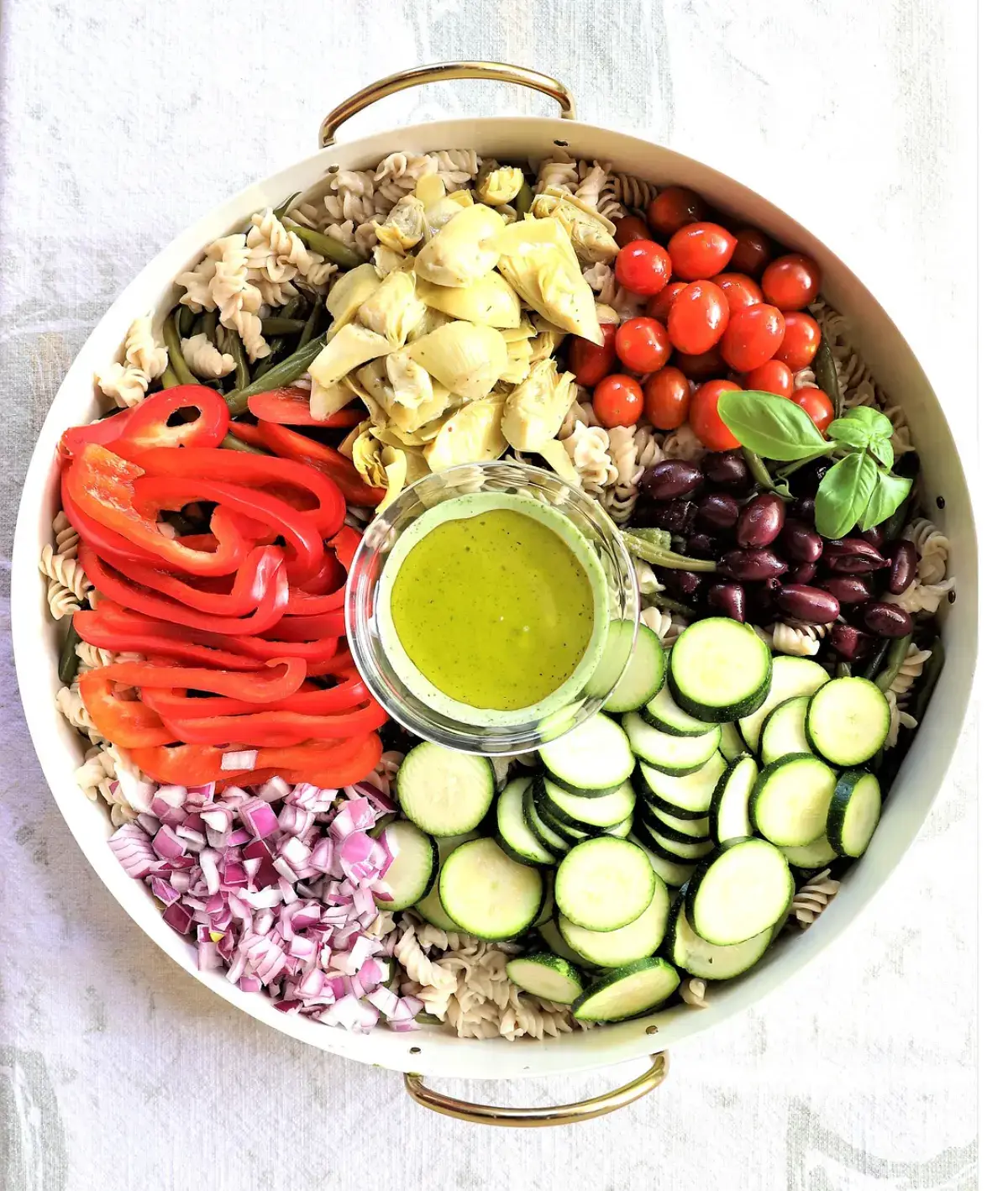
Ruote holds dressing, chopped vegetables and cheese, and it keeps its structure cold.
Sauces to avoid
Very thin sauces, such as plain olive oil without emulsion, tend to drain through the spokes. Clear broths are also a poor match, since the pieces are too large. For soups, smaller shapes like stelline work better. For more matches see our pasta pairing guide.
Tips for family meals
- Chop vegetables and meat small, about the size of a pea (4 to 5 mm), so pieces lodge between the spokes instead of settling at the bottom of the bowl.
- Serve mild sauces first, then add stronger flavours at the table.
- Always supervise young children while they eat, and follow your paediatrician’s advice on introducing solids.
Cold pasta salad tips
- Cook the pasta about a minute short of the packet time.
- Drain and rinse in cold water to stop the cooking and wash off surface starch.
- Drain it well, then toss with a tablespoon of olive oil before adding vegetables and dressing, so the wheels do not nestle together and clump.
Nutrition
Dry ruote has roughly 350 kcal, 70 g of carbohydrate and 12 to 13 g of protein per 100 g, similar to other semolina pasta. Whole-wheat versions have more fibre. Portion size and the sauce make the biggest difference.
Common questions
Is ruote the same as rotelle?
Yes, they refer to the same wheel shape. Ruote is the Italian word and rotelle the term often used in English.
Is ruote good for pasta salad?
Yes. It holds dressing and small ingredients and keeps its shape cold.
Can I use it in soup?
In thick, hearty soups with vegetables or beans. It is less suited to clear broths.
How long does it take to cook?
About 9 to 11 minutes, depending on the brand. Taste early.
Why do the spokes break?
Usually a very hard boil or rough stirring. Use a large pot and a steady boil.
Is whole-wheat ruote available?
Yes. It has more fibre and a nuttier taste.
Keep exploring
See our guides to fusilli, penne, orecchiette and cavatappi, and common pasta mistakes.
Related guides: if you can’t find ruote, the pasta substitution chart lists close swaps. You can also check the cooking time chart or browse the pasta shapes A to Z.
Further reading: Wikipedia: Rotelle (ruote)

Syed Yasar Arafat is the founder of PastaLoverz.com and a food research enthusiast with a focused interest in pasta varieties, traditional Italian cuisine, and balanced eating. Through PastaLoverz.com, he publishes well-researched articles that explain pasta types, cooking methods, and nutritional considerations in clear, practical terms to help readers make informed food choices.