
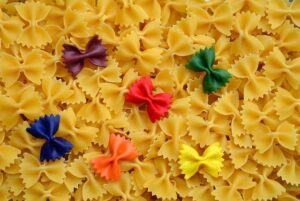
Farfalle pasta is one of Italy’s most recognizable pasta shapes, known for its distinctive bow-tie appearance. The name “farfalle” means butterflies in Italian, which perfectly describes its pinched center and wide edges.
Why Farfalle Pasta Works?
Small pockets and pinch points give Farfalle a friendly structure: the gathered center holds a little sauce, while the wings catch more. That dual personality makes this shape a great match for chunkier vegetables and light cream or butter sauces.
For reference and historical context, see the Wikipedia entry on bow-tie pasta and a brief primer on pasta shapes. Both are excellent background reads.
Dough, Shape, and Size of Farfalle Pasta
How do dough, shape, and size affect Farfalle pasta?
Farfalle pasta relies on precise dough balance, careful shaping, and careful selection of sizes. Because the bow-tie shape has a thicker center and thinner wings, small changes in flour choice, hydration, and cutting technique directly affect texture and cooking performance.
Use the Right Flour for Farfalle Pasta
Which flour works best for Farfalle pasta dough?
Semolina flour creates a firm, toothsome Farfalle pasta that holds its shape well and pairs beautifully with robust vegetables, legumes, and oil-based sauces. It delivers structure and prevents the center knot from turning mushy.
Using 00 flour or all-purpose flour produces a softer dough with a smoother finish. This option works best for delicate sauces, butter-based dressings, and lighter cream sauces where tenderness matters more than bite.
Many experienced cooks blend semolina with 00 flour to achieve both strength and silkiness in a single dough.
Hydration and Resting
Why is resting the Farfalle pasta dough important?
Resting allows flour to fully hydrate and gluten to relax, making the dough easier to roll and shape without tearing. A hydration level of about 30–35% works well for dry Farfalle pasta dough.
Wrap the dough tightly and let it rest for 20–30 minutes, or up to 1 hour at room temperature. This step improves elasticity and ensures clean edges when cutting the bow ties.
Skipping the rest often leads to cracked wings and uneven thickness.
Size Matters
How does Farfalle size affect cooking and use?
Farfalle pasta ranges from tiny bow ties to jumbo shapes. Smaller Farfalle cook quickly and work best in soups or light broths where a subtle texture is needed.
Medium to large Farfalle perform best in pasta salads, cream sauces, and vegetable-forward dishes. Their broader wings catch dressing and sauce, while the thicker center keeps the shape intact during cooking.
Choose the size based on the final dish before cutting the dough.
Cutting and Shaping Techniques of Farfalle Pasta
How do you shape Farfalle pasta correctly?
There are three reliable ways to shape Farfalle pasta: by hand, with a pasta cutter, or on a pasta board. Each method creates slight variations in texture, but the core steps remain consistent.
Step 1: Roll thin and cut rectangles
Roll the dough to a thickness of 1–2 mm. Cut rectangles about 3.5–4.5 cm wide and 5–6 cm long for medium Farfalle. Reduce the size for mini versions.
Step 2: Pinch or press the center
Fold each rectangle lengthwise, then pinch it firmly in the center with your thumb and forefinger. A fork creates decorative ridges, while a fluted wheel gives a clean, defined edge. The wings should puff slightly to trap sauce.
Step 3: Lightly ruffle the wings
Gently ruffle the wings with a fork to increase surface area. This small detail improves sauce adhesion and adds a more satisfying bite once cooked.
Mastering these details ensures farfalle pasta that cooks evenly, holds sauce beautifully, and looks as good as it tastes.
Cooking: timing and texture of Farfalle pasta
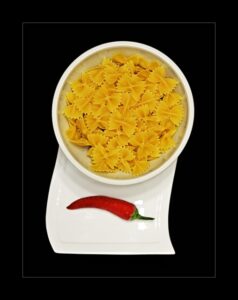
Properly cooked Farfalle should be al dente — firm to the bite but not chalky. Because this shape varies in thickness (center vs. wing), follow two tactics:
Salted, rolling boil
Bring a large pot of water to a rolling boil and season it generously with salt. For fresh Farfalle, start checking at 1–2 minutes. For dried, store-bought items, follow the package timing, but taste earlier. Aim to undercook by about 10–15 seconds to finish in the pan.
Finish in the sauce
Transfer the pasta to the sauce with tongs and toss on medium heat for 30–60 seconds. This step lets the sauce cling to the wings and completes cooking without overworking them.
Best Sauces and Pairings
Farfalle is a generalist. It pairs well with cream, tomato, and oil-based sauces. The center pinch and wings change how the sauce adheres, making chunkier ingredients welcome.
Cream and mushroom
Use a light cream sauce with sautéed mushrooms, garlic, and parsley. The wings catch the cream; the center holds a little mushroom jus.
Tomato and roasted veg
Roasted cherry tomatoes, eggplant,t or bell peppers make a robust partner. Finish with basil and a drizzle of good olive oil.
Pasta salads
ColFarfallele salads benefit from firm, medium-sized pasta bows that retain their structure when chilled. Toss with lemon vinaigrette, olives, and a soft cheese like burrata post-chill.

Storing, Freezing, and Reheating
Leftover stores well. For best results, keep pasta and sauce separate if you plan to refrigerate them for more than a day.
Fridge
Store in an airtight container up to 3 days. Add a touch of olive oil to prevent sticking.
Freezer
Freeze raw, shaped Farfalle on a tray for 1 hour, then transfer to a sealed bag. Cook from frozen; add an extra minute to the boiling time.
Reheat
Gently reheat in a skillet with a splash of water or stock to revive the texture, or microwave briefly covered with a damp paper towel.
Three Pro Recipes of Farfalle Pasta
Each recipe below focuses on technique: shape, timing, and finishing.
1. Farfalle Pasta with Lemon, Peas, and Pancetta
CooFarfallele until very slightly underdone. Crisp-diced pancetta, add peas, and lemon zest. Add pasta and a splash of pasta water, then toss. Finish with Pecorino.
2. Farfalle Pasta with Roasted Cherry Tomatoes and Burrata
Roast cherry tomatoes until they blister. Toss with pasta, and add a spoonful of ricotta, or tear burrata on top. Finish with basil and olive oil.
3. Creamy Mushroom Farfalle. Sear the mushrooms until golden, then deglaze with white wine and add a touch of cream, simmering until the sauce thickens. Toss with pasta and parsley. The gathered center soaks up the concentrated mushroom flavor.
- Our chickpea pasta, ruotepasta, and soba pasta are also valuable additions for enhancing your knowledge

Wrap-up: Make Farfalle Pasta, Your Playful Workhorse
It adapts. Whether you roll it by hand, shape it with a cutter, or purchase a high-quality dried version, the fundamentals remain the same: the right dough, precise cutting, a short finish in the sauce, and confident seasoning. Follow the seven secrets above, and you’ll turn a simple shape into something memorable.
FAQs
Q: How long should I cook Farfalle pasta?
Fresh Farfalle pasta cooks very quickly, usually in 1–3 minutes, depending on thickness. Dried, store-bought Farfalle pasta typically takes 8–12 minutes to cook. Always start tasting 1–2 minutes early. For the best texture, finish cooking Farfalle directly in the sauce so the pasta absorbs flavor and stays evenly coated.
Q: Can I freeze fresh Farfalle pasta?
Yes. Fresh Farfalle pasta freezes very well. Arrange the shaped pasta in a single layer on a tray and freeze until firm. Once solid, transfer it to an airtight bag or container. Cook straight from frozen and add about one extra minute to the boiling time. Do not thaw beforehand, as this can cause sticking.
Q: Is Farfalle pasta suitable for pasta salads?
Absolutely. Farfalle pasta is one of the best shapes for pasta salads because its bow-tie form holds dressing in the folds. Use medium-sized farfalle and cook them just shy of al dente so they stay firm after chilling. Toss with vinaigrette-based dressings and sturdy ingredients like beans, roasted vegetables, olives, or grilled chicken.
Q: Which flour is best for making Farfalle pasta?
Durum wheat semolina produces a firm, toothsome Farfalle pasta that holds its shape well in sauces and salads. Using 00 flour or a blend of 00 and semolina creates a softer, silkier texture that pairs nicely with butter-based or cream sauces. Choose the flour based on whether you want structure or tenderness in the final dish.
Q: Why does Farfalle sometimes cook unevenly?
The thicker center of Farfalle takes longer to cook than the thinner wings. Stir well during boiling and use plenty of water to ensure even cooking. Slight firmness in the center is normal and desirable for texture.
Q: What sauces work best with Farfalle pasta?
Farfalle pasta pairs well with creamy sauces, light tomato sauces, and olive oil-based dressings. The shape also works well with chunky vegetable or protein-based sauces that can lodge in the folds.
Q: Why is the center of Farfalle sometimes hard?
The “pinched” center of Farfalle is thicker than the “wings.” To avoid a crunchy middle, cook the pasta in generously salted boiling water until the center is al dente. If the center is still hard, the pasta likely needs another 60–90 seconds. Always test a piece by biting into the middle fold before draining.
Q: What is the difference between Farfalle and Farfalline?
Farfalline is simply a smaller, miniature version of Farfalle. While standard Farfalle is ideal for heavy sauces and pasta salads, the smaller Farfalline is traditionally used as a soup pasta (pastina) in clear broths or light minestrone to add texture without overwhelming the dish.
Q: Is Farfalle better for hot or cold dishes?
Farfalle is one of the few shapes that excels in both. Its sturdy structure allows it to hold up in high-heat baked pasta dishes, while its flared edges are perfect for catching cold dressings in Mediterranean pasta salads. Its ability to maintain its shape when chilled makes it a top choice for meal prep.
Q: What are “Farfalle Rigate”?
Farfalle Rigate is a variation of the bow-tie shape that features ridges on the surface. These ridges are designed for maximum sauce adhesion, making them the superior choice for thinner, oil-based sauces or extra-creamy pesto that might otherwise slide off a smooth pasta surface.
Q: Why is Farfalle sometimes called bow-tie pasta?
The name Farfalle translates directly to “butterflies” in Italian, which is the original inspiration for the shape. However, because the pinched center and flared, pinked edges closely resemble a formal tuxedo accessory, it is widely known as bow-tie pasta in English-speaking countries.
Q: How much dry Farfalle pasta should I cook per person?
For a standard main course, a good rule of thumb is 56 to 85 grams (2 to 3 ounces) of dry Farfalle pasta per serving. Because of its bulky, three-dimensional geometry, a single cup of dry bow-ties expands significantly, yielding roughly 2 cups of cooked pasta.
Q: What is the difference between Farfalle and Fiorelli pasta?
While both are short, decorative Italian pasta shapes designed to trap sauce, their geometry is completely different:
Farfalle is made from a flat rectangle of dough that is stamped with ridged edges and pinched firmly in the dead center.
Fiorelli is shaped like a rolled, open flower or a small lily, featuring curved petals that excel at holding incredibly thick, chunky meat ragùs or ricotta-based fillings.
Q: Can you use Farfalle pasta in baked pasta dishes (Pasta al Forno)?
Yes, Farfalle is an excellent candidate for oven-baked dishes. Its thick center knot provides a sturdy structure that prevents the noodle from collapsing or becoming mushy under high heat. To prevent overcooking in the oven, boil the Farfalle for 2–3 minutes less than the package instructions (very al dente) before tossing it with your sauce, cheese, and baking it.
Many pasta problems, such as a mushy texture, a bland taste, or poor sauce coverage, stem from missing key fundamentals. The solution is simple: focus on proper cooking methods, water science, and pairing pasta shapes with the right sauces.
A complete pasta cooking guide, combined with knowledge of water science for pasta, the best pasta for each sauce, and common pasta mistakes, helps you fix errors and achieve perfectly cooked pasta every time.
Bucatini Pasta: 7 Powerful Secrets for Perfect Recipes
Pasta Cooking: 9 Powerful Secrets for Perfect Results
Casarecce Pasta: 11 Essential Secrets for Perfect Sauce
Rigatoni Pasta: 7 Reasons It’s the Best Shape for Big Flavor
Cappelletti Pasta: 7 Amazing Secrets of This Italian Classic
Above are our valuable contributions and informational hubs.
Summary: The Ultimate Guide to Farfalle Pasta
Mastering Farfalle pasta, affectionately known as bow-tie pasta, begins with understanding its unique geometrical design. Originating in the 16th century in Northern Italy’s Lombardy and Emilia-Romagna regions, its name is derived from the Italian word for “butterflies.”
The distinctive crimped center and flared wings aren’t just for aesthetics; they create a varied texture profile that holds up beautifully to chunky vegetable sauces and rich, creamy emulsions.
To achieve a perfect al dente result, the secret lies in the pinched center, which takes slightly longer to cook than the outer edges.
This makes Farfalle a powerhouse for pasta salads and baked dishes, as its sturdy structure prevents it from breaking down under heat. Whether you’re pairing it with a simple lemon-herb vinaigrette or a hearty Bolognese ragù, Farfalle remains a versatile pantry staple that bridges the gap between casual family meals and elegant Italian dining.
Farfalle vs. Other Short Pasta Shapes
| Pasta Shape | Shape Profile | Texture & Best Use | Recommended Sauce Pairing |
| Farfalle | Bow-tie / Butterfly | Thick, pinched center; flared edges. Best for pasta salads. | Creamy emulsions, pesto, or chunky vegetable sauces. |
| Penne Rigate | Hollow tubes / Ridged | Sturdy with internal “sauce traps.” Best for baking. | Hearty Marinara, meat ragù, or spicy Arrabbiata. |
| Fusilli | Helical / Spirals | Twisted surface maximizes sauce surface area. | Light oil-based sauces or thick, smooth cheese sauces. |
| Orecchiette | Small ears / Concave | Dense and chewy center. Iconic Southern Italian shape. | Broccoli rabe, sausage, and garlic-heavy olive oil. |
| Rotini | Tight corkscrew | Similar to Fusilli but with a tighter, smaller gap. | Fine-textured sauces like Vodka sauce or vinaigrettes. |
Conclusion
Farfalle pasta rewards attention to detail. From flour choice and hydration to shaping and sizing, each step influences how the bow ties cook, hold sauce, and feel on the palate.
When made well, Farfalle delivers contrast by design: a tender wing, a slightly firmer center, and a shape that captures flavor without overwhelming the dish.
Whether you prefer a toothy semolina dough for vegetable-forward recipes or a softer 00-flour version for creamy sauces and salads, Farfalle adapts easily to your cooking style. Mastering its structure turns a familiar pasta into a refined, dependable staple that performs beautifully across many recipes.
Call to Action
Put this farfalle pasta guide into practice in your own kitchen. Try different flours, adjust the size to suit soups or salads, and refine your shaping technique until the bow ties cook exactly as you like.
Explore more in-depth pasta shape guides, traditional techniques, and practical cooking advice on PastaLoverz.com. If this guide helped you, save it, share it with fellow pasta lovers, and keep building your skills one pasta shape at a time.
💡 Pro Tip: The “Two-Minute Under-Cook” Rule for Leftovers
If you are making Farfalle specifically for meal prep, a cold pasta salad, or a baked Pasta al Forno, boil the noodles for exactly 2 minutes less than the box instructions.
Because the pinched center of the bow-tie retains heat and continues to hydrate, standard al dente cooking will cause the flared wings to turn mushy once stored or reheated. Pulling them out early keeps the entire shape perfectly intact, ensuring it maintains a flawless, restaurant-quality texture when served later!

Syed Yasar Arafat is the founder of PastaLoverz.com and a food research enthusiast with a focused interest in pasta varieties, traditional Italian cuisine, and balanced eating. Through PastaLoverz.com, he publishes well-researched articles that explain pasta types, cooking methods, and nutritional considerations in clear, practical terms to help readers make informed food choices.

4 Responses