

By Syed Yasararafat
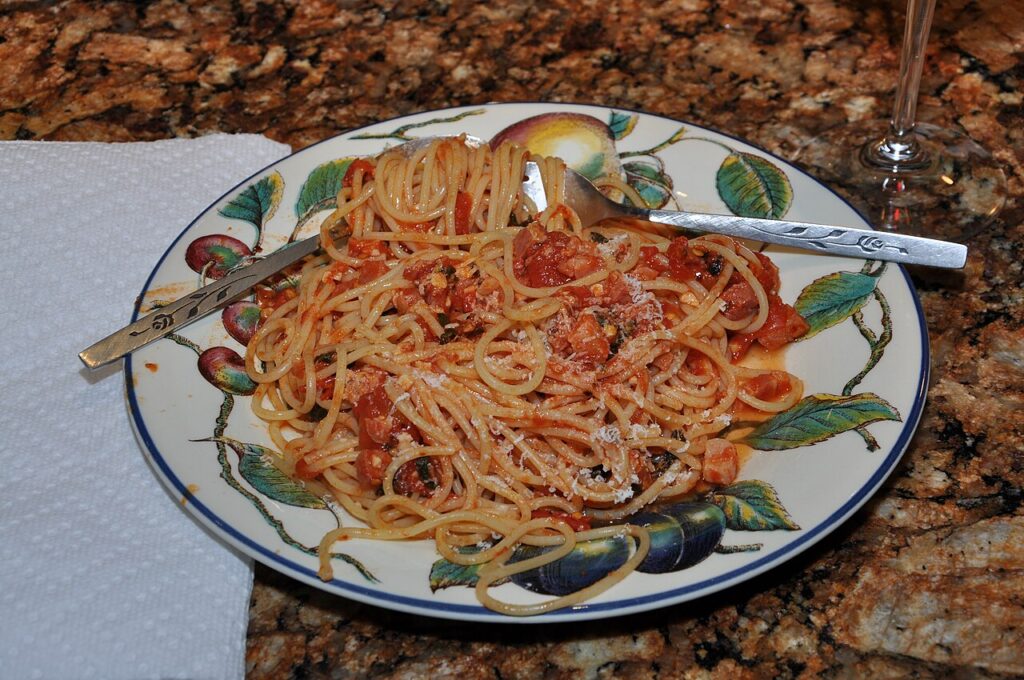
Pasta all’amatriciana is a tomato pasta from the town of Amatrice in Lazio, Italy, made with cured pork cheek, white wine, chili and sharp pecorino cheese. It has few ingredients and is ready in about 35 minutes. Rendered pork fat carries the flavor, while the tomato and cheese balance its richness.
Recipe at a Glance
- Serves: 4
- Prep time: 10 minutes
- Cook time: 25 minutes
- Difficulty: Easy
Where Does Amatriciana Come From?
The dish takes its name from Amatrice, in the province of Rieti, and became famous in Rome during the 19th and early 20th centuries thanks to long-standing ties between the two places. It is often described as a descendant of pasta alla gricia, which uses guanciale and pecorino without tomato. You can compare them in our guide to the four classic Roman pastas.
The recipe is taken seriously. Amatrice’s local government publishes its own ingredient list, and “amatriciana tradizionale” is registered as a traditional speciality in the EU and the UK.
Ingredients
- 400 g spaghetti or bucatini
- 120 g guanciale, rind removed, cut into thick strips
- 1 small dried chili, crumbled, or 1/4 teaspoon chili flakes
- 60 ml dry white wine
- 400 g canned whole peeled San Marzano tomatoes, crushed by hand
- 75 g Pecorino Romano, finely grated, plus extra to serve
- Black pepper
- Salt, for the pasta water
The amount of guanciale here follows the proportion in Amatrice’s specification, reported as 125 g for about 500 g of pasta, and rounds it up slightly. Many cooks use much more, so increase it if you want a richer sauce.
Choosing the Ingredients
Guanciale. This cured pork cheek has a high proportion of fat and a deep, slightly sweet flavor. Look for it at Italian delis. If you cannot find it, unsmoked pancetta is the closest substitute. It is leaner, so you may need a little olive oil. Smoked bacon works in a pinch, but it will change the flavor noticeably.
Pecorino. Amatrice’s list calls for pecorino, and Pecorino Romano is the easiest to find. It is salty and sharp, so it seasons the sauce as well as finishing it.
Pasta. Amatrice typically uses spaghetti, while bucatini is strongly associated with Rome. Rigatoni is also a popular choice.
How to Make Pasta all’Amatriciana
- Start the water. Bring a large pot of water to a boil, but salt it lightly, as the guanciale and pecorino are both salty.
- Render the guanciale. Put it in a cold, wide skillet and set over medium-low heat. Cook for 8 to 10 minutes, stirring now and then, until the fat has melted and the edges are golden. Lift out about half of the pieces and set them aside to stay crisp.
- Add chili and wine. Stir in the chili for a few seconds. Add the wine and let it bubble for 1 to 2 minutes until the sharp smell fades.
- Simmer the sauce. Add the tomatoes and simmer uncovered for 10 to 15 minutes, until slightly thickened. Taste before adding any salt.
- Cook the pasta. Boil the pasta until 1 to 2 minutes short of the package time. Save a mug of the cooking water, then lift or drain the pasta.
- Finish in the pan. Toss the pasta in the sauce over medium heat for 1 to 2 minutes, adding splashes of pasta water until it is glossy. This is the same idea as mantecatura.
- Add the cheese. Off the heat, stir in the reserved guanciale and the pecorino. Add a little more water if it tightens up, then season with pepper and serve right away with extra cheese.
Tips for the Best Result
- Start the guanciale cold. Gentle heat melts the fat before the outside burns.
- Take the pan off the heat before adding pecorino. High heat can make the cheese clump.
- Grate the cheese finely. Fine cheese melts into the sauce more evenly.
- Taste before you salt. Between the pork, cheese and pasta water, it is easy to overdo it.
The Onion and Garlic Debate
Amatrice does not favor onion, although classic Roman cookbooks do include it. Garlic is also out for many traditionalists. When chef Carlo Cracco called a garlic clove his secret ingredient, Amatrice’s local government rejected the idea on its website.
This recipe follows the Amatrice approach, with neither one. If you like a softer, sweeter sauce, cooking a little sliced onion in the fat before adding the tomato will still give you a delicious dinner, even if it would start an argument in Amatrice.
Storage and Make-Ahead
The sauce, without the cheese, keeps in the fridge for up to 3 days and freezes for up to 3 months. Reheat it gently and toss it with freshly cooked pasta, then add the pecorino at the end. Leftover dressed pasta is best eaten within a day or two, reheated in a skillet with a spoonful of water.
Frequently Asked Questions
What is the difference between amatriciana and carbonara?
Both use guanciale and pecorino. Amatriciana has tomato and usually chili, while carbonara has eggs and no tomato. See our spaghetti carbonara recipe.
Can I leave out the wine?
Yes. Add a spoonful of pasta water instead. You will lose a little acidity, but the sauce will still work well.
Can I use fresh tomatoes?
Yes, if they are ripe and in season. Peel and chop them first, and cook the sauce until the extra liquid has reduced.
Can I make it vegetarian?
Without the pork it is no longer amatriciana, but you can make a similar tomato pasta using browned mushrooms and olive oil. Check the cheese label too, because traditional pecorino is usually made with animal rennet.
More Roman-Style Pasta
For another classic that relies on pecorino, make cacio e pepe. For a similar spicy tomato sauce, try spaghetti all’assassina.

Syed Yasar Arafat is the founder of PastaLoverz.com and a food research enthusiast with a focused interest in pasta varieties, traditional Italian cuisine, and balanced eating. Through PastaLoverz.com, he publishes well-researched articles that explain pasta types, cooking methods, and nutritional considerations in clear, practical terms to help readers make informed food choices.