
What Is Meat-Filled Tortelloni?
Ingredients for Homemade Meat-Filled Tortelloni
Fresh Pasta Dough
- 300 g Tipo 00 Flour: Ground finely to yield a silky, flexible pasta sheet.
- 3 Large Eggs: Fresh eggs provide structure, color, and rich flavor.
- ½ tsp Fine Sea Salt: Enhances the natural flour profile.
- 1 tsp Extra-Virgin Olive Oil (Optional): Adds elasticity to the dough.
Savory Meat Filling
- 150 g Lean Ground Beef & 100 g Ground Pork: A classic blend balancing richness and lean protein.
- 1 tbsp Extra-Virgin Olive Oil: For browning the meats evenly.
- 1 Small Shallot & 1 Small Garlic Clove: Finely minced for a subtle aromatic base.
- 50 g Parmigiano-Reggiano: Freshly and finely grated for sharp, salty richness.
- 1 Egg Yolk: Acts as a natural binder for the filling.
- 1 tbsp Fresh Flat-Leaf Parsley: Adds a clean, bright herbal note.
- ¼ tsp Freshly Grated Nutmeg: The secret ingredient in traditional Italian meat fillings.
- Salt & Freshly Ground Black Pepper: To taste.
Nutty Sage Butter Sauce
- 90 g Unsalted Butter: High-fat European-style butter browns best.
- 10–12 Fresh Sage Leaves: Infuse the butter with woodsy, earthy aromas.
- 30 g Parmigiano-Reggiano: For finishing.
- 2–3 tbsp Reserved Pasta Cooking Water: Creates an emulsified, glossy pan sauce.
Mastering the Filling for Meat-Filled Tortelloni
- Sauté the Aromatics: Heat olive oil in a skillet over medium heat. Add minced shallots and cook for 2–3 minutes until translucent, then toss in garlic for 30 seconds.
- Brown the Meats: Add the ground beef and pork. Cook thoroughly, breaking the meat down into micro-fine pieces. Ensure all moisture evaporates completely before removing from heat.
- Cool and Bind: Allow the meat to cool down completely. Transfer to a bowl, add the Parmigiano-Reggiano, egg yolk, fresh parsley, nutmeg, salt, and pepper, then mix until compact.
- Chill: Refrigerate the filling for 15–20 minutes so it sets firmly.
Chef’s Tip: Never place warm filling on fresh pasta dough. Heat weakens dough structure, leading to soft, torn pasta during sealing.
How to Roll and Shape Meat-Filled Tortelloni
[Square Cut Pasta] ──> [Teaspoon of Meat Filling] ──> [Fold to Triangle] ──> [Seal Corners Together]
- Knead the Dough: Combine flour, eggs, and salt. Knead vigorously for 8–10 minutes until elastic and smooth. Wrap tightly in plastic film and rest for 30 minutes at room temperature.
- Sheet the Dough: Divide dough into four portions. Pass through a pasta machine on a medium-thin setting. Avoid rolling it paper-thin, as large Meat-Filled Tortelloni require sturdy walls to hold hearty fillings.
- Cut and Portion: Cut dough into 8–9 cm squares. Place a generous teaspoon of chilled meat filling in the middle of each square.
- Form the Ring: Lightly moisten the edges with water. Fold diagonally into a triangle, pressing firmly from the center outward to push out trapped air. Join the two bottom corners around your finger and press tightly to lock the seal.
Cooking and Coating Your Meat-Filled Tortelloni
- Brown the Butter: Melt 90 g of unsalted butter in a skillet over medium heat. Drop in whole fresh sage leaves and let them sizzle gently until the milk solids turn golden and fragrant. Remove from direct heat.
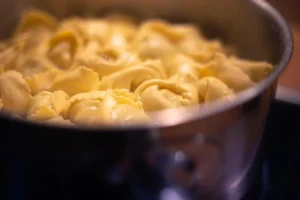
- Boil Gently: Bring a large pot of water to a gentle boil and season generously with sea salt. Drop in your handmade Meat-Filled Tortelloni and cook for 4–6 minutes.
- Emulsify the Sauce: Transfer cooked pasta directly to the sage butter using a slotted spoon. Pour in 2–3 tablespoons of starchy pasta water, tossing gently over low heat until a glossy sauce clings to each parcel.

Serving Suggestions & Wine Pairings
- Crisp Arugula Salad: Dressed in fresh lemon juice and cold-pressed olive oil to cut through butter richness.
- Crusty Artisan Bread: Essential for soaking up leftover sage butter (fare la scarpetta).
- Wine Selection: A bright Sangiovese or a medium-bodied Chianti Classico balances the savory richness of pork and beef.
Storage and Meal Prep Guidelines
| Storage Method | Preparation | Shelf Life |
| Refrigerated (Uncooked) | Single layer on semolina-dusted tray, covered | Up to 24 hours |
| Frozen (Uncooked) | Freeze flat on baking sheets, then bag | Up to 3 months |
| Refrigerated (Cooked) | Airtight container with a drizzle of oil | Up to 3 days |
Nutrition Information
- Calories: 670 kcal
- Protein: 34 g
- Carbohydrates: 66 g
- Fat: 31 g
- Fiber: 3 g
- Sodium: 680 mg
Step-by-Step Summary
- Prepare Filling: Sauté meats and aromatics dry, cool completely, and bind with egg yolk and cheese.
- Roll Dough: Keep sheets slightly thicker than standard pasta sheets to support larger shapes.
- Shape Carefully: Remove air pockets from filled triangles before connecting corner ends.
- Pan Sauce Finish: Glaze cooked Meat-Filled Tortelloni directly in a pan of simmering sage butter and starchy cooking water.

Frequently Asked Questions
Why do my Meat-Filled Tortelloni open while boiling?
Can I make the meat filling a day in advance?
What makes tortelloni different from tortellini?
Authentic handmade pasta is at the heart of traditional Italian cuisine, especially rich stuffed styles originating from the historic Emilia-Romagna Region. For the filling, using high-quality authentic Parmigiano-Reggiano Cheese makes all the difference in achieving traditional depth of flavor. If you are exploring more classic Italian dishes on our site, check out our collection of Pasta Loverz Home to master every style of noodle from scratch.
Conclusion
PastaLoverz Pro Tip
The Semolina Dust Trick: When arranging fresh, uncooked Meat-Filled Tortelloni on a tray, skip standard all-purpose flour. Dust your baking sheets generously with coarse durum semolina flour. Semolina doesn’t absorb moisture from fresh dough as quickly, preventing your carefully crafted Meat-Filled Tortelloni from sticking or getting soggy while waiting for the pot!

Syed Yasar Arafat is the founder of PastaLoverz.com and a food research enthusiast with a focused interest in pasta varieties, traditional Italian cuisine, and balanced eating. Through PastaLoverz.com, he publishes well-researched articles that explain pasta types, cooking methods, and nutritional considerations in clear, practical terms to help readers make informed food choices.