
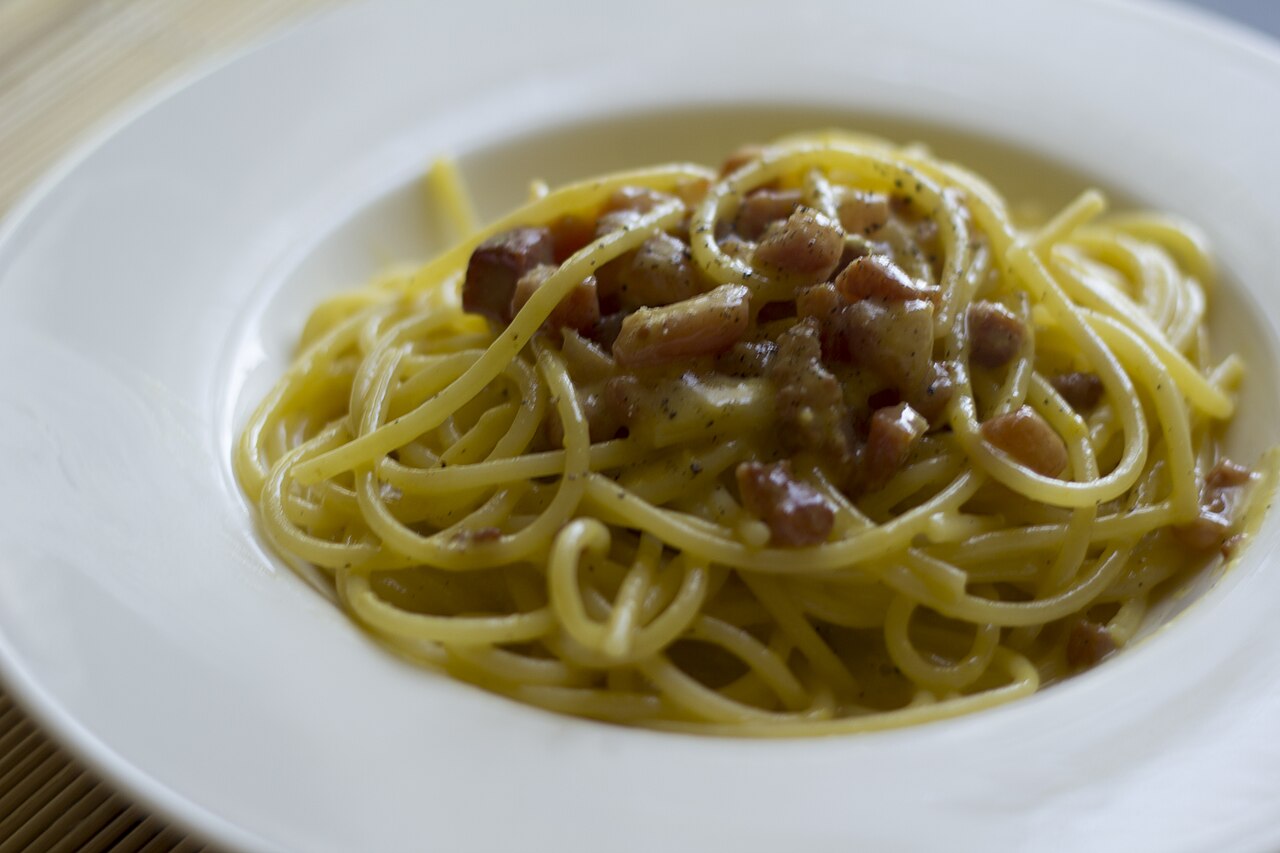
Carbonara is Rome’s egg-and-cheese pasta: spaghetti tossed with crisp guanciale, beaten eggs, Pecorino Romano and plenty of black pepper. There is no cream. The silky sauce comes from eggs and cheese that thicken gently in the heat of the pasta, loosened with a little starchy cooking water. It takes about 25 minutes, and the only tricky part is keeping the eggs from scrambling.
Serves: 4 | Time: about 25 minutes
Ingredients
- 400 g spaghetti (or rigatoni)
- 150 to 200 g guanciale, rind removed, cut into short strips
- 4 large egg yolks plus 2 whole eggs, at room temperature
- 80 to 100 g Pecorino Romano, very finely grated, plus extra to serve
- 1 to 2 teaspoons black peppercorns, freshly and coarsely ground
- Salt for the pasta water
Guanciale is cured pork cheek. It is fattier than pancetta and gives the sauce its depth. If you cannot find it, use unsmoked pancetta, which is the closest substitute. Smoked bacon works but adds a flavour that is not part of the Roman dish.
Method
- Mix the eggs. In a large bowl, whisk the yolks, whole eggs, most of the Pecorino and a generous amount of pepper into a thick paste. Set it aside.
- Boil the pasta. Cook the spaghetti in lightly salted water, using less salt than usual, since guanciale and Pecorino are both salty. Stop about a minute before the packet time.
- Render the guanciale. Meanwhile, put the guanciale in a cold, wide pan and set it over medium heat. Cook for 8 to 10 minutes, stirring now and then, until the fat has melted and the pieces are golden. Turn off the heat.
- Save the water. Scoop out a mug of the pasta water. Stir 2 tablespoons of it into the egg mixture to warm it slightly.
- Combine in the pan. Move the pasta into the guanciale pan with tongs and toss it in the fat for 30 seconds. Make sure the burner is off.
- Add the eggs. Let the pan cool for about 30 seconds, then pour in the egg mixture and toss quickly and constantly, adding splashes of pasta water, until the sauce turns creamy and coats each strand. This takes 1 to 2 minutes.
- Serve. Divide among warm bowls and finish with more Pecorino and pepper. Carbonara thickens as it sits, so serve it straight away.
How to keep the sauce from scrambling
Eggs start to thicken at around 65 °C and turn into scrambled egg not far above that. The pasta and pan only need to be warm enough to thicken the sauce, not hot enough to set it. These habits make the difference:
- Turn the heat off before the eggs go in, and give the pan a moment to cool.
- Keep the pasta moving. Constant tossing spreads the heat so no part of the sauce overcooks.
- Use pasta water as your control. A splash cools and loosens the sauce if it starts to look grainy.
- Grate the cheese finely. Coarse cheese melts unevenly and can turn stringy.
The same finishing technique is explained in our mantecatura guide, and the role of starchy water in our pasta water guide.
If something goes wrong
- Grainy or scrambled: the pan was too hot. Small lumps can be loosened with a splash of pasta water and fast tossing, but fully set egg cannot be rescued.
- Too runny: keep tossing for another 30 seconds. The residual heat will thicken it.
- Too thick or claggy: add warm pasta water a spoonful at a time.
- Too salty: use less salt in the pasta water next time, or a little less Pecorino.
Whole eggs or yolks?
Recipes differ. All yolks give the richest, most golden sauce. Whole eggs make it lighter and slightly easier to keep smooth. The mix of yolks and whole eggs used here is a common middle ground. A rough guide is one yolk per person, plus one or two whole eggs.
What carbonara is not
Many versions outside Italy add cream, garlic, onion, peas or mushrooms. They can be tasty, but they are different dishes. The Roman version relies only on guanciale, eggs, Pecorino, pepper and pasta water. Cream in particular hides the technique and dulls the flavour of the cheese.
Where it comes from
Carbonara is much younger than many people assume. The first printed recipes date from the 1950s, and its origins are still debated. One story links it to charcoal burners, the carbonari. Another suggests it grew out of the eggs and bacon that reached Rome with Allied soldiers at the end of the Second World War. Neither can be proven, so it is best to treat them as stories. It now sits alongside cacio e pepe, gricia and amatriciana as one of the four classic Roman pastas.
Which pasta to use
Spaghetti is the most common choice in Rome. Rigatoni are also popular because the sauce collects inside the tubes, and bucatini and mezze maniche work too. Bronze-cut pasta releases more starch, which helps the sauce cling. See bronze-cut vs Teflon pasta.
A note on egg safety
The eggs in carbonara are only gently heated, not fully cooked. If you are pregnant, cooking for young children or older people, or have a weakened immune system, use pasteurised eggs. Follow your local food safety advice.
Serving and storage
Carbonara is best eaten the moment it is made. Serve it with a simple green salad or a plate of greens. Leftovers lose their silkiness, but you can refrigerate them within 2 hours and eat them the next day. Reheat gently in a pan with a splash of water, stirring constantly so the egg does not scramble.
Frequently asked questions
Can I use Parmesan instead of Pecorino?
Yes, or a mix of the two. Parmigiano Reggiano is milder and nuttier, while Pecorino Romano gives the sharper, saltier flavour of the Roman version.
Why is there no cream?
The eggs, cheese, fat and pasta water make the sauce creamy on their own. Cream is a common addition elsewhere, but it is not part of the traditional recipe.
Can I make carbonara ahead?
Not really. You can cut the guanciale and grate the cheese ahead, but the sauce must be made with freshly cooked pasta.
Is there a vegetarian version?
Some cooks use fried mushrooms or courgette in place of guanciale, with a little extra olive oil and smoked salt. It is a different dish, but it uses the same egg technique.
More from PastaLoverz
If you enjoy carbonara, try its relatives: cacio e pepe and pasta all’amatriciana. For the basics of timing and salt, see our pasta cooking guide and common pasta mistakes.
Further reading: Wikipedia: Carbonara

Syed Yasar Arafat is the founder of PastaLoverz.com and a food research enthusiast with a focused interest in pasta varieties, traditional Italian cuisine, and balanced eating. Through PastaLoverz.com, he publishes well-researched articles that explain pasta types, cooking methods, and nutritional considerations in clear, practical terms to help readers make informed food choices.