
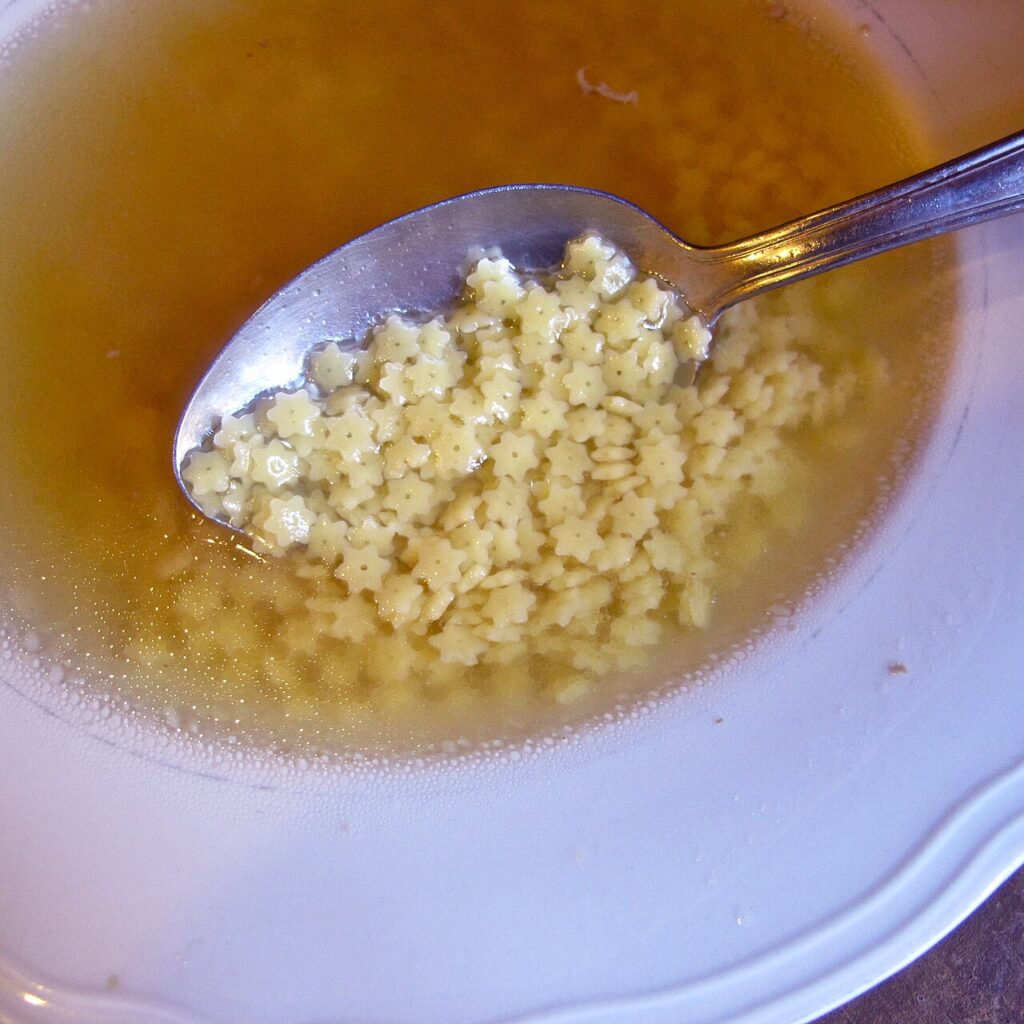

Pastina means “little pasta” in Italian. It is the family name for the tiny shapes used in broth and in simple comfort bowls with butter and cheese, such as stelline (little stars), acini di pepe and anellini. Because pastina covers so many shapes, almost any very small pasta can stand in for it. The best choice depends on whether you are making a clear soup or a soft, buttery bowl.
Quick answer: stelline, acini di pepe and alphabet pasta are the closest swaps. Orzo works if you do not mind a slightly bigger bite. For gluten-free, use a gluten-free pastina, white rice or quinoa.
Pastina substitutes at a glance
| Substitute | Best for | Typical cooking time | Keep in mind |
|---|---|---|---|
| Stelline | Broth, comfort bowls | 3 to 6 minutes | Often what is sold simply as “pastina” |
| Acini di pepe | Soups, comfort bowls | 5 to 7 minutes | Round beads with a slightly firmer bite |
| Alphabet pasta | Children’s soups | 3 to 6 minutes | Fun for children, softens quickly |
| Anellini | Broth, baked dishes | About 5 to 8 minutes | Tiny rings that hold their shape well |
| Orzo | Soups, buttery bowls | 8 to 10 minutes | Larger and longer, so the bowl is chunkier |
| Ditalini | Heartier soups | 7 to 10 minutes | A bigger, firmer bite than true pastina |
| Broken capellini or vermicelli | Clear broth | 2 to 4 minutes | Snap into very short pieces first |
| Fine couscous | Quick comfort bowls | About 5 minutes, soaked | Steamed semolina, softer and fluffier |
| White rice | Soups, gluten-free | About 15 to 20 minutes | Needs more time and more liquid |
| Quinoa | Gluten-free bowls | About 15 minutes | Gluten-free, with a nutty flavour |
Times are typical for dried products and vary by brand, so follow the packet. Our pasta cooking time chart lists more shapes.
Best pastina substitutes for broth
In a clear broth such as chicken soup or brodo, the pasta should be small enough to eat by the spoonful and should not cloud the liquid too much. Stelline and acini di pepe are the best choices. Alphabet pasta works well for children, and anellini hold their shape a little longer.
Tiny pasta keeps soaking up liquid, so if you are making soup ahead, cook the pasta separately and add it to each bowl when you serve.
Best substitutes for a buttery pastina bowl
The classic comfort bowl is pastina cooked in broth or water, then stirred with butter, grated Parmigiano and sometimes an egg until creamy. Stelline and acini di pepe give the closest result. Orzo also works well and makes the bowl a little more substantial. Fine couscous is the quickest option, but it turns fluffy rather than creamy, so add a little extra butter or cheese.
Gluten-free pastina substitutes
Regular pastina is made from wheat. Gluten-free pastina made from rice or corn flour is the simplest swap. White rice and quinoa also work in soups, but they take longer to cook and absorb more liquid. If you are cooking for someone with coeliac disease, check labels carefully.
Common questions
Is pastina a specific shape?
Not exactly. Pastina is the general name for tiny pasta. In many shops, the product labelled “pastina” is small stars (stelline), but acini di pepe, anellini and alphabet pasta are all types of pastina. See our pastina guide for more.
Can I use orzo instead of pastina?
Yes. Orzo is a little bigger and takes a few minutes longer, but it works in both soups and buttery bowls.
Can I use couscous instead of pastina?
Yes, fine couscous makes a quick, soft bowl. It is fluffier than pastina rather than creamy.
What is the closest substitute for pastina?
Stelline or acini di pepe, since both are themselves types of pastina.
Keep exploring
See our guides to the best pasta for soup and orzo substitutes, or browse the full pasta substitution chart.
Further reading: Wikipedia: Pastina

Syed Yasar Arafat is the founder of PastaLoverz.com and a food research enthusiast with a focused interest in pasta varieties, traditional Italian cuisine, and balanced eating. Through PastaLoverz.com, he publishes well-researched articles that explain pasta types, cooking methods, and nutritional considerations in clear, practical terms to help readers make informed food choices.