
Testaroli Pasta is often considered one of the oldest forms of pasta in Italy. This traditional dish comes from the historic region of Lunigiana, where cooks have been preparing it for centuries with a simple batter of flour and water.
Unlike typical pasta shapes, Testaroli is first cooked like a thin pancake, then cut into diamond-shaped pieces, and briefly boiled. The result is a soft, rustic pasta that pairs beautifully with classic Italian sauces such as Pesto or olive oil and cheese.
In this guide, you will discover the fascinating history of Testaroli pasta, how it is traditionally made, and the best ways to cook and serve it at home.
1: What Testaroli Pasta Actually Is?
estaroli pasta is widely celebrated as the world’s oldest pasta, offering a wonderful glimpse into ancient Roman culinary traditions. Unlike the extruded dough you’ll find in modern grocery aisles, this extraordinary Tuscan specialty begins as a simple batter of flour, water, and salt. It is traditionally cooked into a perfect, crepe-like disc on a scorching terracotta griddle known as a testo, then sliced into signature diamond shapes. This unique process results in a porous, velvet-soft texture that absorbs sauces far better than standard dried pasta, making it a proven favorite for anyone seeking the ultimate authentic Italian comfort food.
2: Origins and Historical Background of Testaroli Pasta
Many food writers describe testaroli as one of the earliest recorded pasta traditions still eaten today, mainly because it uses a method that predates most rolled, extruded, or dried pasta shapes. (Wikipedia) The dish comes from Lunigiana, a borderland between northern Tuscany and southern Liguria, where it remains a proud local staple rather than a restaurant trend. (Wikipedia)
The name ties directly to its cookware. Cooks traditionally made testaroli on a testo (plural testi), a flat cooking surface that was historically terracotta and later often cast iron. (true-italian.com) They heated the testo over a flame or wood fire, poured on a thin batter, and cooked it into a round, rustic sheet. That hot-surface cooking creates a gentle toasted aroma and an earthy, old-world character you do not get from boiling raw dough alone. (I Sapori dell’arca S.r.l.)
Testaroli also breaks the “normal pasta rules.” Instead of boiling raw pasta until tender, cooks cook it once on the testo, then briefly warm the cut pieces in hot water off the heat before dressing it. (Serious Eats) This two-stage method explains its signature bite: soft, slightly spongy, and extremely good at soaking up sauce, especially Pesto. (Serious Eats)
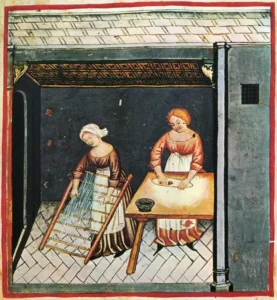
3: Testaroli Pasta Preparation
The preparation looks simple, but the technique makes all the difference. Here is the traditional process:
- Mix a thin batter using flour, water, and salt. (Serious Eats)
- Heat the testo (or a cast-iron pan) until it’s hot and evenly warmed. (true-italian.com)
- Pour and spread the batter into a thin, round shape, like a rustic crêpe. (Serious Eats)
- Cook the sheet, flip, and finish until set, then cool briefly. (GialloZafferano)
- Cut into diamonds or small pieces. (Wikipedia)
- Warm the pieces briefly in hot water off the boil, then lift out gently. (Serious Eats)
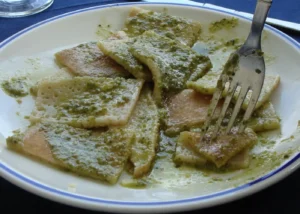
- Dress immediately, most traditionally with pesto alla Genovese, so the sauce melts into the porous texture. (Great Italian Chefs)
1. Prepare the Batter
Whisk together flour, water, and salt until smooth. No eggs. No oil. The result is a thin, pourable mixture similar to crepe batter.
2. Cook in a “Testo.”
The batter is poured into a very hot testo pan. These pans are traditionally heated over chestnut embers. The edges are crisp while the center stays tender.
3. Cut Into Diamonds
Once cooled, the sheet is cut into diamond or square pieces that resemble small pasta pockets.
4. Brief Boil
The pieces boil for 30 to 60 seconds, just long enough to soften them.
4
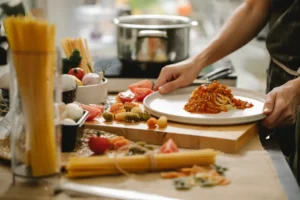
How to Cook Testaroli Pasta Perfectly? (The 45-Second Method)
To achieve the perfect al dente texture for this ancient Tuscan specialty, follow this precise step-by-step guide:
Prepare a Gentle Boil: Fill a large pot with salted water and bring it to a simmer. Unlike dried semolina pasta, Testaroli pasta requires a gentle boil to maintain its delicate, crepe-like structure.
Flash-Boil Briefly: Drop the diamond-shaped pieces into the water. Wait exactly 45 to 60 seconds. Because the batter was already “pre-baked” on a traditional terracotta testo, you are simply rehydrating the starch, not cooking it from scratch.
The “Shock” Technique: Use a slotted spoon to remove the pieces immediately once they float. Briefly rinse with lukewarm water or dip in a “shock” bowl to stop the cooking process and prevent the pieces from sticking together.
Emulsify with Sauce: Transfer the pasta to a warm bowl and toss immediately with authentic basil pesto or a walnut cream sauce. The porous surface of the Testaroli acts as a sponge, absorbing the sauce instantly for maximum flavor.
5: Best Sauces for Testaroli Pasta
The most iconic pairing is **Pesto alla genovese**. According to Italian culinary research by the Academia Barilla, this pairing dates back centuries.
Top sauces for Testaroli pasta:
- Pesto alla genovese
- Garlic and olive oil
- Sage butter
- Pecorino Romano with black pepper
- Walnut sauce (salsa di noci)
Comparison Table: Testaroli vs. Traditional Italian Pastas
Pasta Shape Primary Base Form & Dough Structure Critical Cooking Technique Primary Sauce Mechanism Testaroli Wheat flour, water, & salt Pourable, yeast-free batter pre-baked into a crepe-like disc on a testo. 45-second flash-boil in hot water off the heat for starch rehydration. Cellular Absorption: Acts like a sponge, soaking emulsions directly into its porous core. Casarecce Durum wheat semolina & water Extruded dough twisted into a narrow, rolled “S” shape with an open central groove. Standard rolling boil until achieving a firm, al dente bite. Physical Trapping: Channels and captures chunky bits inside its smooth, rolled fold. Rigatoni Durum wheat semolina & water Extruded large ridges, hollow tubes with straight-cut ends. Standard rolling boil; highly resilient against overcooking. Surface Adhesion: Outer ridges grip clings of heavy fats while the hollow center fills with sauce. Radiatori Durum wheat semolina & water Extruded squat shapes with deeply ruffled, concentric fins. Standard rolling boil; requires careful handling to prevent the delicate fins from tearing. Structural Pocketing: Maximizes physical surface area to lock thick, heavy ragùs between its ruffles.
Testaroli vs Traditional Pasta
Testaroli pasta behaves differently from shapes like Radiatori, Casarecce, and Agnolotti. It holds sauces through absorption rather than grooves or folds.
Key differences:
- Made from batter, not dough
- Soft, sponge-like texture
- Absorbs sauce instead of gripping it
- Boils for seconds, not minutes

6: Nutrition Benefits and Dietary Notes
Testaroli keeps things simple. Traditional recipes use flour, water, and salt, so you get a pasta-style food without eggs or rich add-ins. (Serious Eats) This makes testaroli a practical choice for people who avoid eggs for dietary or allergy reasons.
From a calorie standpoint, egg pasta can run slightly higher in energy than semolina-based pasta, especially in dried formats. (International Pasta Organization) That does not automatically make testaroli “low-calorie,” but it does explain why egg-free versions often feel lighter when portions are kept similar.
Testaroli also absorbs sauce easily because of its porous, tender texture. That’s great for pesto, but it can also turn a plate calorie-dense fast if you use heavy amounts of oil or cheese. Balance it by adding:
- a side of vegetables (greens, zucchini, tomatoes)
- a lean protein (chicken, beans, fish)
- a lighter pesto portion, loosened with a spoonful of warm water
You can also find whole-grain versions more often now. Whole-grain flour usually adds more fiber and a nuttier taste, which can help the dish feel more filling.
Gluten-free note: Traditional testaroli contains wheat. Gluten-free versions exist, but you often need to adjust hydration because gluten-free batters can dry out and crack as they set. Start with a slightly looser batter, cook gently, and avoid over-thinning the sheet.
Storage and Make-Ahead Tips
Fresh testaroli tastes best the day you make it, but you can store it safely if you wrap it well.
Refrigerator (fresh sheets):
- Wrap sheets tightly and refrigerate.
- Use within up to 3 days for the best texture.
Freezer (best make-ahead option):
- Freeze sheets flat with parchment between layers, or quick-freeze pieces on a tray first, then bag them.
- Freeze for up to about 1 month for the best quality. (Pasta Evangelists)
Slice before or after freezing:
- Slice before freezing for quick portions.
- Freeze whole sheets if you want cleaner cuts later.
Reheat the right way:
Warm testaroli briefly in hot water off the boil, then toss with sauce right away. This keeps it tender and helps it hold its shape. (Serious Eats)
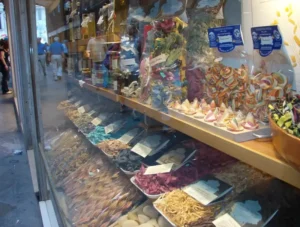
7: Where to Buy Authentic Testaroli Pasta?
You can buy traditional versions from artisan producers in Lunigiana. Authentic sources include:
- Eataly Marketplace
- Gustiamo Italian Foods
8: FAQs (Testaroli Pasta)
Q: Is Testaroli pasta considered the oldest pasta?
A: Many food historians describe testaroli as one of the oldest pasta-like traditions in Italy, with origins that may predate most modern pasta shapes.Q: Why is Testaroli boiled only briefly?
A: Testaroli cooks first on a testo pan, so you only warm it briefly in hot water to soften and heat it before serving.Q: What is the best sauce for Testaroli pasta?
A: Pesto alla Genovese is the most traditional and widely loved pairing.Q: Can Testaroli be stored after cooking?
A: Yes. You can refrigerate it for short-term use or freeze it for longer storage.Q: Does Testarolipasta taste like regular pasta?
A: No. It has a softer, sponge-like texture and a mild rustic flavor.Q: Where does Testaroli pasta come from?
A: Testaroli comes from the Lunigiana area, between Liguria and Tuscany, where it remains a local specialty.Q: What is a “testo” in Testaroli?
A: A testo is a flat cooking surface, often terracotta or cast iron, used to cook the batter into thin sheets.Q: Do I need to boil Testaroli pasta in a rolling boil?
A: No. Use hot water and keep it gentle because vigorous boiling can break the pieces.Q: How do I stop Testaroli pasta from falling apart?
A: Cut even pieces, warm them briefly in hot water off the boil, and lift them out carefully with a slotted spoon.Q: Can I make Testaroli pasta without a testo?
A: Yes. Use a well-heated cast-iron skillet to cook thin sheets, then cut and warm them the same way.Q: Is Testaroli pasta gluten-free?
A: Traditional testaroli is not gluten-free because it uses wheat flour.
- Q: What can I serve with Testaroli pasta besides pesto?
A: Toss it with olive oil and cheese, or use a light butter-and-herb sauce so the texture stays the focus.Q: What’s the best way to reheat Testaroli pasta?
A: Warm it briefly in hot water or broth off the boil, then toss with the sauce immediately. - Q: Why is testaroli pasta considered a historical hybrid between a crepe and traditional pasta?
Testaroli pasta breaks conventional culinary classifications because it relies on a unique two-stage preparation method originating in the ancient Lunigiana region.
Unlike traditional extruded durum wheat shapes, testaroli begins as a pourable, yeast-free batter cooked on a scorching terracotta or cast-iron griddle (testo) into a rustic pancake. Only after it cools is it sliced into characteristic diamond pieces and flash-boiled, bridging the gap between flatbread baking and authentic pasta revival.
Q: Why do you cook testaroli pasta in water off the heat instead of a rolling boil?
Because the starch network in the batter is completely pre-baked during its initial cook on the traditional testo, you are not actually cooking raw dough when it hits the water—you are simply achieving starch rehydration.
Submerging the delicate, diamond-cut pieces in a violent, rolling boil will rapidly agitate the porous edges, causing the velvety structure to tear and dissolve into a gummy mess. A gentle, brief 45-second steep in hot water right off the boil preserves its signature tender bounce.
Q: How does testaroli pasta compare to regular pasta when absorbing classic Italian sauces?
Standard dried pasta relies on outer grooves, rough brass-die extrusions, or structural folds (like Radiatori or Casarecce) to physically grip onto dressing. Testaroli, conversely, functions entirely through deep cellular absorption.
Cooking it on a dry, ungreased hot surface creates an intensely porous, sponge-like exterior. When tossed with a rich fat like Pesto alla Genovese or a luxurious walnut cream sauce, the pasta acts like a sponge, vacuuming the emulsion directly into the core of the disc.
Q: Can you successfully make authentic testaroli pasta at home without a traditional Italian testo?
Yes, you can easily replicate this ancient Tuscan specialty using a heavy, seasoned cast-iron skillet or a flat crêpe pan. The secret lies in preheating the pan over high heat until it mimics the intense radiant heat of chestnut embers.
Pour your thin flour, water, and salt batter thinly, ensuring the edges blister into a crisp lace while the center remains soft and pliable. Once flipped and set, slide it onto a cutting board to cool completely before carving your shapes.

- Perfect pasta comes down to mastering a few core fundamentals: using the right cooking method, understanding how water and starch interact, pairing the right pasta with the right sauce, and avoiding common mistakes. When these elements come together, your pasta has a better texture, improved flavor, and holds sauce more effectively.
- To build these skills, follow a complete pasta cooking guide, learn the water science behind pasta, explore the best pasta for each sauce, and understand common pasta mistakes. These foundational techniques will help you cook better pasta every time, no matter the shape or recipe.
- Pasta Cooking: 9 Powerful Secrets for Perfect Results
- Casarecce Pasta: 11 Essential Secrets for Perfect Sauce
- Rigatoni Pasta: 7 Reasons It’s the Best Shape for Big Flavor
- Bucatini Pasta: 7 Powerful Secrets for Perfect Recipes
- Cappelletti Pasta: 7 Amazing Secrets of This Italian Classic
- Above are our valuable contributions and informational hubs.
Related Videos
Summary
This comprehensive culinary guide explores the deep-rooted heritage and unique preparation of authentic testaroli pasta, widely celebrated as Italy’s oldest traditional pasta. Hailing from the historic Lunigiana region—the scenic borderland bridging northern Tuscany and southern Liguria—this ancient dish breaks conventional pasta rules by beginning not as an extruded dough, but as a simple, yeast-free flour and water batter.
The guide highlights the traditional two-stage cooking process that gives testaroli pasta its signature old-world character. The pourable batter is first pre-baked into a thin, crepe-like disc on a scorching, radiant-heat terracotta or cast-iron griddle (testo), historically fueled by chestnut embers. Once set and cooled, it is sliced into its characteristic diamond-shaped pieces and subjected to a brief, 45-second flash-boil in hot water off the heat to achieve perfect starch rehydration without compromising its structural integrity.
Finally, the article examines how testaroli’s intensely porous, sponge-like exterior relies on deep cellular absorption rather than outer grooves or folds to hold dressing. It outlines the ultimate regional pairings, showcasing how the velvet-soft medallions act as a reservoir for Pesto alla Genovese, walnut cream sauce (salsa di noci), or a simple emulsion of extra virgin olive oil and Pecorino Romano, establishing testaroli as a definitive ancestral pillar of Italian comfort food.
9: Call to Action
If you enjoy exploring ancient Italian comfort foods, put testaroli pasta on your shortlist. Make a small batch at home, warm it gently, and test a few pairings to see how the texture changes with different sauces. Start with Pesto, then try olive oil and Parmesan, or a light butter-and-herb finish to keep the flavor clean and traditional.
Keep building your pasta knowledge on PastaLoverz. Browse more pasta shape guides, learn which sauces match each style, and pick one new pasta to try each week. The more you explore, the easier it becomes to cook pasta like a local, not just follow a recipe.
- To avoid wastage of food and prepare the right amount of pasta, use our Pasta portion calculator
- Pro Tip:
The “Water Off the Heat” Flash-Boil Method
The biggest mistake people make with Testaroli pasta is boiling it like regular dried pasta. Because the batter is already completely pre-baked on the testo (or in your skillet), you aren’t actually cooking raw dough—you are simply rehydrating the starch.
If you drop the delicate, diamond-cut pieces into a violent, rolling boil, the turbulent water will rapidly agitate the porous edges, causing the velvety structure to tear and dissolve into a gummy mess.
How to do it right:
Bring your salted water to a boil, then remove the pot from the heat source entirely (or turn the burner completely off).
Drop the Testaroli pieces into the hot water and let them steep gently for only 45 to 60 seconds.
Use a slotted spoon to lift them out carefully—never pour them into a colander, as the weight of the pasta will crush the delicate pieces.
Sauce Absorption Tip: Because the surface of cooked Testaroli is incredibly porous, it acts like a sponge. Toss it with your Pesto alla Genovese immediately after lifting it from the water so it vacuums the sauce directly into its core.

Syed Yasar Arafat is the founder of PastaLoverz.com and a food research enthusiast with a focused interest in pasta varieties, traditional Italian cuisine, and balanced eating. Through PastaLoverz.com, he publishes well-researched articles that explain pasta types, cooking methods, and nutritional considerations in clear, practical terms to help readers make informed food choices.

0 Responses