
Fresh egg pasta needs only flour and eggs. The usual starting ratio is 100 g of flour to 1 large egg per person. The dough is firm at first and turns smooth after kneading and resting, so most of the time here is hands-off. You can roll it with a rolling pin or a machine and cut it into ribbons by hand.
Serves: 4 | Time: about 1 hour 15 minutes, including 30 minutes of resting
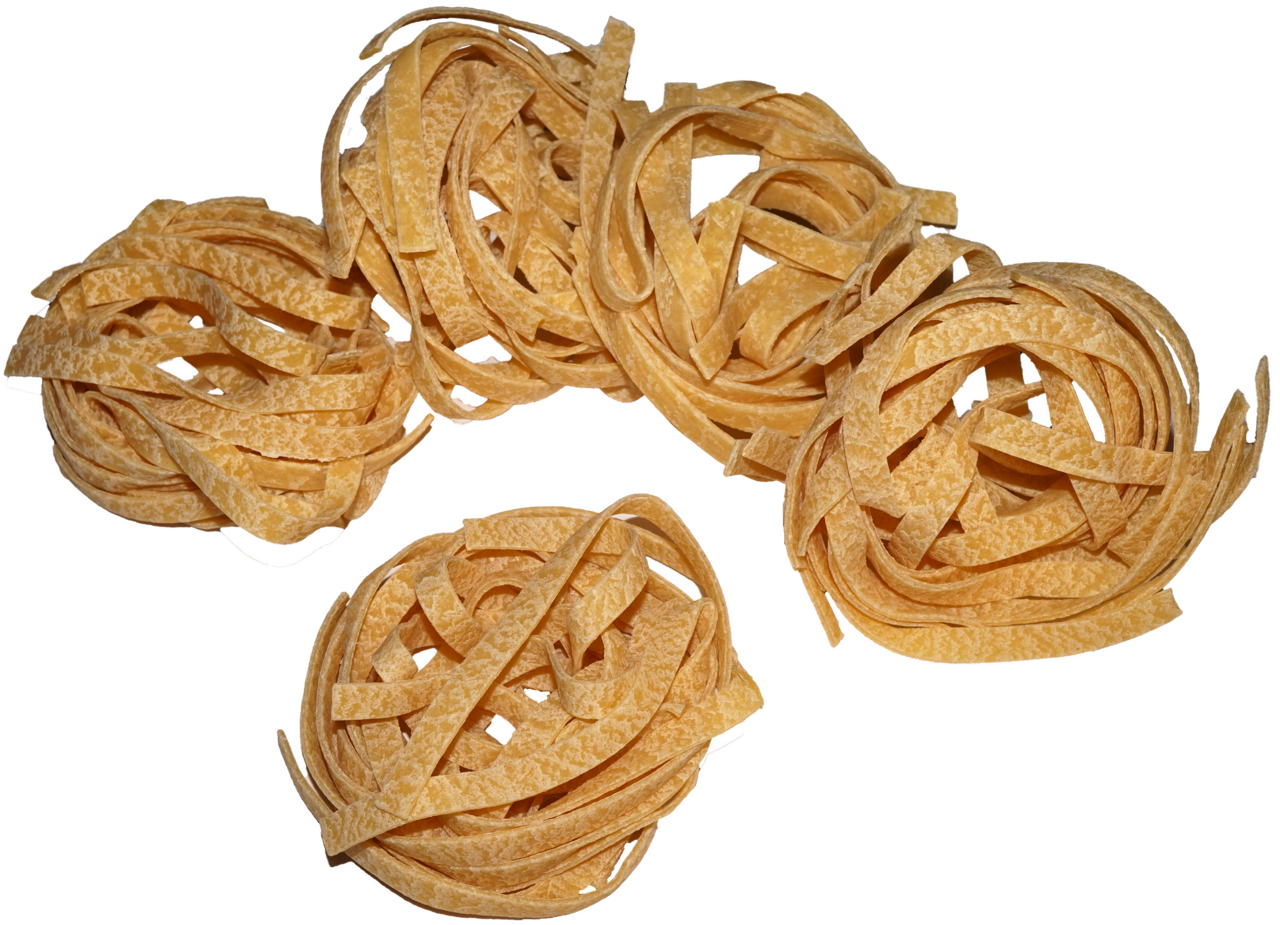
Ingredients
- 400 g 00 flour or all-purpose flour, plus extra for dusting
- 4 large eggs
- Fine semolina for dusting (optional)
- Salt for the cooking water
Eggs and flour vary, so treat the amounts as a guide. Our pasta flour guide compares 00, semolina and all-purpose flour.
Method
- Mix. Pile the flour on a clean surface and make a wide well in the center. Crack in the eggs and beat them with a fork, drawing in flour from the inner wall a little at a time. When it gets too thick for the fork, bring it together with your hands or a bench scraper.
- Knead. Knead for 8 to 10 minutes, until smooth and springy. If it stays crumbly, wet your hands and keep kneading. If it sticks, add a little flour.
- Rest. Wrap the dough and leave it at room temperature for at least 30 minutes. This relaxes the gluten and makes it much easier to roll.
- Roll. Cut the dough into 4 pieces and keep the others covered. Flatten one piece, then roll it with a pin or pass it through a machine, starting at the widest setting. Go down the settings one at a time until the sheet is thin enough for you to faintly see your hand through it.
- Cut. Dust the sheet lightly and leave it for a few minutes until it no longer feels tacky. Roll it up loosely and slice it into ribbons, or use the machine’s cutter. Toss the ribbons with flour or semolina so they don’t stick.
- Cook. Boil in plenty of well-salted water for about 2 to 3 minutes, and start tasting after 1 minute. Thin pasta cooks quickly. Save some of the water, then finish the pasta in your sauce.
Common problems
- Dough too dry or cracking: knead with wet hands, then rest it longer before deciding it needs more liquid.
- Dough too sticky: dust with flour as you knead and roll. Add it a little at a time.
- Dough springs back when rolled: it needs more rest. Cover it for another 10 to 15 minutes.
- Ribbons stick together: let the sheet dry a little before cutting, and toss the ribbons with semolina or flour straight away.
- Tough, chewy pasta: the sheet was probably too thick, so roll it thinner next time.
Which shapes and sauces suit it
Egg pasta suits ribbons such as tagliatelle, fettuccine and pappardelle. The same dough also works for filled pasta such as ravioli. Butter and sage, cream sauces and meat ragù are classic partners. See the pasta pairing guide for more.
Making it ahead and storing it
- Dough: keep it wrapped in the fridge for up to 1 day, then let it come to room temperature before rolling.
- Cut pasta: cook it the same day, or freeze it on a tray in small nests until firm, then transfer to a freezer bag for up to 1 month. Cook from frozen and allow an extra minute or so.
- Cooked leftovers: refrigerate within 2 hours and eat within 2 to 3 days.
Frequently asked questions
Do I need a pasta machine?
No. A rolling pin works, though it takes more effort to get an even, thin sheet. If you decide to buy equipment, see our guide to tools for homemade pasta.
Can I use all-purpose flour?
Yes. The texture may be a little different from 00 flour, but it makes good pasta.
Can I add oil or water to the dough?
You don’t need oil. If the dough won’t come together after kneading, wet your hands rather than pouring in water.
More from PastaLoverz
For green sheets, try lasagne verdi. For a dough with no eggs, see handmade orecchiette. Our drying rack guide explains how to dry cut pasta.
Further reading: Wikipedia: Pasta

Syed Yasar Arafat is the founder of PastaLoverz.com and a food research enthusiast with a focused interest in pasta varieties, traditional Italian cuisine, and balanced eating. Through PastaLoverz.com, he publishes well-researched articles that explain pasta types, cooking methods, and nutritional considerations in clear, practical terms to help readers make informed food choices.