
Ziti are smooth, straight-cut tubes of pasta, best known as the base of baked ziti. The walls are thick and the surface is usually smooth, so the tubes hold their shape in the oven and let thick tomato sauce, ricotta and melted mozzarella fill the centre. That makes ziti the classic choice for casseroles and make-ahead dinners. This guide covers the name and origin, how ziti differs from penne and rigatoni, how to cook it so it stays firm in the oven, and a simple baked ziti recipe.
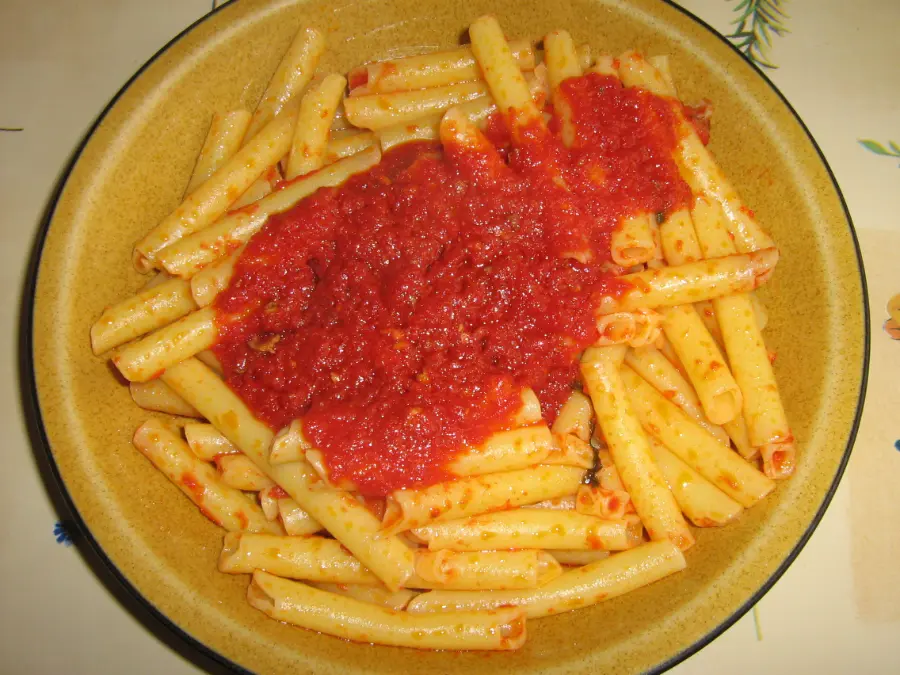
What ziti is
- Shape: a tube, straight-cut at the ends, traditionally smooth. Ridged versions (ziti rigati) also exist.
- Size: usually 5 cm (about 2 inches) long when sold short. In some places, ziti are sold as long tubes that cooks break into pieces before cooking.
- Made from: durum wheat semolina and water
- Origin: southern Italy, especially Campania and Sicily
For background, see the Wikipedia entry on ziti.
The name and history
The name is generally linked to the Italian word for bride or bridegroom (zita and zito), because ziti were traditionally served at wedding feasts in southern Italy. Large trays of baked pasta marked weddings and holidays, a symbol of abundance and shared celebration. Italian immigrants brought the dish to the United States, where baked ziti with tomato sauce, ricotta and mozzarella became a staple of Italian-American cooking. For the wider context, see our pasta history and regional pasta guide.
Ziti compared with similar tubes
| Shape | Ends | Surface | Best for |
| Ziti | Straight | Smooth | Baked ziti, casseroles, thick sauces |
| Penne | Diagonal | Ridged or smooth | Tomato sauces, vodka sauce |
| Rigatoni | Straight, wider | Deep ridges | Chunky ragù, baking |
| Mezze maniche | Straight, short and wide | Smooth or ridged | Chunky sauces |
| Pennoni | Diagonal, oversized | Ridged | Thick sauces, large bakes |
Ziti’s smooth walls let sauce and cheese flow inside and fuse evenly in baked dishes. Penne holds sauce more on the outside. If you cannot find ziti, rigatoni is the best substitute: it is slightly wider and ridged, which holds even more sauce. Penne also works.
How to cook ziti
- Use a large pot, about 4 to 5 litres of water per 500 g, and salt it once it boils (roughly 10 g per litre).
- Add the ziti and stir during the first minute.
- Cook for 8 to 10 minutes, tasting early.
- If you will bake it, drain 1 to 2 minutes before al dente (often around the 7 or 8-minute mark). It keeps cooking in the oven and in the sauce, so fully cooking it first makes the result mushy.
- Reserve a cup of the starchy water before draining. Do not rinse.
See pasta cooking and pasta water for more.
Baked ziti
Quantities are a starting point for 6 to 8 servings.
Ingredients
- 500 g ziti
- About 2 cups (500 ml) tomato sauce or marinara
- 1 cup (250 g) ricotta
- 2 cups (about 200 g) shredded mozzarella
- ½ cup (about 50 g) grated Parmesan
- Optional: 450 g Italian sausage or ground beef, fully cooked
- Fresh basil and oregano
Method
- Heat the oven to 190 °C (375 °F). Cook the ziti until slightly short of al dente.
- If using meat, brown it until fully cooked. Ground beef should reach 71 °C (160 °F).
- Mix the ricotta with half the mozzarella and the herbs.
- Layer sauce, pasta and cheese in a baking dish.
- Top with the remaining mozzarella and Parmesan.
- Cover with foil for the first 15 to 20 minutes to keep the pasta moist, then uncover and bake until bubbling and golden, about 25 minutes in total.
Tips
- Keep it saucy. Pasta absorbs a lot of liquid. Use a little more sauce than you think you need.
- Keep the ricotta smooth. Stir in a room-temperature egg and a handful of Parmesan to bind it, so it does not turn grainy when baked.
- Look for ziti rigati if you want the sauce to hold better. The ridges give it a little more grip.
For another baked dish, try pasta alla Sorrentina or lasagna Bolognese. For video demonstrations, see Baked Ziti Recipe: Easy Pasta Casserole and Vegetarian Baked Ziti.
Best sauces
- Marinara: simple, bright and traditional.
- Bolognese or meat ragù: clings to the tube walls.
- Alfredo or béchamel: richer baked dishes.
- Pesto: a lighter option for summer.
Thin sauces tend to run through the tube. For more matches see our pasta pairing guide.
Wine and sides
Tomato-based baked ziti suits a medium-bodied red such as Chianti or Montepulciano d’Abruzzo. Creamier versions go with a Chardonnay or Pinot Grigio. Serve with garlic bread, roasted vegetables or a crisp green salad.
Storing and reheating
Cool and refrigerate within two hours, and keep for 3 to 4 days. Reheat covered at 175 °C (350 °F), until hot throughout (74 °C / 165 °F). Baked ziti often tastes better the next day. It also freezes well. Wrap tightly, and thaw overnight in the fridge.
Common questions
Is ziti the same as penne?
No. Ziti has straight ends and a smooth surface, and penne is cut diagonally and is often ridged.
Do I need to boil it before baking?
Yes, but stop 1 to 2 minutes short of al dente.
Why is my baked ziti dry?
Not enough sauce, or the dish was not covered while baking. Use more sauce and cover it with foil for the first 15 to 20 minutes.
Can I use it for mac and cheese?
Yes. Cheese sauce flows into the smooth tubes.
Is ziti egg-free?
Traditionally yes, made from semolina and water. Check the label.
Can I use gluten-free ziti?
Yes, but use extra sauce and slightly shorter cooking.
How much per person?
About 75 to 90 g dry for baked dishes. Our portion calculator can help.
Keep exploring
See our guides to creste di gallo, ruote, chickpea pasta, pastina and best pasta for Alfredo sauce, and common pasta mistakes.
Related guides: find close swaps in the pasta substitution chart, check typical times in the cooking time chart, or browse the pasta shapes A to Z.

Syed Yasar Arafat is the founder of PastaLoverz.com and a food research enthusiast with a focused interest in pasta varieties, traditional Italian cuisine, and balanced eating. Through PastaLoverz.com, he publishes well-researched articles that explain pasta types, cooking methods, and nutritional considerations in clear, practical terms to help readers make informed food choices.