
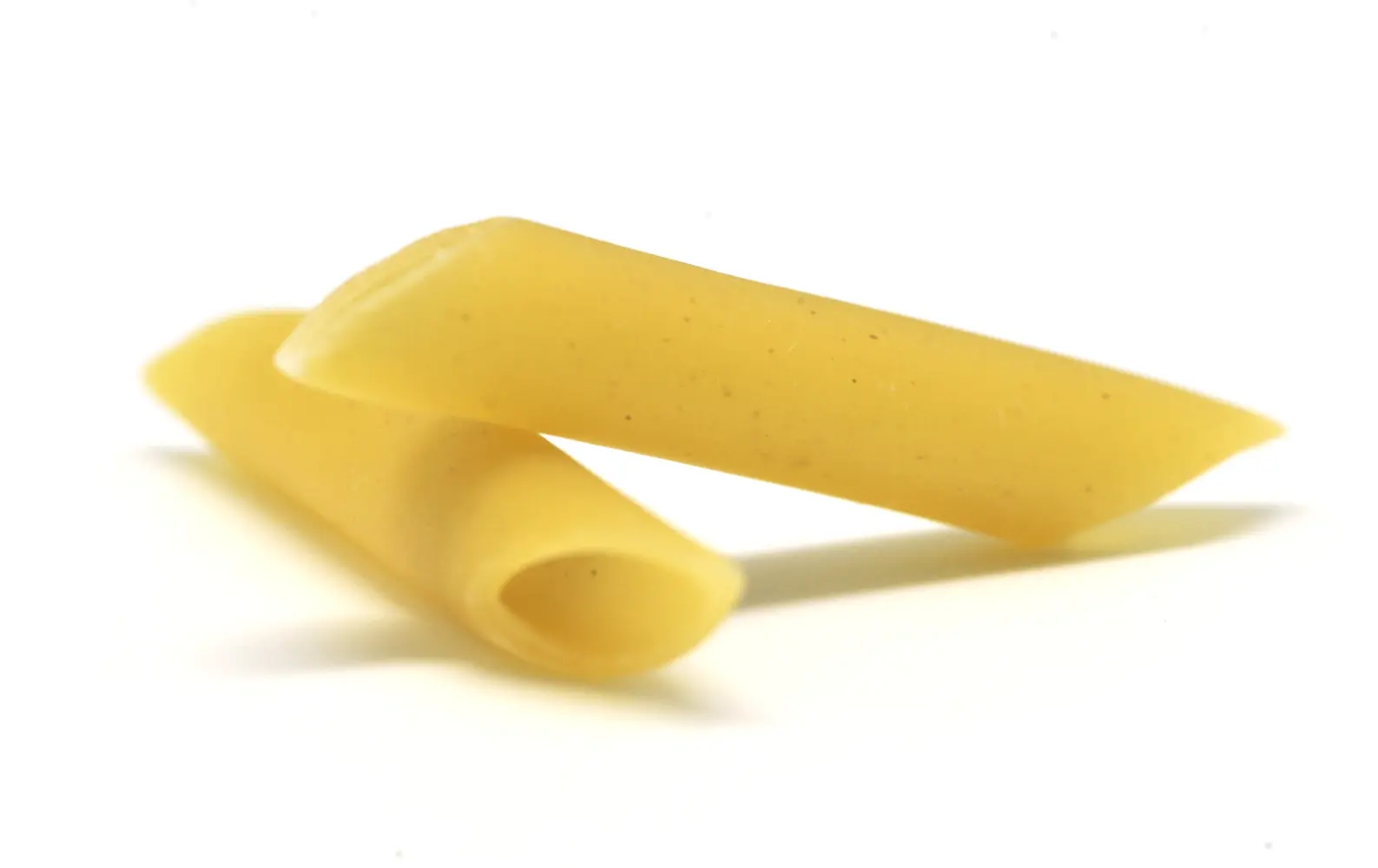
Pennoni are the oversized cousin of penne: wide tubes with diagonally cut ends, usually with ridges along the surface. The name comes from penne, the Italian word for quills, with the ending -oni meaning “big”. The extra width makes them suited to thick sauces, chunky vegetables and baked dishes.
This guide explains how pennoni differ from penne and rigatoni, how long to cook them, which sauces suit them, and what to use if you cannot find them.
What pennoni are
- Shape: a wide hollow tube with diagonal ends
- Surface: usually ridged (rigate), though smooth (lisce) versions exist
- Size: noticeably larger in diameter than ordinary penne
- Made from: durum wheat semolina and water
Ridged pennoni grip chunky sauces and bits of vegetable. Smooth ones suit slippery sauces such as cream or puréed tomato.
A note on history
The diagonal cut is the signature of the penne family. A commonly cited account credits Giovanni Battista Capurro of Genoa with patenting a machine in 1865 that cut pasta tubes at an angle. That story is told about penne in general, and pennoni are simply the larger version. Much of what is written about pennoni specifically is repeated from penne sources, so treat precise dates with caution.
Pennoni vs penne vs rigatoni
| Feature | Pennoni | Penne | Rigatoni |
| Size | Large, wide tube | Medium tube | Wide, short tube |
| Ends | Diagonal | Diagonal | Straight |
| Surface | Ridged or smooth | Ridged or smooth | Mostly ridged |
| Works well with | Chunky ragù, bakes | Vodka sauce, arrabbiata | Bolognese |
See our guides to penne, rigatoni and ziti for the details of each.
How to cook pennoni
- Use a big pot with plenty of water, about 5 litres for 500 g, and salt it once it boils.
- Add the pasta and stir right away so the wide tubes do not stick.
- Cook for about 11 to 13 minutes, starting the timer when the water returns to a boil. Bite into a thick piece to check the centre.
- Save a cup of the cooking water before draining.
- Finish the pasta in the sauce over low heat, adding splashes of the starchy water until the sauce coats the ridges.
A useful trick for big tubes is to pull them out a minute early and finish cooking them in the sauce. The pasta absorbs flavour and the starch helps the sauce cling. See pasta water for the reasons, and pasta cooking for the full method. Do not rinse unless you are making a cold salad.
Sauces that suit it
- Meat ragù: slow-cooked beef or pork fills the tubes.
- Vodka or cream sauces: they coat the wide surface, and pancetta adds depth.
- Roman sauces: amatriciana and carbonara work, and pennoni alla zozzona is a famous Roman combination of several of them.
- Baked pasta: mozzarella, aubergine, or ricotta, spinach and marinara. The thick walls hold up in the oven.
- Seafood: mussels with chilli, white wine and cherry tomatoes.
- Spicy tomato: an arrabbiata with garlic and chilli.
For more matches, see our pasta pairing guide.
Portions and nutrition
A main-course portion is about 80 to 100 g of dry pasta per person. As a rough guide, a cup of cooked penne-type pasta has about 200 calories, with around 40 g of carbohydrate and 7 g of protein, and very little fat. Exact values vary by brand. Whole wheat versions add fibre. Use our pasta portion calculator to work out how much to cook.
Buying tips
Look for bronze-die pasta, which has a rough, matte surface that helps sauce cling. Many Italian and supermarket brands sell pennoni, and the shape is usually found as “penne giganti” or similar if the exact name is missing. Dry pasta keeps for months in a cool, dry cupboard.
Substitutes
Rigatoni, ziti and tortiglioni are the closest replacements. Rigatoni has straight ends, but a similar width and ridges. For baked dishes, paccheri or manicotti also work.
Common questions
Is it good for baking?
Yes. The thick walls resist turning mushy.
Does it hold sauce better than penne?
For thick, chunky sauces, generally yes, because of the wider opening and ridges.
Can I use it in pasta salad?
Yes, with bold dressings and sturdy ingredients like roasted vegetables and cheese.
Can I freeze cooked pennoni?
You can. Slightly undercook it, cool it, toss it with a little oil, freeze on a tray, then bag it. Reheat in boiling water for a minute or two.
Is there a gluten-free version?
Yes. Some brands make gluten-free tubes from corn, rice or other flours. Choose a good brand so the large tubes do not collapse.
What does “pennoni” mean?
Roughly, “large quills”.
Related guides: compare other sturdy shapes in best pasta for chunky sauces, find swaps in the pasta substitution chart, or browse the pasta shapes A to Z.
Further reading: Wikipedia: Penne

Syed Yasar Arafat is the founder of PastaLoverz.com and a food research enthusiast with a focused interest in pasta varieties, traditional Italian cuisine, and balanced eating. Through PastaLoverz.com, he publishes well-researched articles that explain pasta types, cooking methods, and nutritional considerations in clear, practical terms to help readers make informed food choices.