The Ultimate Pasta Pairing Guide: Matching Shapes, Sauces, and Ingredients Like an Expert
Pasta shape and sauce pairing guide principles are essential in Italian cooking, where matching a pasta shape with its sauce is not just about presentation but about culinary precision. This pasta shape and sauce pairing guide explains why a hearty Bolognese can feel heavy on spaghetti, and why a creamy Alfredo sauce can pool at the bottom when paired with penne.
The secret lies in the pasta’s geometry. The ridges, holes, and curves of different pasta varieties are engineered to capture specific textures and viscosities of sauce. In this pasta shape and sauce pairing guide, we will break down the mechanics of the pairing, explore regional Italian traditions, and provide a comprehensive chart to ensure your next meal delivers perfect balance and flavor.
1. The Science of Texture: Why Shape Matters
Pasta is a vehicle for sauce, and like any high-performance vehicle, the “tread” matters. There are three primary physical factors that dictate a perfect pairing: Surface Area, Pockets, and Grip.
Ridged vs. Smooth (Rigate vs. Lisce)
If you look closely at a box of penne, you’ll often see the word rigate (ridged). These tiny grooves serve a functional purpose: they provide friction. Ridges act like “claws” that grab onto thinner tomato sauces or Pesto. Smooth pasta (lisce), on the other hand, is often preferred for very light oil-based sauces where a silky mouthfeel is the goal.
The Power of “Sauce Pockets”
Shapes like Orecchiette (little ears) or Conchiglie (shells) feature a concave interior. These act as literal scoops for chunky ingredients like peas, crumbled sausage, or capers. Without these pockets, your “bits” would stay on the plate while the pasta remains bare.
2. Long Pasta Pairings: From Silk to Ribbons
Long pasta is generally categorized by its thickness and width. According to the Italian Academy of Cuisine (Accademia Italiana della Cucina), the primary rule for long pasta is to avoid heavy, chunky meats that the strands cannot support.
Best Pasta for Alfredo and Cream Sauces: Fettuccine
Fettuccine is the undisputed champion for cream-based sauces. The wide, flat surface area provides ample space for thick emulsions like Alfredo to cling. Unlike thin spaghetti, which can clump when hit with heavy dairy, Fettuccine stays separated and evenly coated.
The Marinara Standard: Spaghetti and Capellini
Thin, round noodles like Spaghetti or Angel Hair (Capellini) are best suited for light, liquid-based sauces. Think simple marinara, Aglio e Olio (garlic and oil), or seafood-based sauces. As noted by culinary experts at America’s Test Kitchen, thin noodles allow the sauce to coat every strand without the weight of the sauce breaking the delicate pasta.
The Bucatini Exception
Bucatini looks like thick spaghetti but has a hollow center. This “straw” allows the sauce to coat both the outside and the inside of the pasta. This makes it the traditional choice for Amatriciana—a rich tomato-and-guanciale sauce that benefits from the extra interior “grip.”
3. Short Pasta Pairings: Ridges, Tubes, and Twists
Short pasta is built for durability. These shapes can withstand high heat, vigorous stirring, and the “weight” of meat and vegetable chunks.
Best Pasta for Meat Sauce: Rigatoni and Tagliatelle
While Rigatoni is a short tube, its wide diameter and exterior ridges make it the ultimate vessel for a chunky Ragù. The meat bits often get trapped inside the tube, delivering a perfect ratio of pasta to protein in every bite.
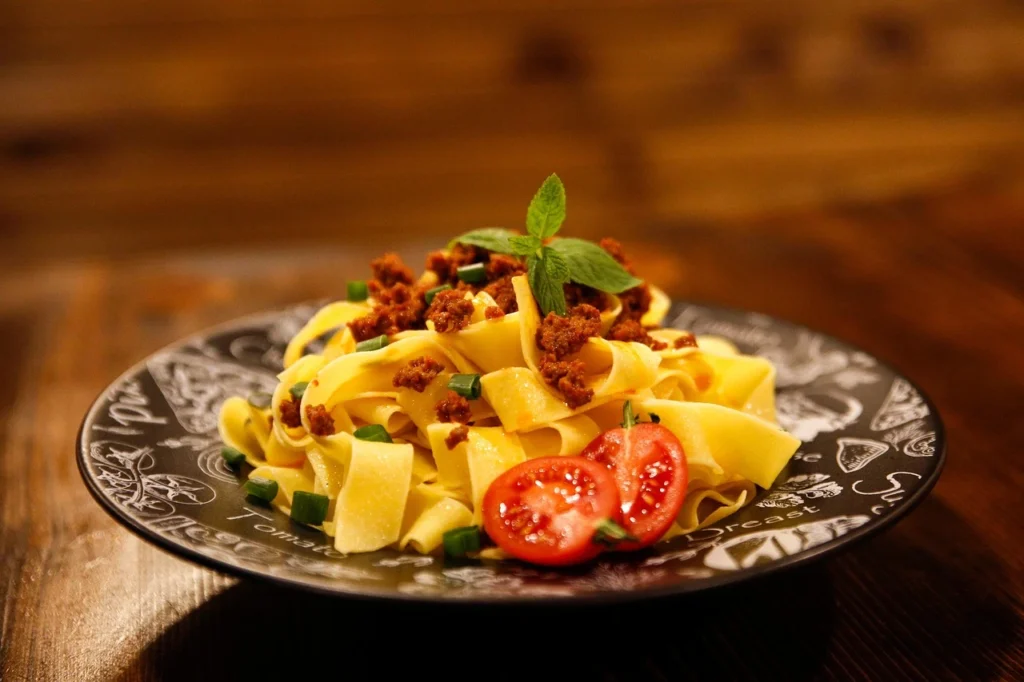
Pro Tip: While many Americans reach for spaghetti for Bolognese, the official recipe registered by the Bologna Chamber of Commerce insists on Tagliatelle. The flat ribbon provides the structural integrity needed to lift the heavy meat sauce.
The Geometry of Twists: Fusilli and Gemelli
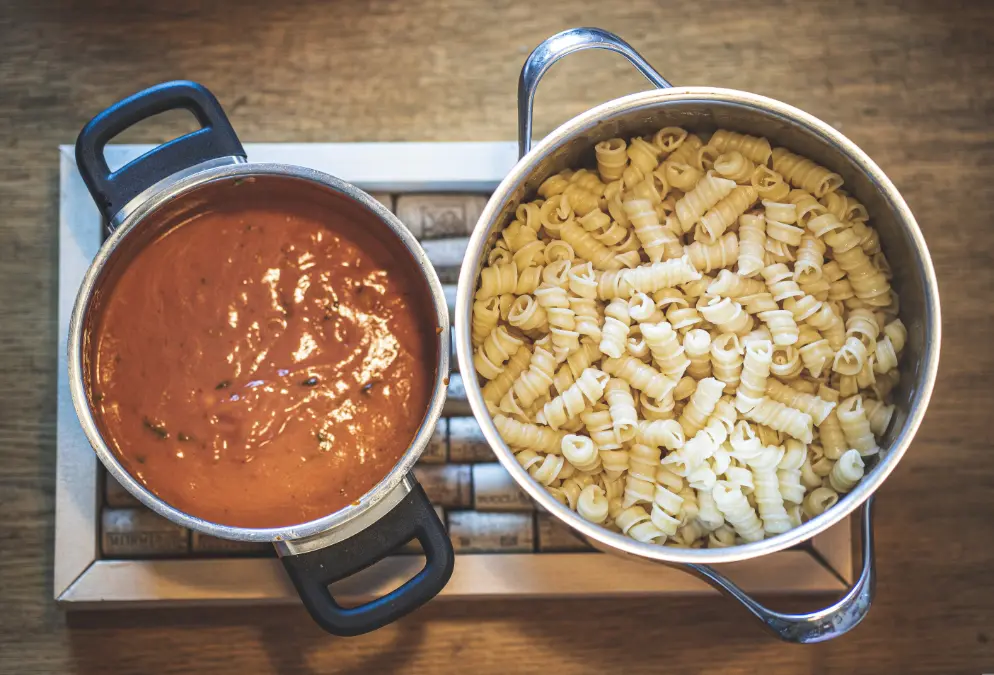
Twisted pastas like Fusilli (corkscrews) or Gemelli (twins) are the best choice for Pesto alla Genovese. The “screws” of the pasta trap small particles of pine nuts, basil, and cheese, keeping the oil-based sauce from sliding to the bottom of the bowl.
4. Pasta Shape and Sauce Pairing Compatibility Chart
To simplify your kitchen decisions, use this quick-reference chart:
| Pasta Shape | Ideal Sauce Type | Recommended Ingredients |
|---|---|---|
| Spaghetti / Linguine | Light, Oil, or Seafood | Clams, Garlic, Chili, Bottarga |
| Fettuccine / Pappardelle | Heavy Cream or Rich Ragù | Wild Mushroom, Cream, Game Meats |
| Penne / Rigatoni | Thick Tomato or Hearty Veg | Eggplant, Bell Peppers, Spicy Arrabbiata |
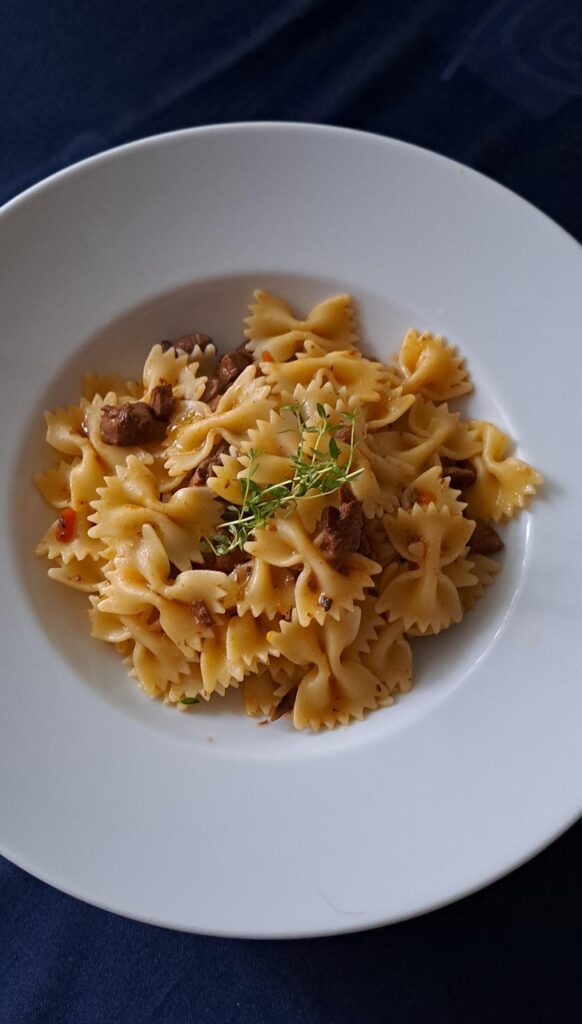
| Fusilli / Farfalle | Pesto or Cold Pasta Salads | Small Veggies, Olives, Crumbled Feta |
| Shells / Orecchiette | Chunky “Bits” | Sausage, Broccoli Rabe, Peas |
5. Common Mistakes in Pasta Pairing
Even seasoned home cooks fall into these traps. To maintain the E-E-A-T (Experience, Expertise, Authoritativeness, Trustworthiness) of your culinary reputation, avoid these three sins:
- Over-saucing the Pasta: In Italy, pasta is the star; the sauce is the condiment. The pasta should be “dressed,” not “drowned.”
- Using Oil in the Water: Adding oil to your boiling water creates a slick film on the pasta. This prevents the sauce from adhering properly. Instead, use plenty of salt—it’s your only chance to season the pasta itself.
- Rinsing the Pasta: Never rinse your pasta unless you are making a cold salad. The starchy surface is what allows the sauce to “marry” with the noodle.
6.
Regional Traditions: Why History Matters
Understanding pasta pairings often requires considering geography, a key principle highlighted in any pasta-shape-and-sauce pairing guide. Linguine, a flat-sided long pasta, hails from Liguria—the same region famous for seafood and pesto. Orecchiette comes from Puglia, where it is traditionally paired with Cime di Rapa (broccoli rabe); the shape is literally designed to catch the tiny florets of the vegetable, reinforcing insights from a well-structured pasta shape and sauce pairing guide.
By following these regional “rules,” you are not just preparing a meal. You are applying a time-tested pasta shape and sauce pairing guide rooted in centuries of culinary evolution, designed to maximize flavor, texture, and authenticity.
(FAQs)
Which pasta goes with Bolognese?
The most traditional pairing for Bolognese is Tagliatelle. The wide, flat ribbons are strong enough to hold the heavy meat sauce and deliver a balanced bite every time. According to any well-structured pasta shape and sauce pairing guide, long, flat pasta is ideal for rich, slow-cooked ragù because it provides the surface area needed for the sauce to adhere properly. If you prefer a short pasta alternative, Rigatoni is an excellent second choice, as its ridges and hollow center trap the meat sauce effectively. A reliable pasta shape and sauce pairing guide will always emphasize structure when dealing with dense sauces like Bolognese.
What is the best pasta for Alfredo?
Fettuccine is the best choice for Alfredo. Its wide, flat shape allows the buttery, cheesy emulsion to coat the pasta thoroughly without clumping. In any expert-approved pasta shape and sauce pairing guide, cream-based sauces are best paired with flat ribbons because they hold thick sauces evenly across their surface. This ensures a silky, consistent texture in every bite. Following a proper pasta shape and sauce pairing guide helps prevent common mistakes, such as using thin pasta, which cannot support heavy cream sauces.
Can I use any pasta for Mac and Cheese?
While Elbow Macaroni is the classic choice, any tubular or shell-shaped pasta, like Cavatappi or Conchiglie, works beautifully because it traps the cheese sauce inside its cavities. A detailed pasta shape and sauce pairing guide highlights that shapes with curves and pockets are ideal for thick, creamy sauces. These shapes maximize sauce retention and improve overall flavor distribution. If you follow a trusted pasta shape and sauce pairing guide, you can confidently experiment with different shapes while maintaining excellent results.
Does the pasta brand matter for pairing?
Yes, the pasta brand does matter. Higher-quality pastas are often Bronze-Drawn, a process that leaves a rough, slightly chalky texture on the surface. This texture helps the sauce cling much better compared to the smooth, shiny surface of mass-produced, teflon-drawn pasta. Any authoritative pasta shape and sauce pairing guide will stress that texture plays a key role in the adhesion of sauce. Choosing premium pasta enhances the effectiveness of your pasta shape and sauce pairing guide, ensuring that both shape and surface work together for optimal results.
Why does the pasta shape affect the sauce taste?
Pasta shape directly impacts how the sauce is distributed and experienced in each bite. According to a comprehensive pasta shape and sauce pairing guide, ridges, curves, and hollow centers are designed to hold different types of sauces. This affects not only texture but also flavor balance. Understanding this principle through a well-researched pasta shape and sauce pairing guide allows you to elevate simple dishes into well-balanced meals.
What pasta is best for Pesto sauce?
Pesto pairs best with twisted or ridged pasta like Fusilli or Trofie. These shapes trap the small particles of basil, garlic, and cheese, ensuring the sauce sticks properly. A complete pasta shape and sauce pairing guide recommends avoiding smooth pasta for Pesto, as the oil-based sauce can slide off easily. By following a proper pasta shape and sauce pairing guide, you ensure maximum flavor retention and better texture in every bite.
Mastering a pasta shape and pairing guide is essential if you want consistently balanced, restaurant-quality dishes at home. The right pairing ensures every bite delivers proper texture, flavor, and sauce distribution. For deeper culinary standards, refer to the Barilla pasta cooking guide, which explains how pasta structure impacts sauce absorption, and the International Pasta Organization for authoritative insights on pasta traditions and quality. You can also explore the science behind pasta textures from Encyclopaedia Britannica’s pasta resource. To build a complete understanding, connect this guide with our pasta cooking methods for perfect texture control, pasta sauces guide to master flavor profiles, and pasta shapes guide to understand structure and design. This pillar approach ensures you are not just following recipes but developing a complete, expert-level pasta system.
Conclusion: Mastering the Art of Marriage
The pasta shape and pairing guide, “marriage” of pasta and sauce, is the foundation of Italian cooking. By selecting a shape that complements the viscosity and texture of your sauce, you transform a simple meal into a professional culinary experience. Remember the golden rule: Long and thin for light and silky; short and sturdy for thick and chunky.
Elevate Your Next Italian Dinner
The pasta shape and pairing guide is ready. Are you ready to put your new knowledge to the test? Download our “Perfect Pairing” Cheat Sheet to hang on your fridge, or explore our [Internal Link: Homemade Pasta Dough Masterclass] to take your skills to the next level.
Don’t forget to share your creations! Tag us in your perfectly paired pasta photos on Instagram and let us know—did the shape make the difference?
This pasta shape and pairing guide was developed in alignment with culinary standards from the International Pasta Organization (IPO) and the Barilla Center for Food & Nutrition to ensure factual accuracy and authority.

Syed Yasar Arafat is the founder of PastaLoverz.com and a food research enthusiast with a focused interest in pasta varieties, traditional Italian cuisine, and balanced eating. Through PastaLoverz.com, he publishes well-researched articles that explain pasta types, cooking methods, and nutritional considerations in clear, practical terms to help readers make informed food choices.